
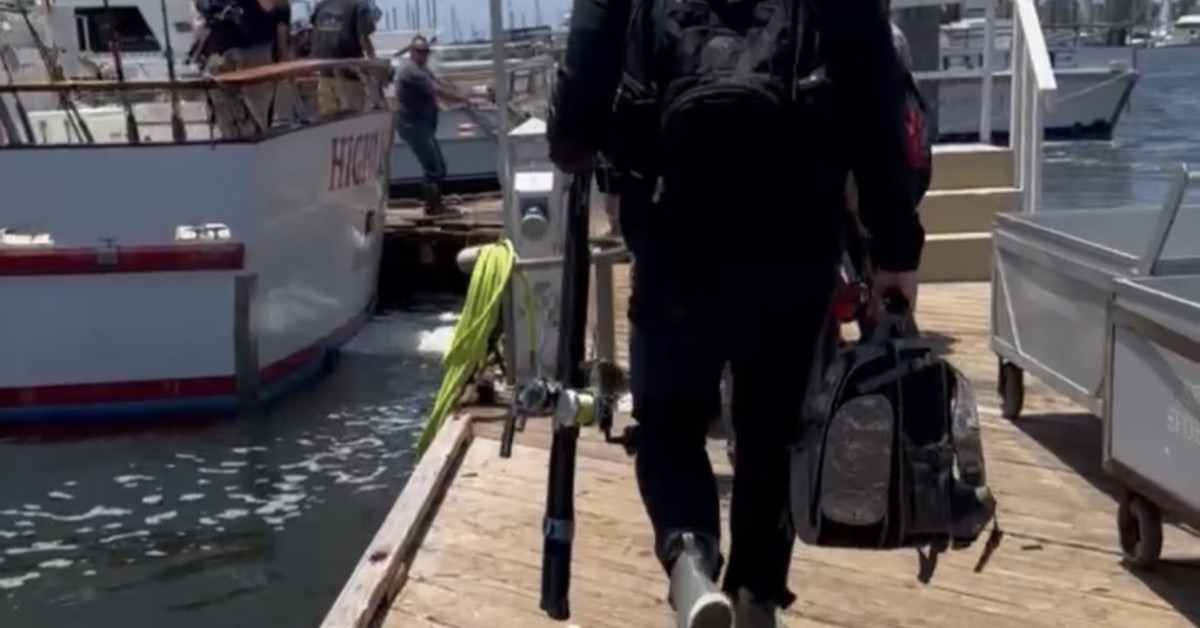
Booking a fishing charter for the first time can feel like there's a code everyone else already knows — what kind of trip to pick, what's included, what to pack, how not to embarrass yourself at the dock. There isn't a code. There's just a handful of decisions and a short routine. Here's the whole thing, start to finish, for someone who has never set foot on a party boat.
Open-party vs. private — what you're actually choosing
The first fork in the road is whether you book a seat or book a boat. It's the single biggest factor in what your day looks like and what it costs, so get it straight before you do anything else.
Open-party (also called a "party boat") means you buy one seat on a boat full of strangers. You show up, you pick a spot at the rail, and you fish alongside however many other anglers signed up — could be eight, could be forty. It's how the vast majority of California sportfishing works, and it's by far the cheaper way in: you're splitting the cost of the boat, fuel, and crew across everyone aboard. For a first-timer, this is usually the right call. You don't need a group, you don't commit much money, and there's a deckhand whose whole job is helping people exactly like you.
Private charter means your group books the entire boat for the day. You set the headcount (up to the boat's limit), you're not sharing the rail with anyone outside your party, and the crew tailors the trip to you. It costs a lot more because you're covering the whole boat, not one seat — but split across a group of six or eight friends, the per-person number can land close to an open-party fare while giving you the boat to yourselves. Private is great for a bachelor party, a family outing, or anyone who wants a more relaxed, customized day. It's overkill for one person dipping a toe in.
If you're going solo or as a pair and just want to try it, book an open-party seat. If you've got a group and want control over the day, look at a private charter. Everything else in this guide applies to both, with notes where they differ.
Picking a trip length
Charters are sold by duration, and the length you pick determines how far offshore you go, what you can catch, and how hard the day is on a beginner. The three you'll see most often near shore are half-day, three-quarter-day, and full-day.
| Trip length | Hours | Where you fish / typical catch | Best for |
|---|---|---|---|
| Half-day | ~4–6 | Kelp beds and nearshore structure; calico bass, sand bass, rockfish, bonito, mackerel | First-timers and kids |
| Three-quarter-day | ~8–10 | Outer kelp and nearshore islands (in San Diego, the Coronado Islands); yellowtail often the headline | Motivated beginners ready for a longer day |
| Full-day | ~10–12 | Offshore banks and paddies; seasonal tuna in summer and fall | The deep end for a first trip — go in knowing it |
Half-day (about 4–6 hours): The beginner's trip, full stop. You stay close to shore — kelp beds and nearshore structure a few miles out — fishing for things like calico bass, sand bass, rockfish, bonito, and mackerel. The water is calmer near land, the time commitment is small, and if seasickness or boredom hits, you're not stuck out there for ten hours. Most half-days run a morning departure and an afternoon departure; the morning trip almost always fishes the better bite. If you have kids or you're not sure you'll love it, start here.
Three-quarter-day (roughly 8–10 hours): The step up. You get enough time to reach better grounds — outer kelp, nearshore islands, and in San Diego the Coronado Islands across the Mexican border. Fish quality and variety jump, with yellowtail often the headline. It's a longer, more committed day but still manageable for a motivated beginner. Note that trips into Mexican waters need a Mexican fishing license, which the landing sells on-site.
Full-day (about 10–12 hours): A real day on the water — early departure, evening return, and a run far enough offshore to reach banks and paddies the shorter trips can't. This is where seasonal tuna fishing starts to come into play in summer and fall. It's a fantastic day, but it's a lot of open ocean and a lot of hours for a first trip. If you've never been, it's the deep end — doable, but go in knowing it.
There are longer formats too — overnight and multi-day trips that run to distant offshore banks — but those are not first-timer territory. Get a half-day or three-quarter-day under your belt before you commit to sleeping on a boat.
What it costs and what's included
Trip fares vary widely by region, season, boat, and length, so the only honest answer to "what does it cost" is: check the specific landing's current schedule. Generally, a half-day is the cheapest entry point and the price climbs with duration and distance. For a Southern California breakdown of what a half-day actually runs, see our guide to half-day charter costs in Southern California. What matters more for a first-timer is knowing what the fare does not cover, so nothing surprises you at the dock.
Your fishing license is not included — and the boat does not cover it. In California, anyone 16 and older needs a valid sport fishing license to fish, and the angler buys their own. A California one-day sport fishing license is $21.09 (the 2026 CDFW rate). It is not part of your trip fare, and the boat does not provide it — you buy it yourself, and the landing's tackle shop sells them right there before you board. Budget for it separately, and build it into your morning so you're not scrambling at the counter while the boat's loading. (If you fish more than a couple times a year, an annual license can pay for itself, but for a one-off trip the one-day is what you want.)
Beyond the license, the common add-ons — all of which vary by landing, so confirm with yours:
- Rod rental. Most open-party boats rent rods and reels for anglers who don't own gear, for a modest fee that varies by landing. For a first trip, renting is completely normal and usually the smart move — no reason to buy tackle before you know you like it.
- Bait. Some fares include bait, some charge for it, and some run a "bait fee" on top of the ticket. Ask when you book.
- Fish cleaning. Most landings will fillet and bag your catch at the end of the day, typically for a per-fish fee that varies by landing and fish size. It's worth it — cleaning fish is a skill and a mess you don't want on your first go.
And bring cash. The license, some add-ons, and your crew tip are all smoother in cash, and dock card readers and cell service offshore are both unreliable.
What to bring
The boat supplies the fishing — bait, tackle (rented or your own), and a crew that knows the water. Everything else that makes the day comfortable is on you. Here's the checklist:
- Layers. Mornings on the water are cold even in summer, and it warms up fast once the sun's up. A sweatshirt or jacket you can peel off, plus a windbreaker, beats one heavy coat.
- Sun protection. Sunscreen (reef-safe, high SPF), a hat, and a buff or long sleeves. The sun reflects off the water and burns you faster than you expect.
- Polarized sunglasses. They cut the glare so you can actually see into the water — and they protect your eyes from a stray hook or flying jig at the rail.
- Motion-sickness meds. Non-negotiable for a first-timer (more on this below).
- Non-marking, closed-toe shoes. Deck shoes or sneakers with light soles. No black-soled shoes (they scuff the deck), no flip-flops, no bare feet — wet decks and heavy gear are no place for exposed toes.
- A soft-sided cooler. For carrying your filleted catch home. Soft coolers store out of the way better than hard ones on a crowded boat. Some landings have ice; ask.
- Snacks and water. Many boats have a galley, but not all, and a long day burns energy. Bring more water than you think you need, plus easy snacks.
- Cash. For the license, add-ons, and tipping the crew. Hit an ATM before you reach the landing.
- A small dry bag or zip-top bags. For your phone, keys, and wallet. Everything on a boat gets wet eventually.
- Your own rod, only if you have one. Optional. If you don't fish regularly, rent at the landing and skip this.
Seasickness prep
Here's the thing nobody tells first-timers: even people who never get carsick can get seasick, and a bad case can wreck an otherwise great day. The good news is it's largely preventable if you plan ahead. The mistake people make is waiting until they feel queasy to do something about it — by then it's too late.
- Take your meds early. Over-the-counter motion-sickness pills (the common ones being meclizine and dimenhydrinate) work best taken before you're on the water — typically the night before and again the morning of, per the package directions. Taking one as you start feeling sick barely helps. Read the label and follow it.
- Sleep and eat sensibly the night before. Show up rested, not hungover. A light, bland breakfast settles the stomach better than an empty one or a greasy one. Skip heavy grease and a lot of alcohol the night before.
- Stay on deck in the fresh air. Below deck, in the galley or the head, is where seasickness gets worse. Out in the open with wind on your face is where it gets better.
- Watch the horizon. Looking at the steady, distant horizon helps your inner ear and your eyes agree on what's happening. Staring down at your phone, your tackle, or the deck does the opposite.
- Stay hydrated, nibble something. Sip water and keep a little food in your stomach. Crackers, ginger candies, and similar settle a lot of people.
- If it hits anyway, tell the crew. They've seen it a thousand times and they'll point you to the right spot on the boat. And if you do get sick, get it over the rail downwind, then get back to fishing — most people feel better after and finish the day fine.
The dock sequence and etiquette
Showing up knowing the routine is the difference between feeling lost and feeling like you belong. Here's how the start of the day actually goes, and the unspoken rules that keep a crowded boat running smoothly.
Arrive early. Plan to be at the landing at least 30–45 minutes before departure — earlier on a busy summer morning. You need time to park, buy your license at the tackle shop, check in, rent a rod if you need one, and get aboard before the boat pulls out. Boats leave on time and they do not wait for stragglers. If you're cutting it close, you're not getting on.
Check in at the office. Find the landing's office or the boat's check-in table, give your name, and confirm your reservation. This is also where you sort out rod rentals, bait fees, and any paperwork — like a Mexican fishing license if your trip crosses the border. Handle the license-counter business here, before you board.
Load and stow your gear. When the crew calls you to board, walk your stuff aboard and stow it out of the way — coolers and bags go where the deckhand tells you, not piled at the rail. The deck is a workspace; keep the walkways clear.
Pick a rail spot. On an open-party boat, your fishing position is first-come at the rail. Claim a spot, set your rod in the holder, and that's your home for the trip. Don't crowd the people next to you — everybody needs room to cast and fight a fish — and don't wander off and leave gear sprawled across three other spots.
Listen to the crew — they run the show. This is the most important etiquette rule on the boat. The deckhands will tell you what to fish, what depth, which bait, when to drop, and when to reel up. Follow their instructions immediately, especially when they call to clear lines or move. When someone hooks a good fish, the courtesy is to reel up and give them room to fight it around the boat — and when it's your turn, the favor comes back. Ask the deckhands questions; helping beginners is literally their job, and they'd much rather coach you than untangle a mess later.
Tip the crew at the end. The deckhands who rigged your gear, pinned your bait, and gaffed your fish work for tips — it's how they get paid, not an optional extra. The standard is 15–20% of your fare, in cash, handed over at the dock when the trip wraps. For the full breakdown of who you're tipping, how the jackpot factors in, and when to tip above standard, read our guide to tipping a fishing charter captain and crew.
Ready to book
That's the whole thing: pick open-party for your first time, start with a half-day, buy your $21.09 one-day license at the landing, pack layers and your motion-sickness meds, show up early, listen to the crew, and tip them at the dock. Do that and you'll have a good day on the water — and probably book a second trip before you've even cleaned the first one's fish.
When you're ready, browse the California charter landings and fleets to find a boat, and check the live fish counts to see what's biting before you commit — there's no better way to pick a trip than knowing what's already coming over the rail.
See What's Biting Before You Book
Fish City tracks real-time fish counts from California's major sportfishing landings — updated daily. Compare boats, spot the hot bite, and book your first trip with confidence.