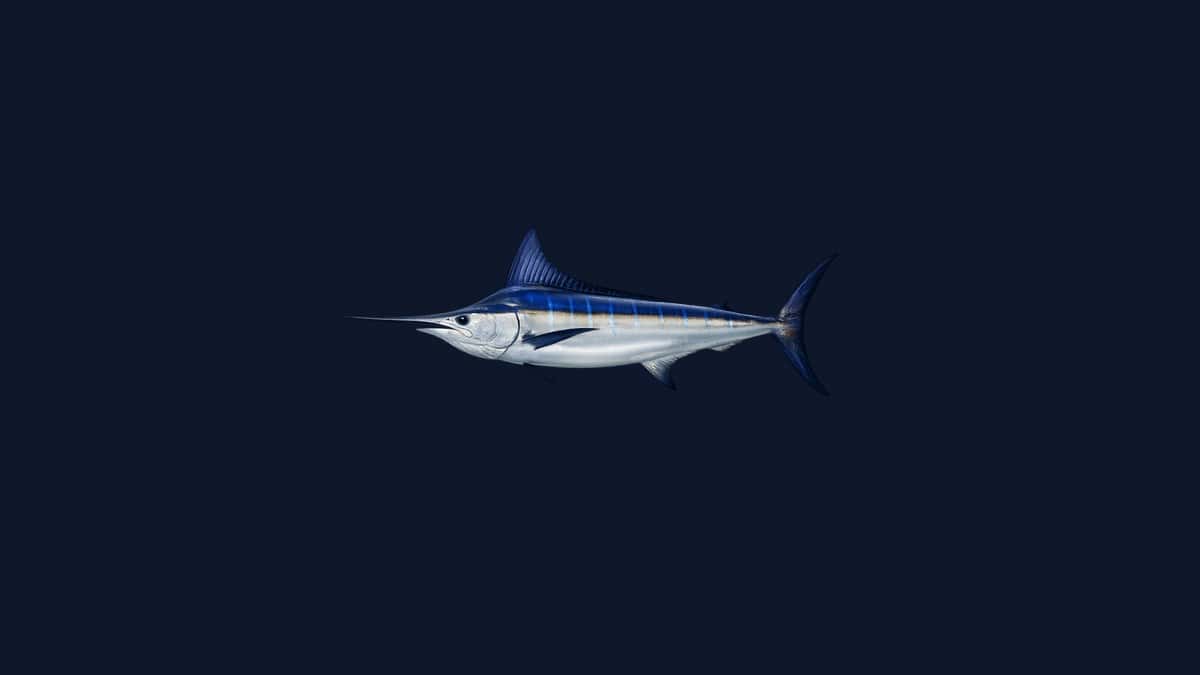
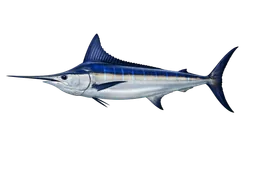
About Striped Marlin
Striped marlin are the billfish that California anglers have a realistic shot at catching. Blue marlin and black marlin are rarer and grow much larger — striped marlin are the common species in SoCal, averaging 100 to 200 lbs and showing up in numbers when warm currents push north in summer and fall.
The stripes are the tell: pale vertical bars along the flanks, more visible on a fresh fish. The dorsal fin is proportionally large — taller and more sail-like than on blue marlin. A striped marlin at boatside after a 20-minute fight, standing on its tail, is the visual centerpiece of offshore California fishing.
For how striped marlin compare with the blue and black marlin San Diego long-range boats see in Baja, read our marlin guide.
Most California recreational striped marlin are caught and released. The community norm is strong; dedicated marlin boats run primarily release programs.
How to Catch
Trolling is the primary method to locate fish. Boats run a spread of skirted lures, feathers, or large stick baits at 5 to 7 knots along temperature breaks in 72°F+ water. When a marlin comes up behind a lure, the captain calls the bite — often you see the fish before it strikes.
Bait-and-switch is a more active method. Troll a teaser (a hookless lure or daisy chain) to raise a curious fish, then pull the teaser away from the fish and pitch a live mackerel at it. The switch from teaser to live bait on a circle hook is the most efficient way to get a clean hook-up on a raised fish.
Live bait drop-back is also effective when fish are spotted: cast a live mackerel past the fish, let it swim into the zone, and give the fish time to eat it before applying pressure. On a circle hook, the fish turns and sets itself — don't swing.
Line-class on marlin is not as heavy as many anglers expect. 50 lb class gear handles most California striped marlin; 80 lb for bigger fish or deeper offshore programs.
Eating Profile
Striped marlin flesh is white, firm, and mild — similar in texture to swordfish but slightly lighter in flavor. It's excellent eating when handled correctly. The catch-and-release ethic means most California fish never reach the table.
If you keep one: bleed immediately, ice hard, and prepare as steaks. Same rules as swordfish — high-heat grill, short cook time, simple seasoning. Don't freeze unless vacuum-sealed; it dries out.
Note that sale of striped marlin caught recreationally in California is prohibited.
Common Mistakes
- Swinging on a live bait bite. On a drop-back rig with a circle hook, the fish self-sets when it turns and swims away. Swing hard and you pull the hook before it seats. Apply pressure by reeling, not by striking.
- Too-light wire on the bite. Marlin bills will cut monofilament. A 150 to 200 lb monofilament wind-on leader (15–25 ft) is standard. Heavy enough to withstand the bill, light enough to handle quickly at the boat.
- Slow on the teaser pull. In bait-and-switch, you have a narrow window when the fish follows the teaser. Pull too slowly and the fish eats the teaser; pull too fast and the fish loses interest. The pitch bait needs to land where the fish's head is going.
- Using J-hooks on live bait. A non-offset circle hook on natural bait hooks the jaw and keeps released fish alive. Save J-hooks for trolled lures. Pack both.
Month-by-Month
- Jan–May: No striped marlin in SoCal. Water too cold.
- Jun: Early arrivals in warm years. Long-range boats finding fish south of San Diego.
- Jul: Building. Fish pushed north of Baja into SoCal waters in warm years.
- Aug–Oct: Peak window. Surface water 72°F+ and bait stacks up. Best local marlin fishing.
- Nov: Tailing off. Warm-water pocket retreats south. Long-range boats stay on them.
- Dec: No SoCal marlin program.