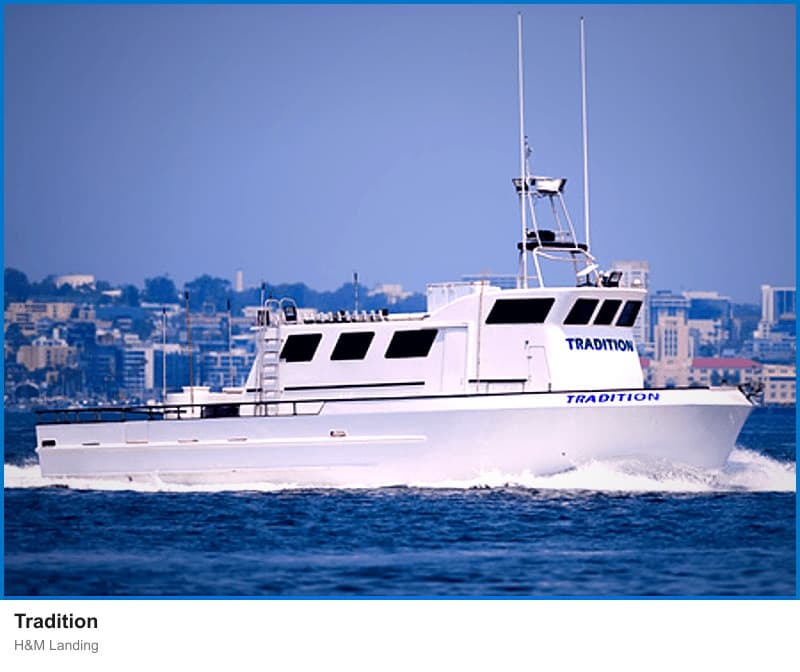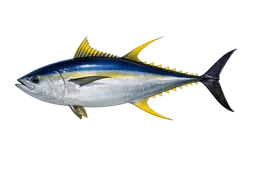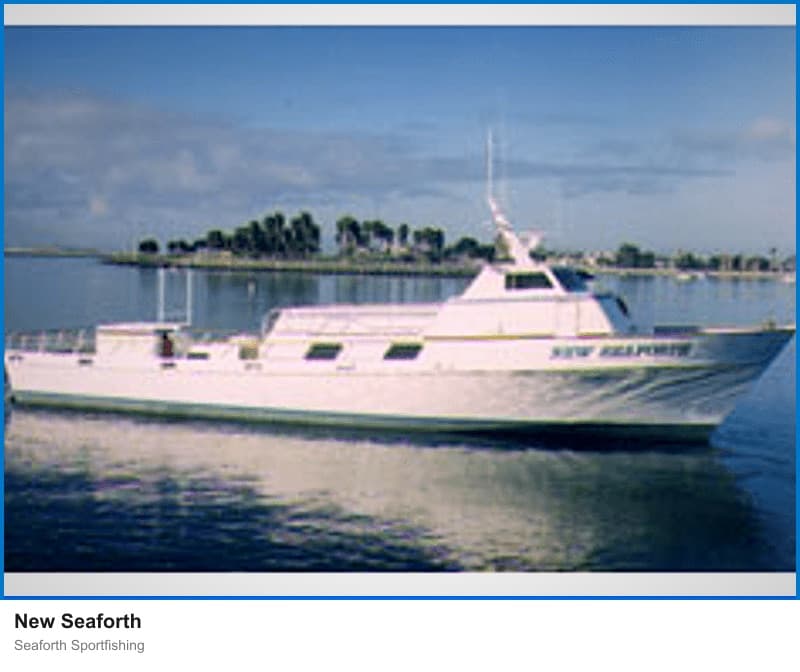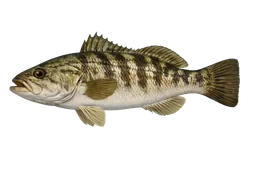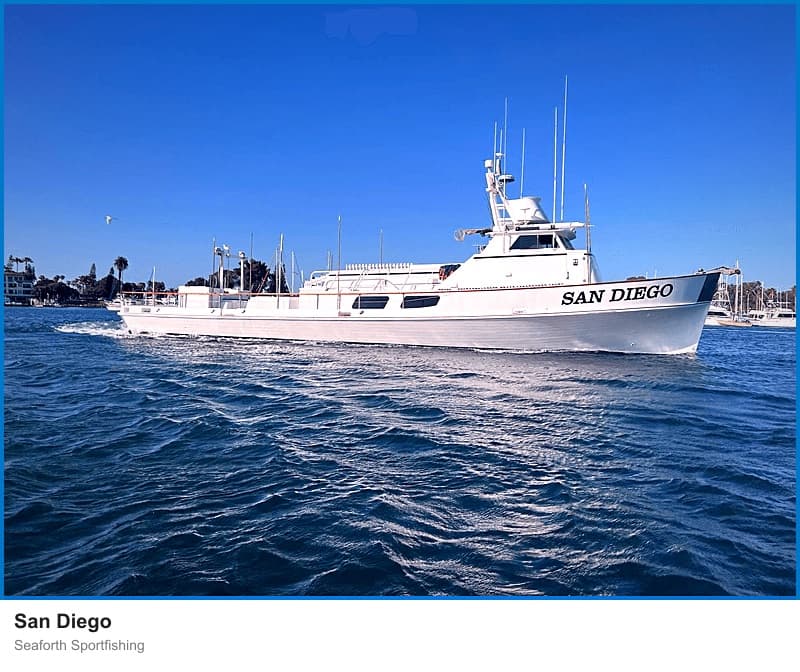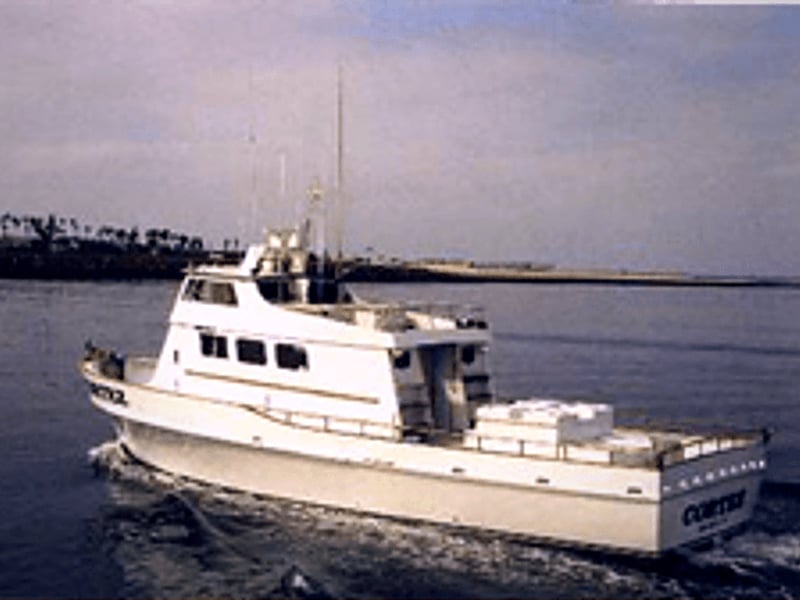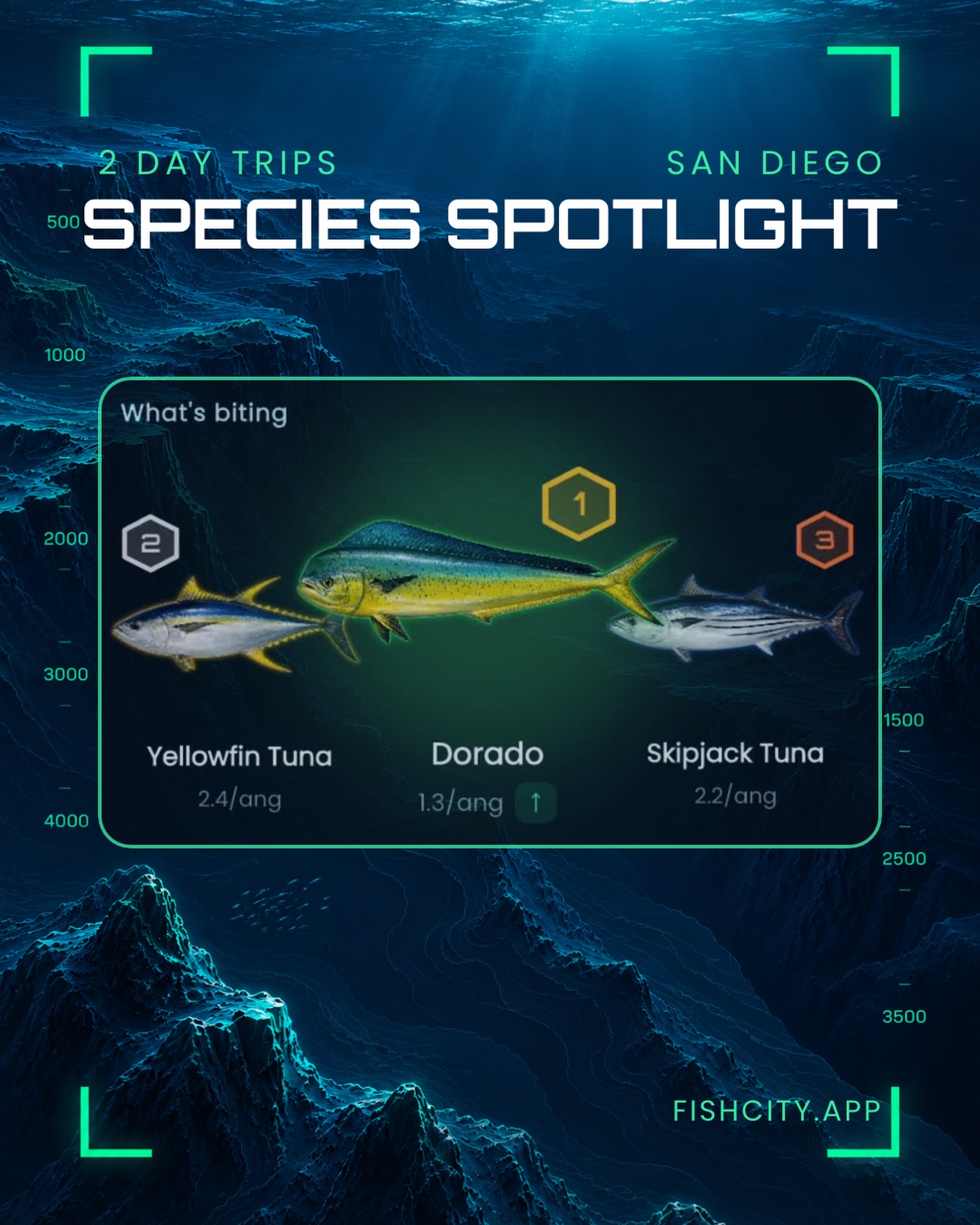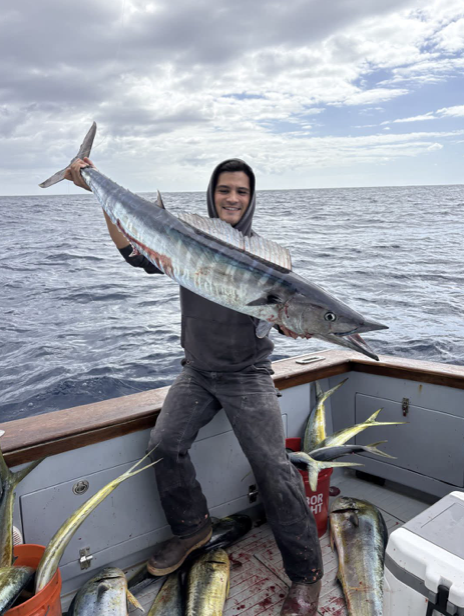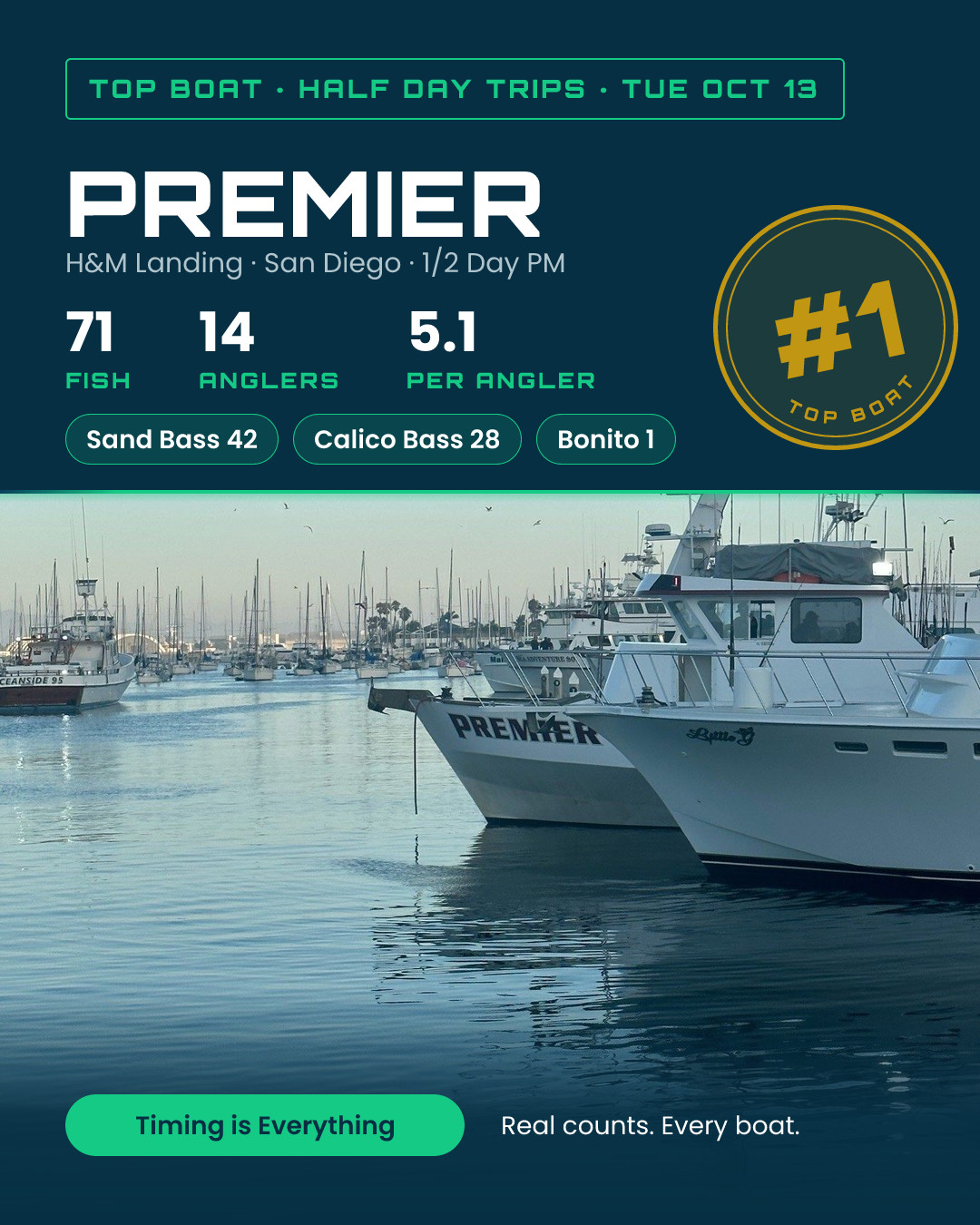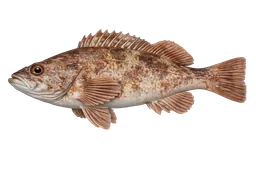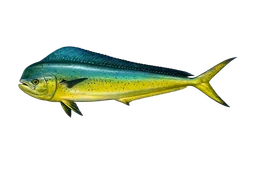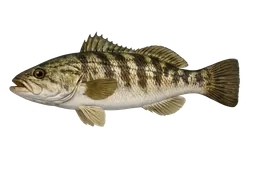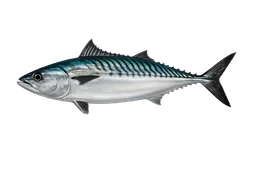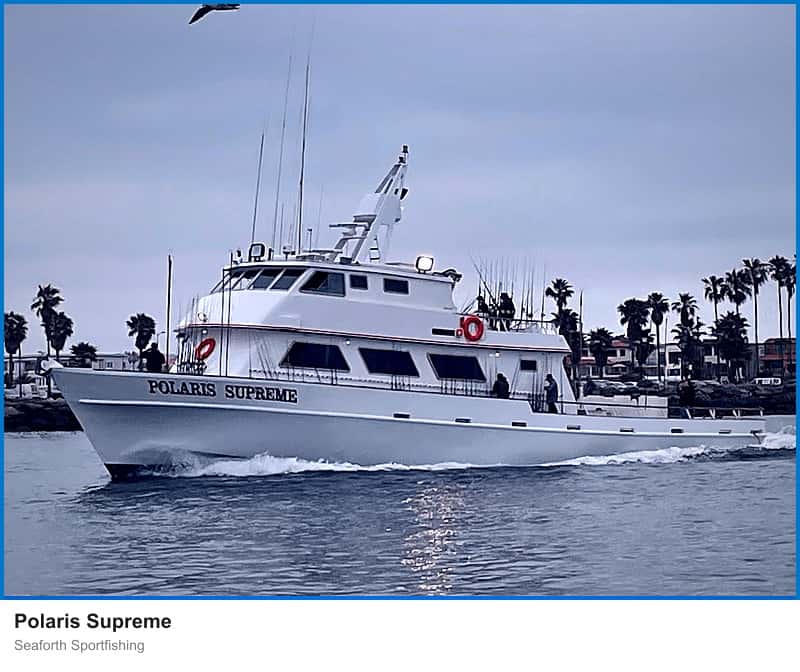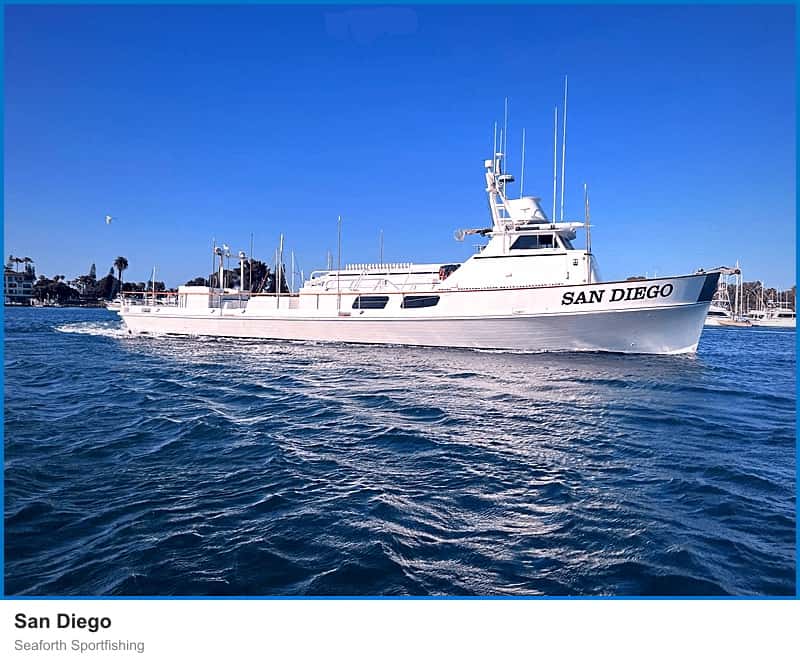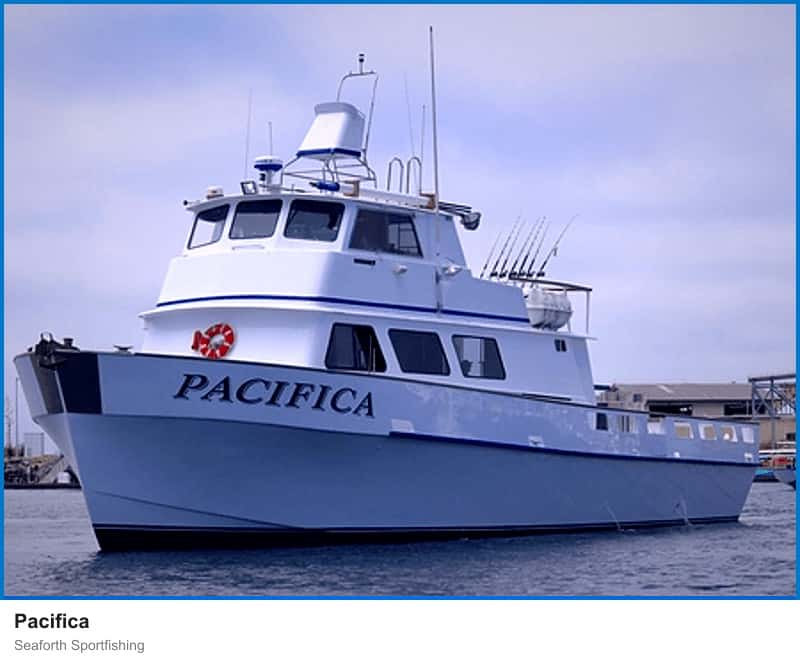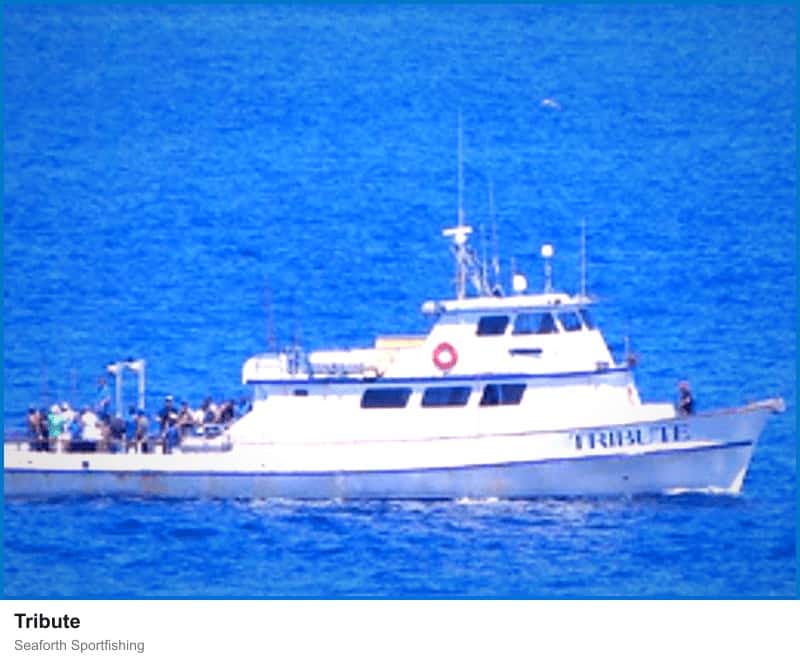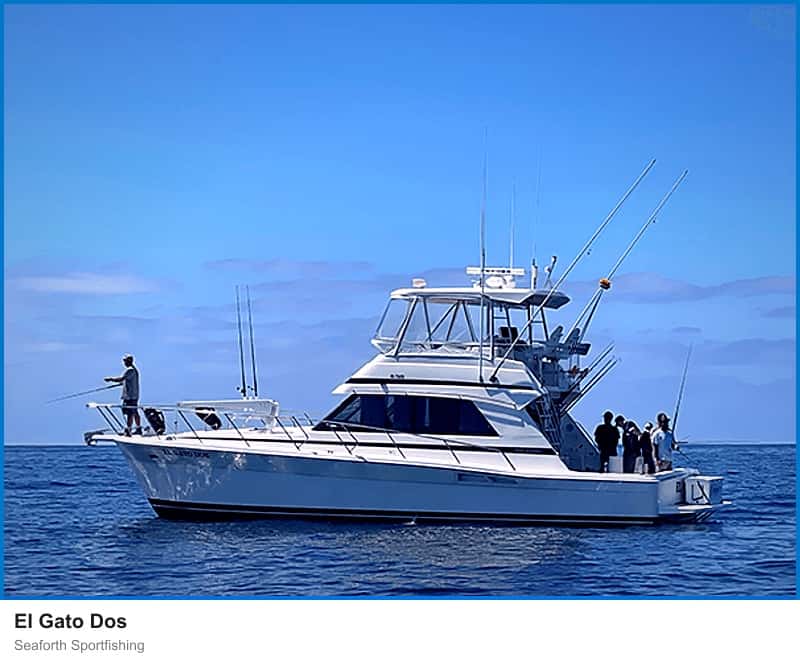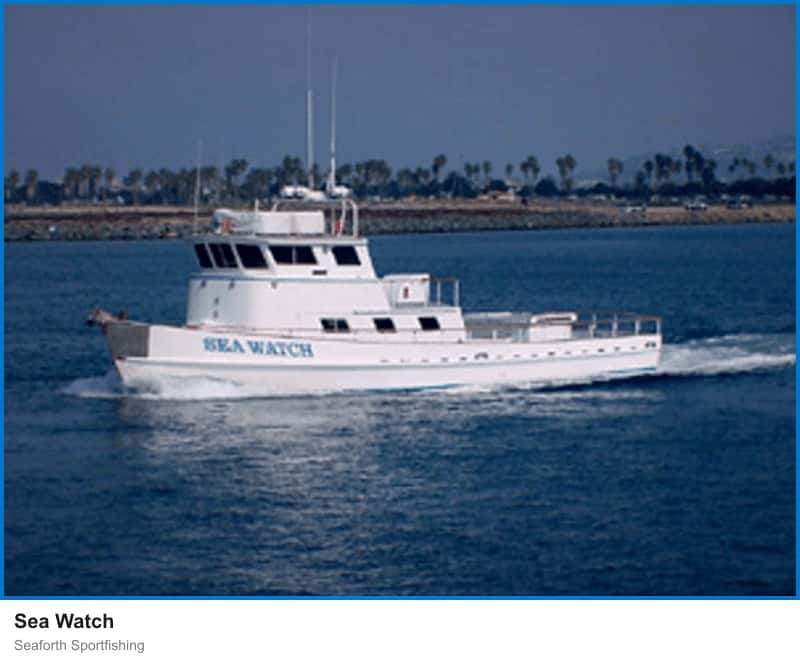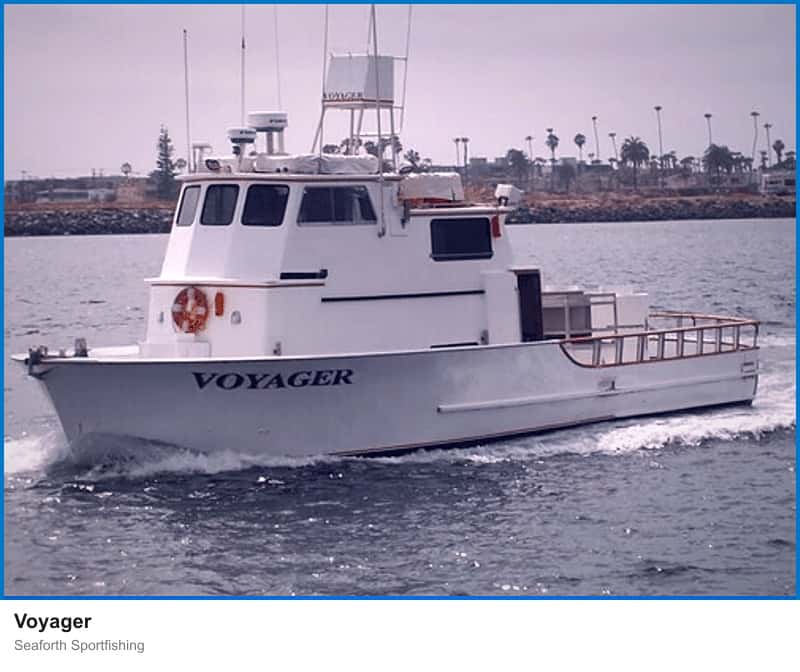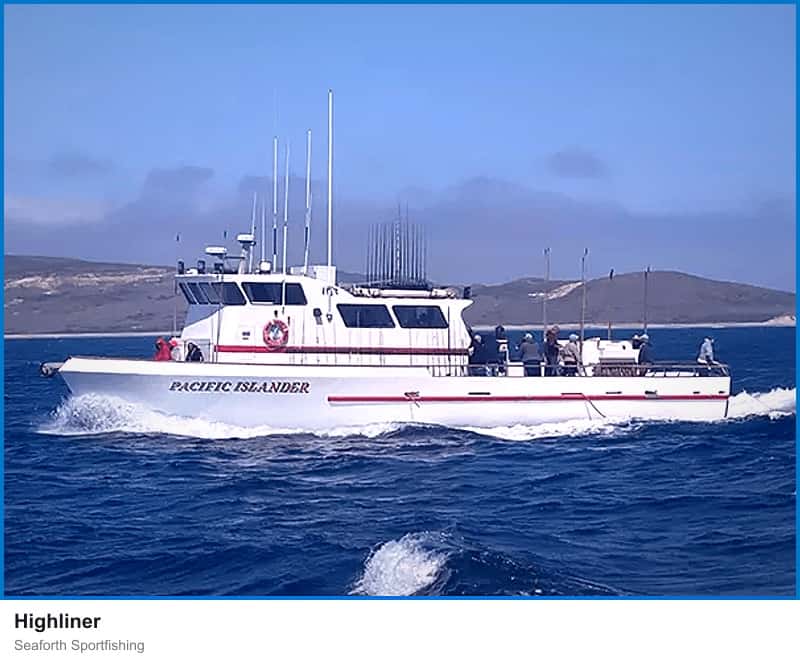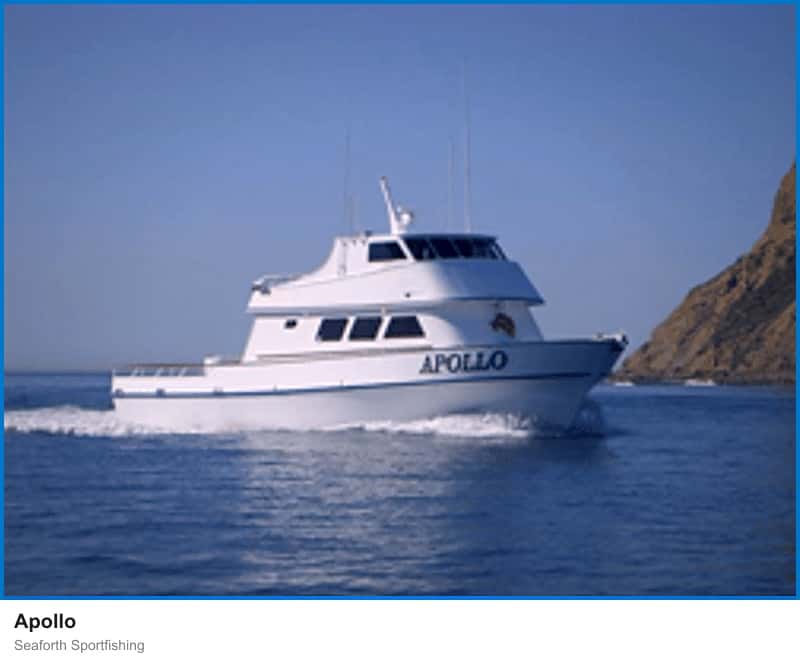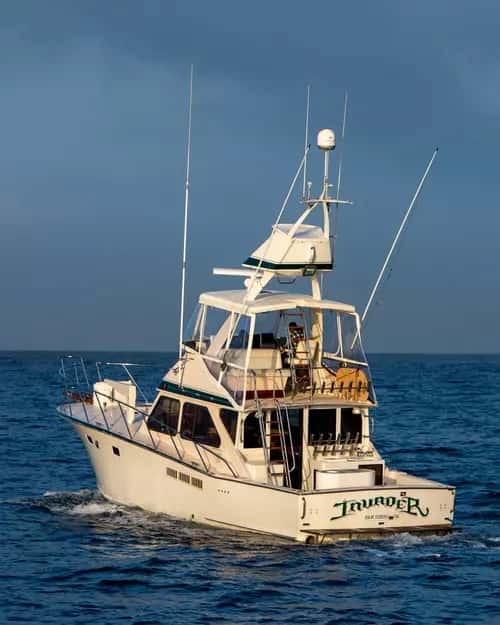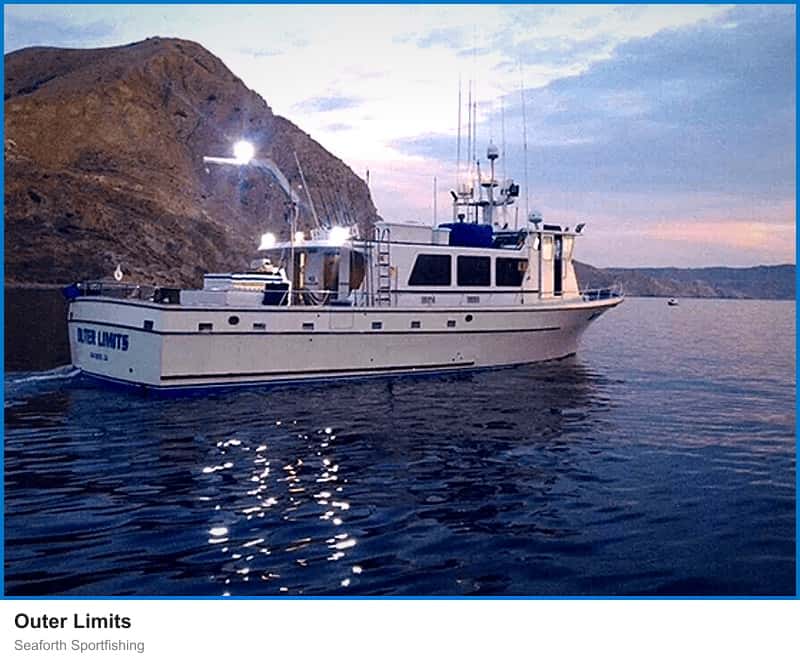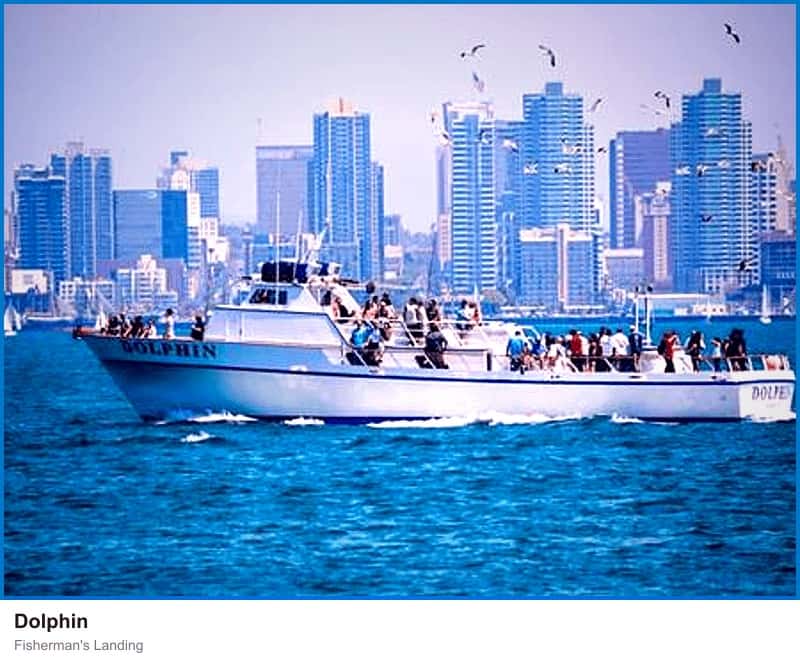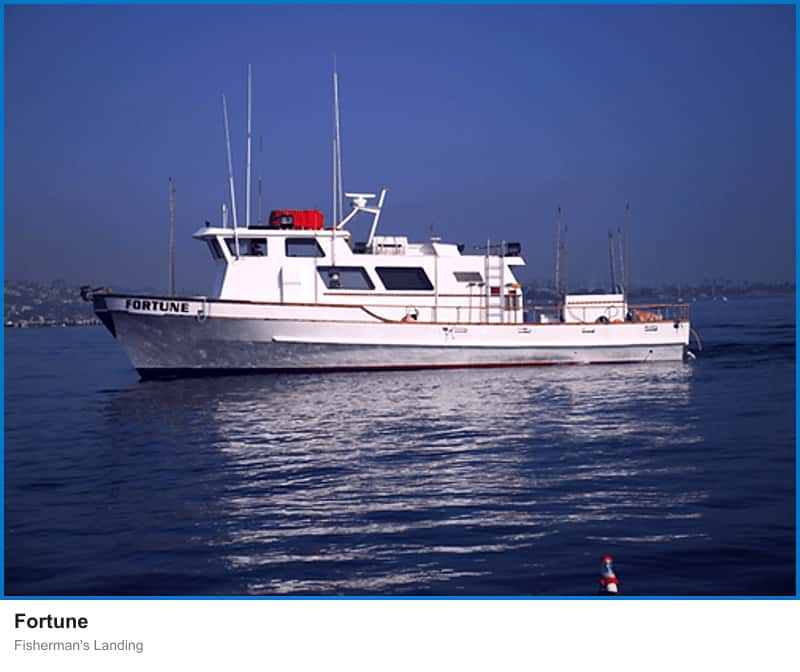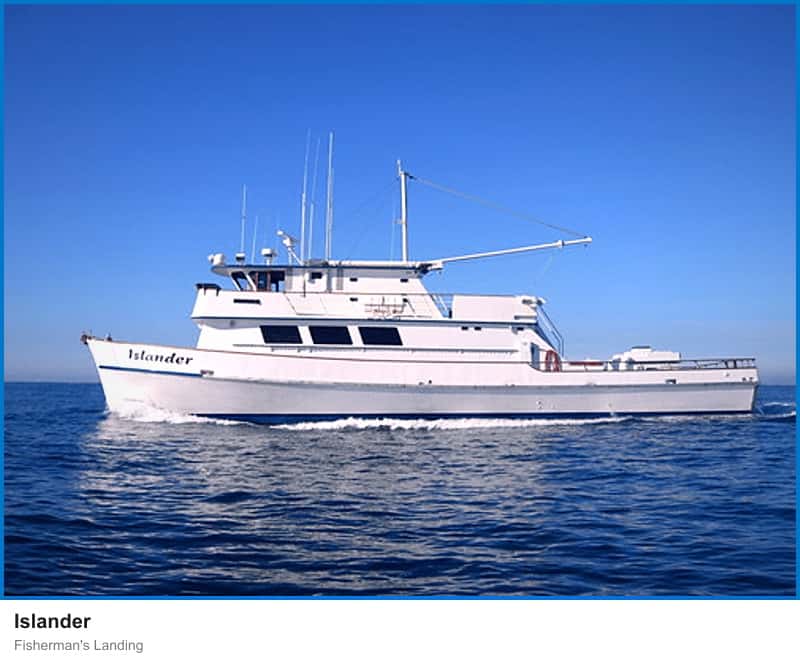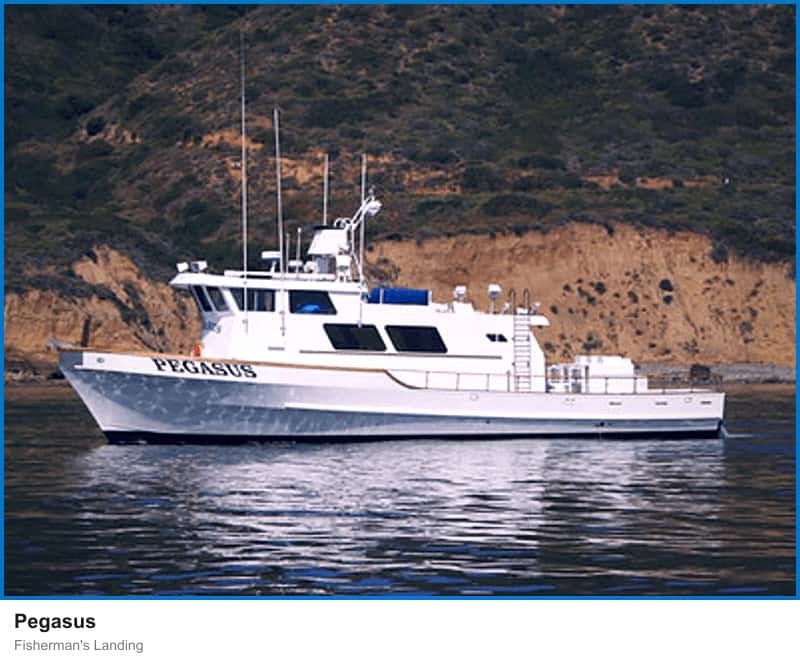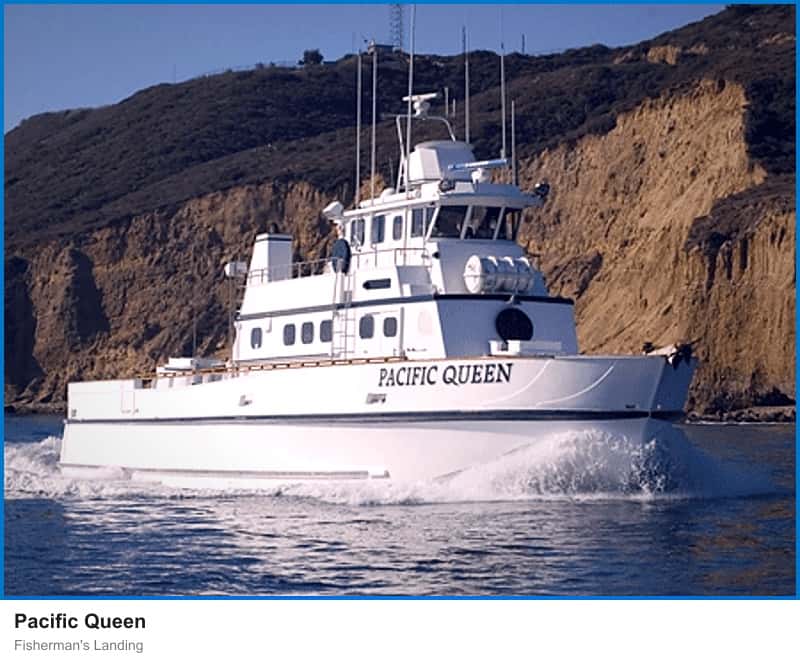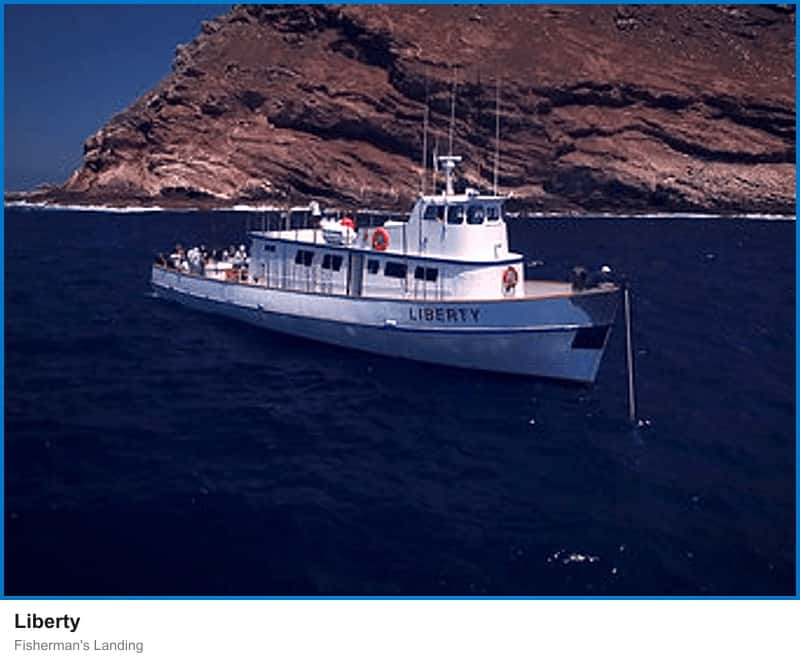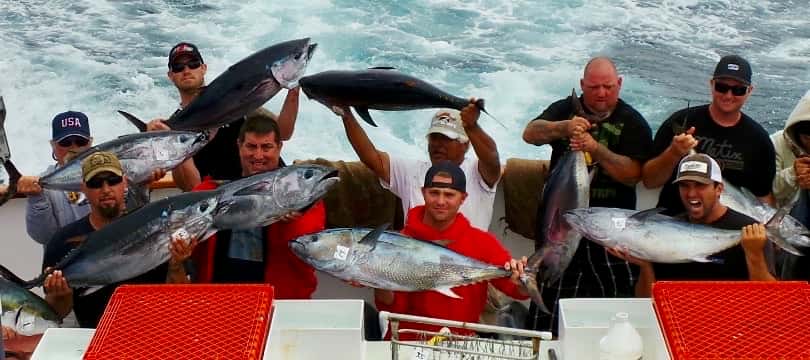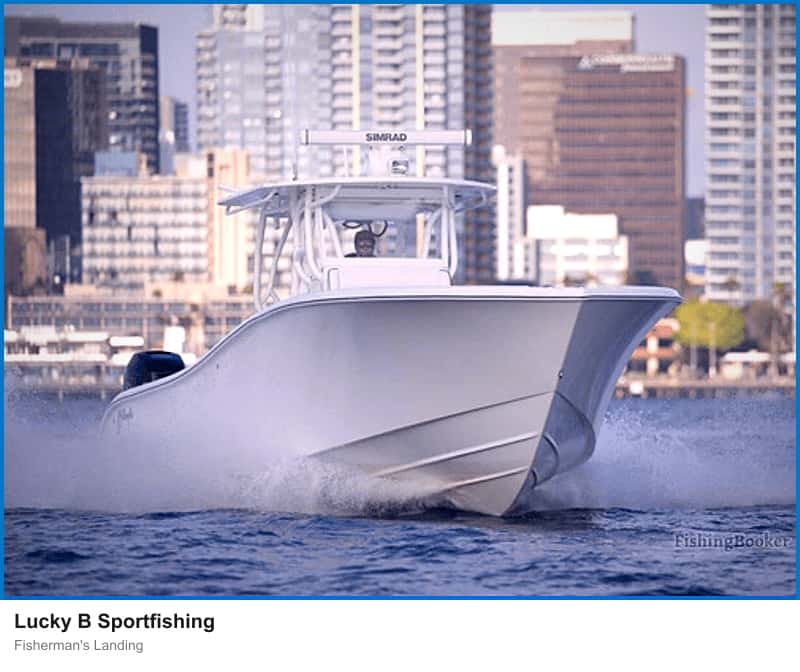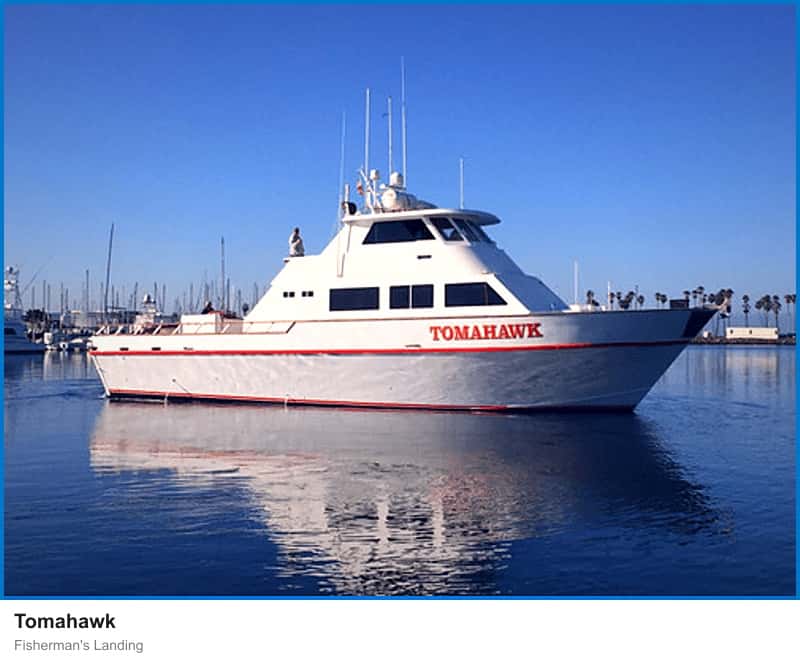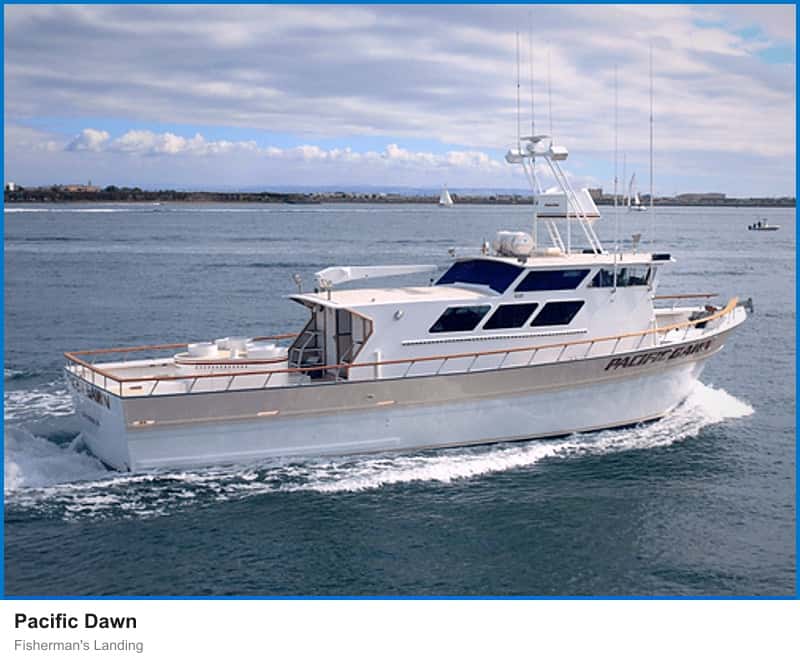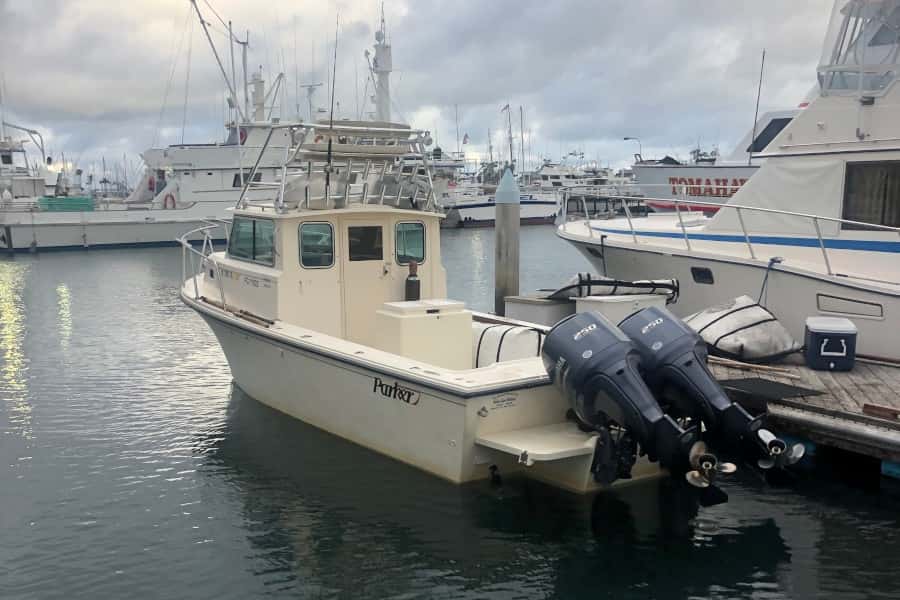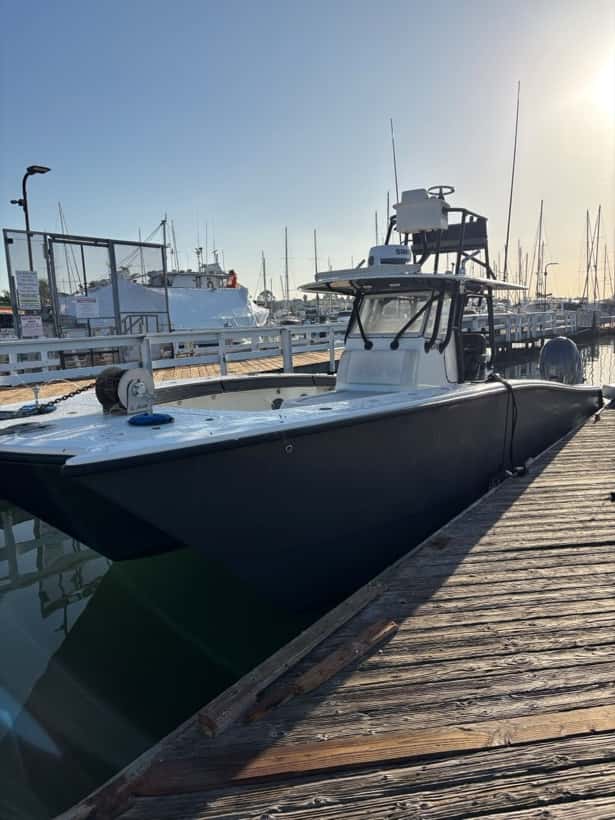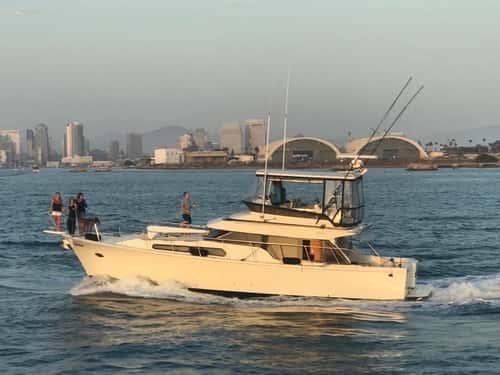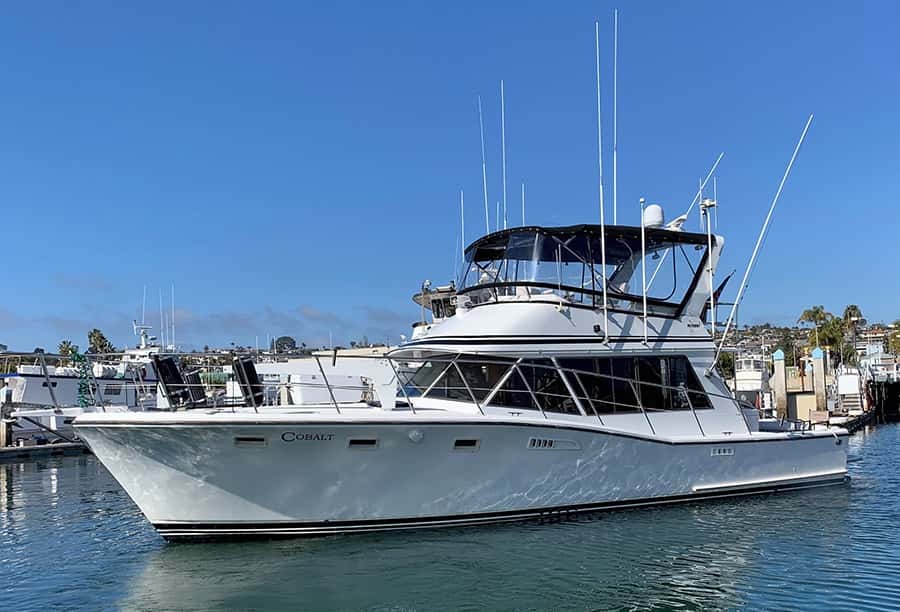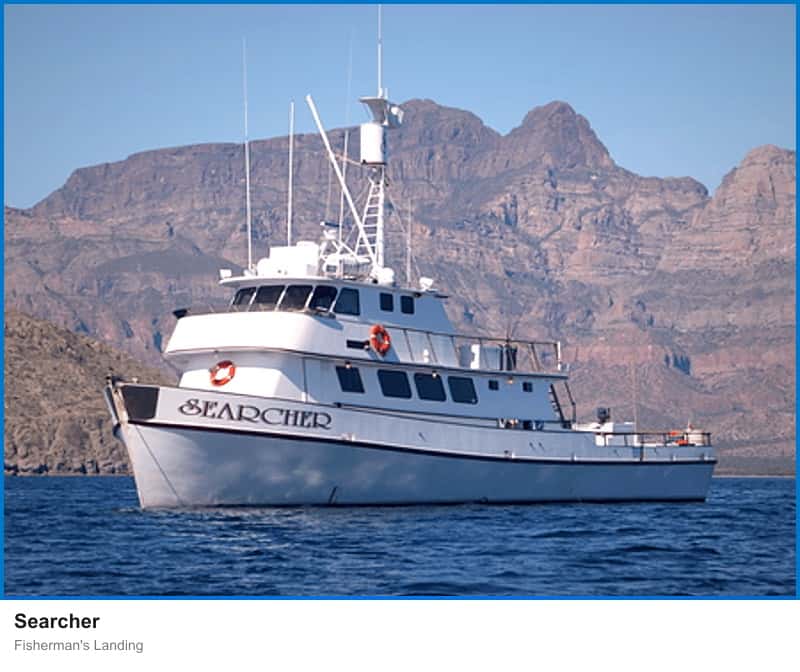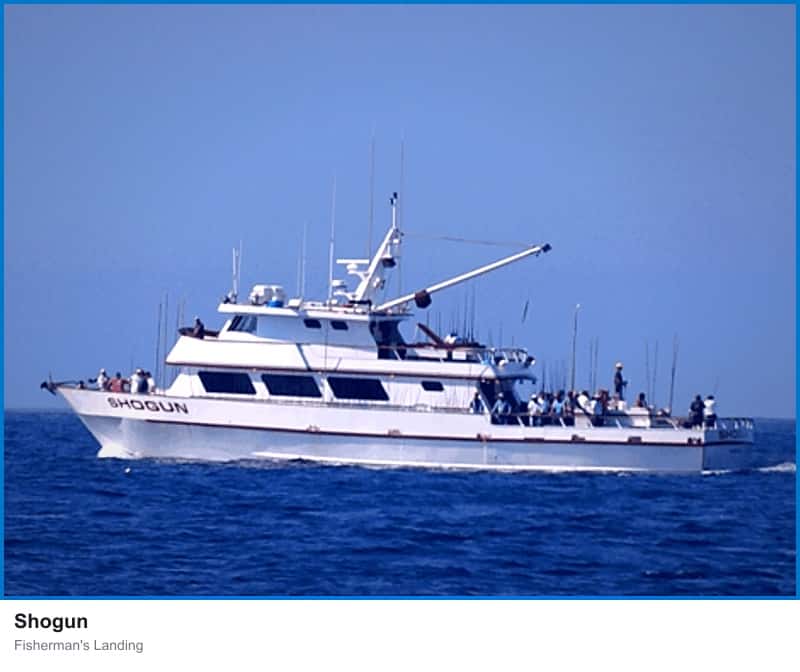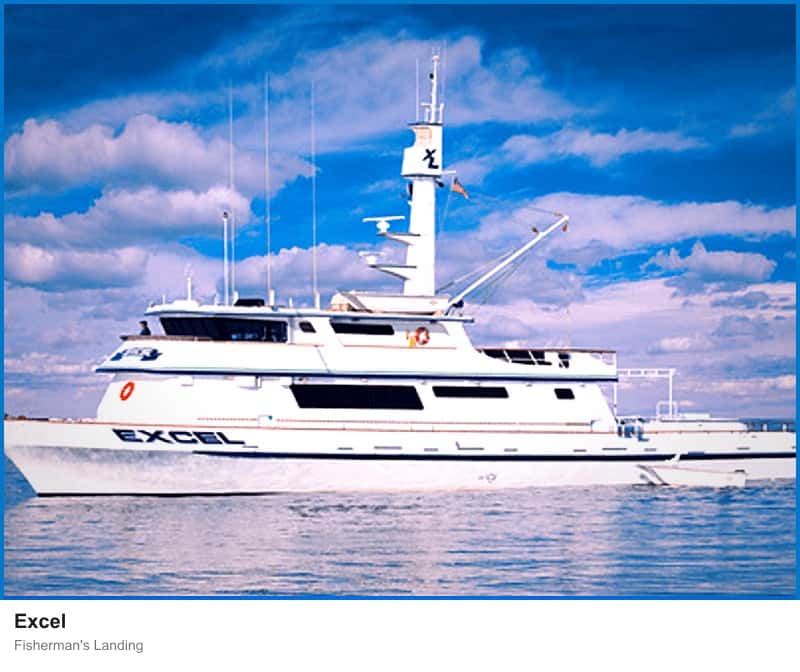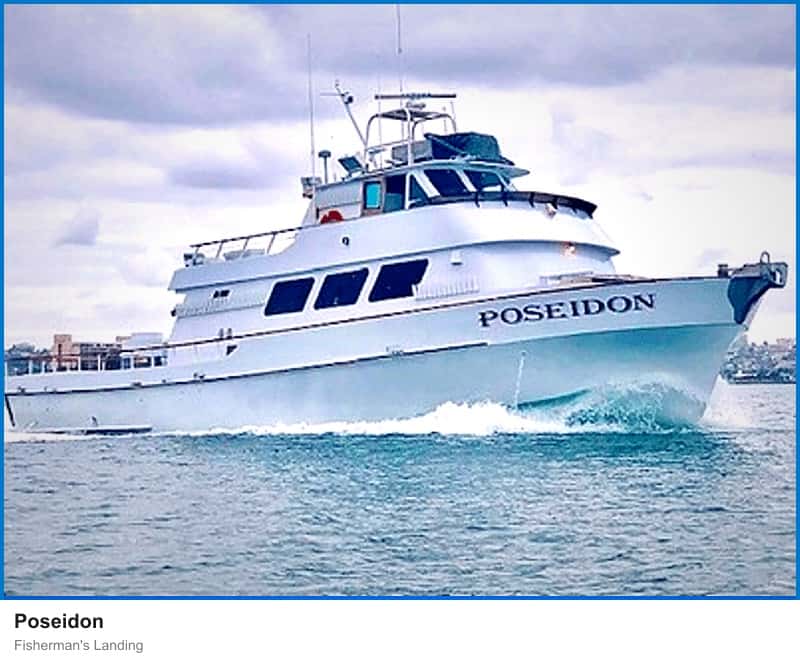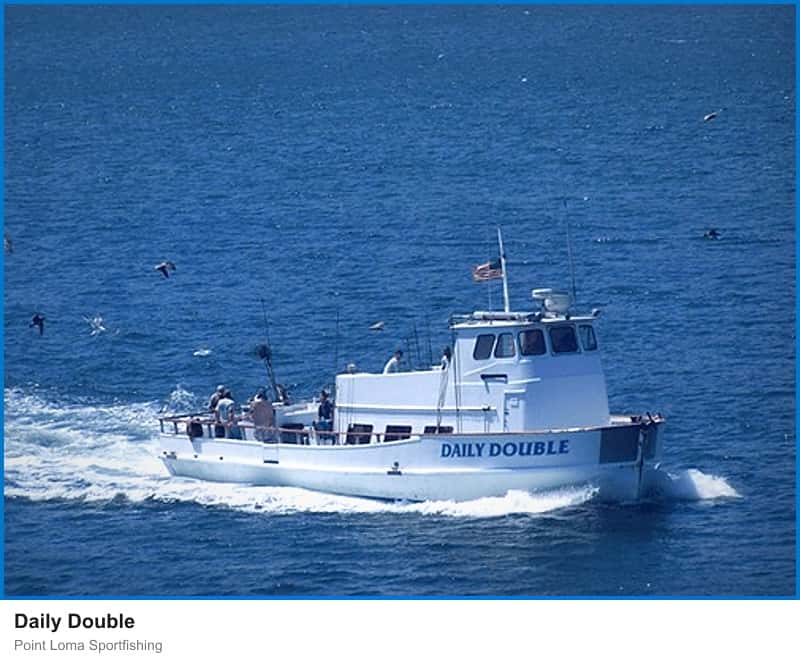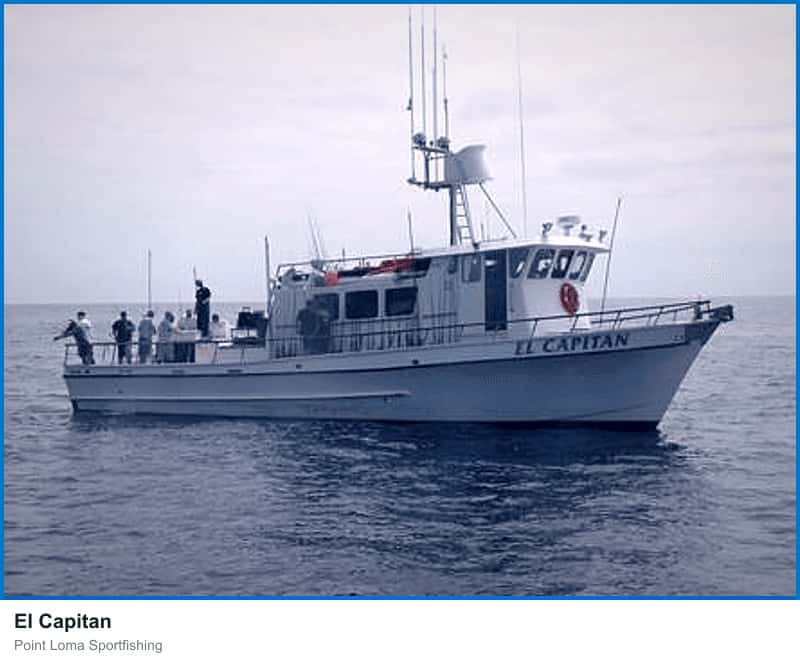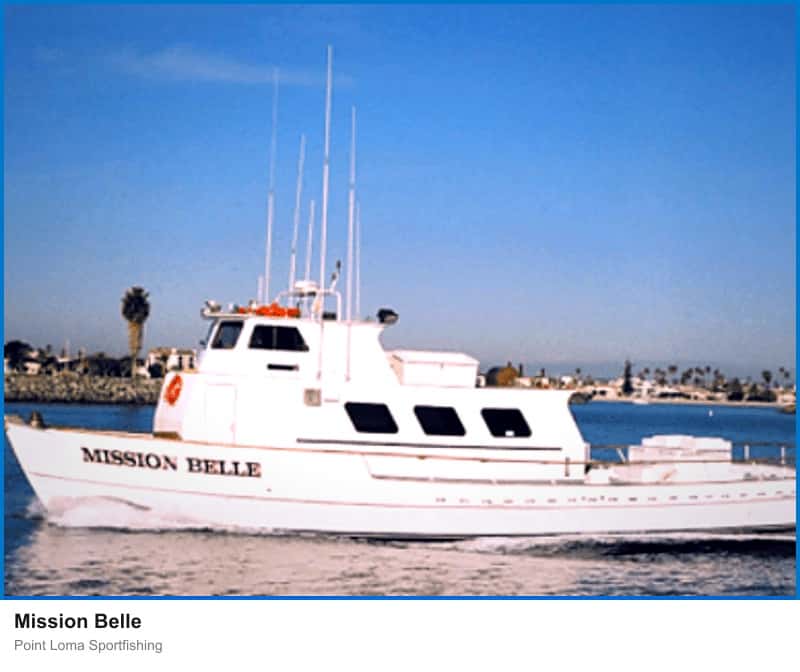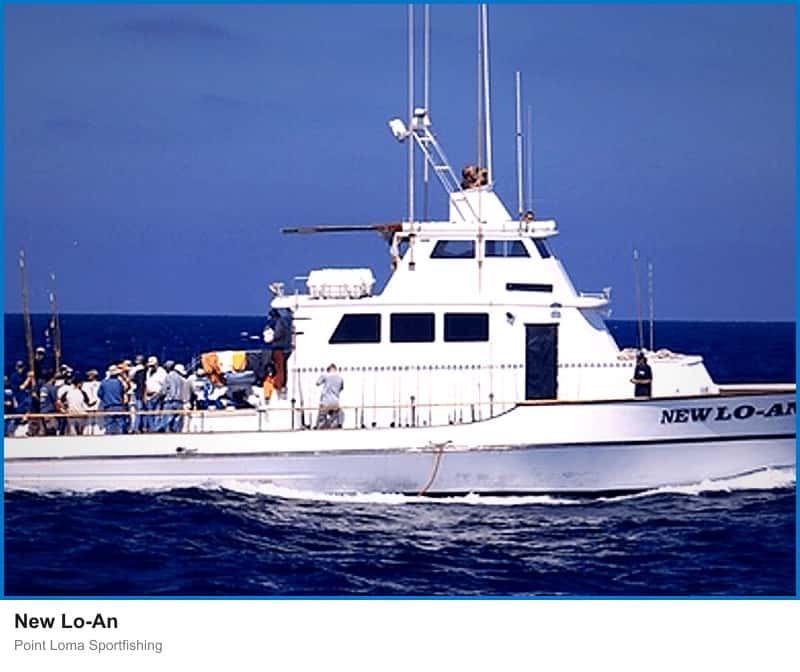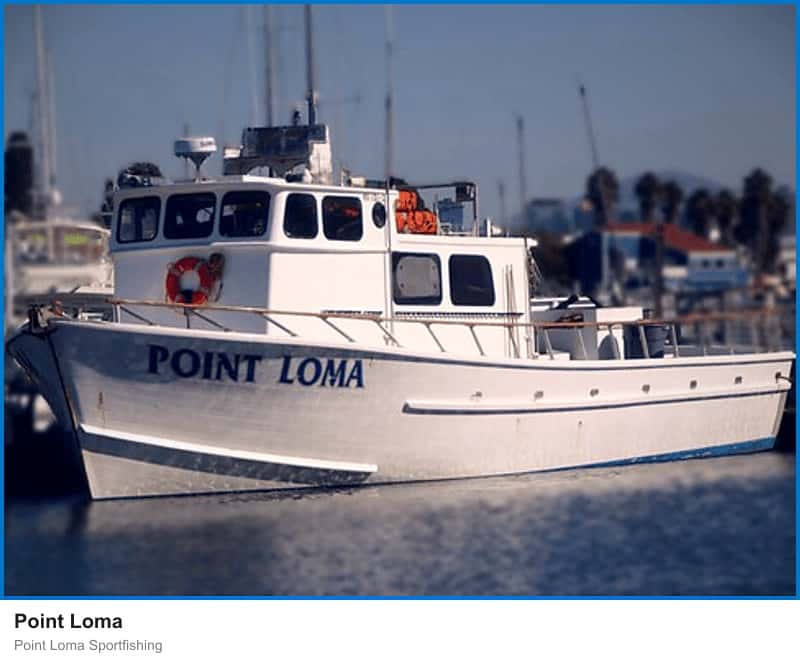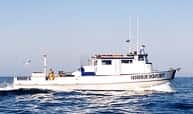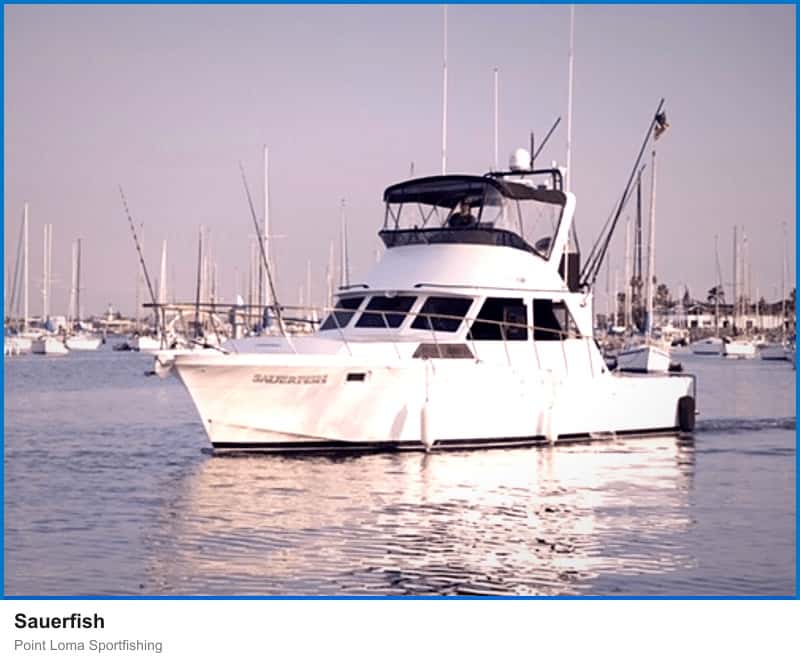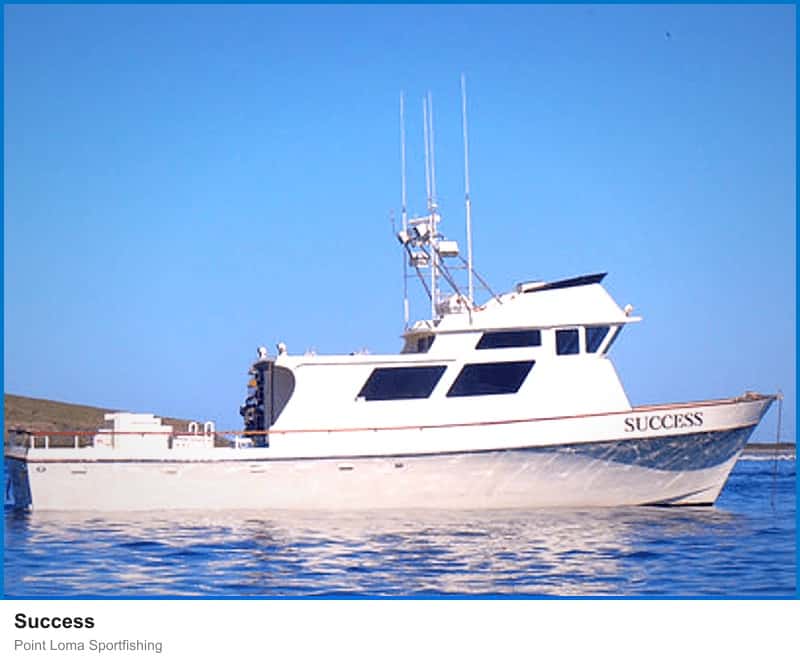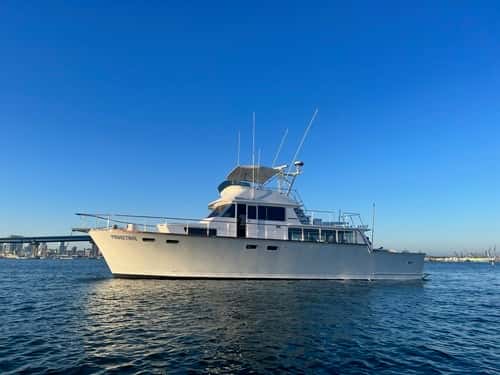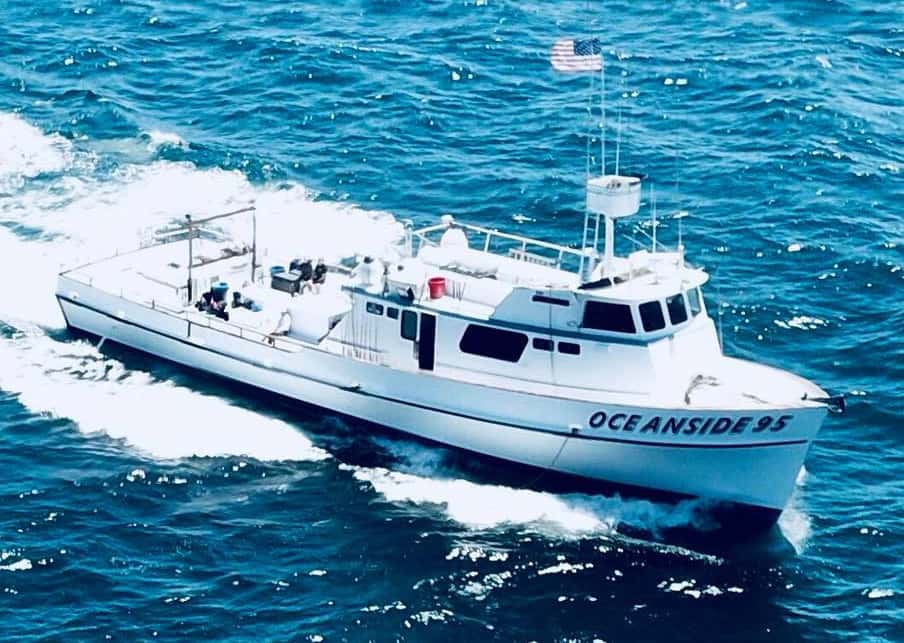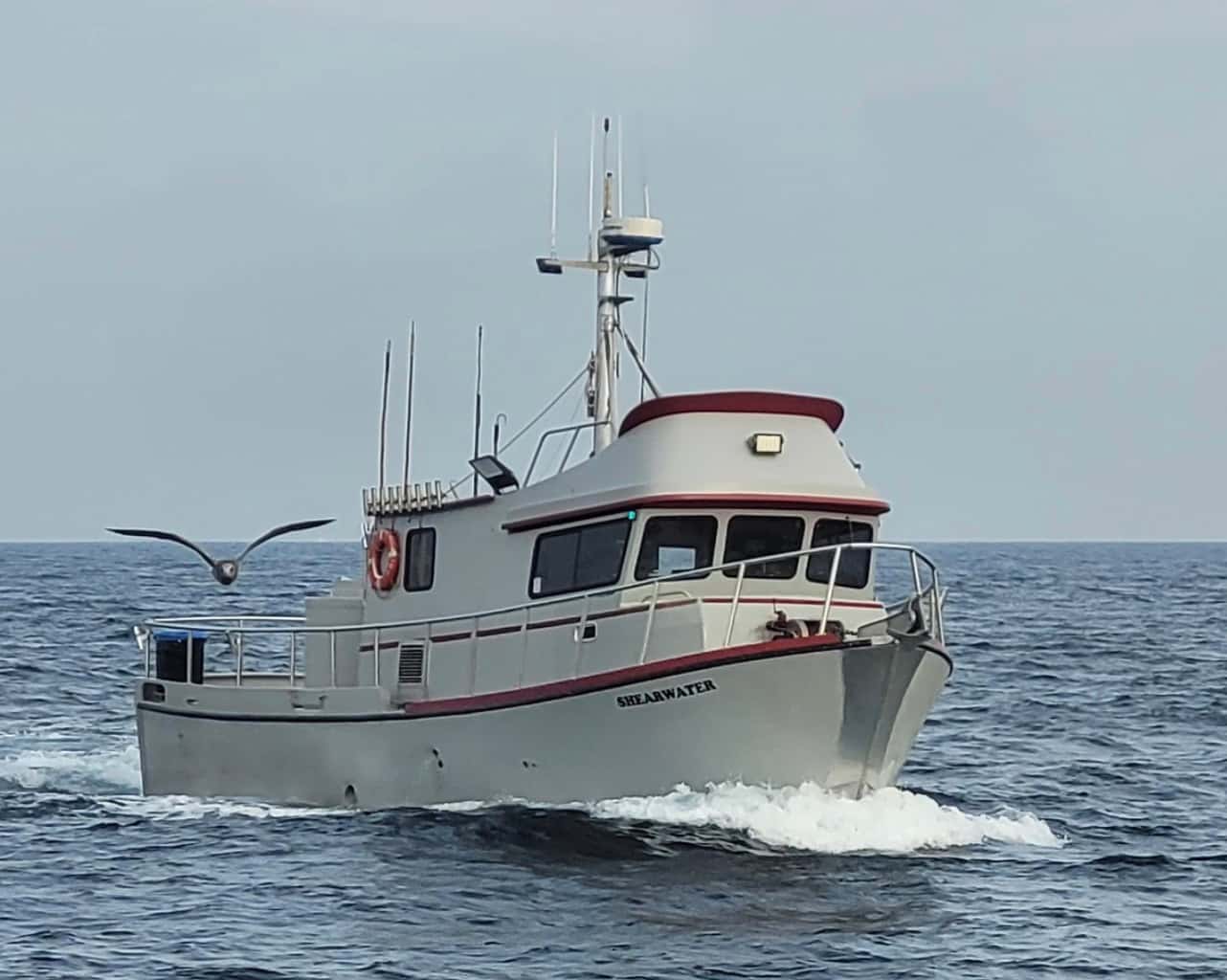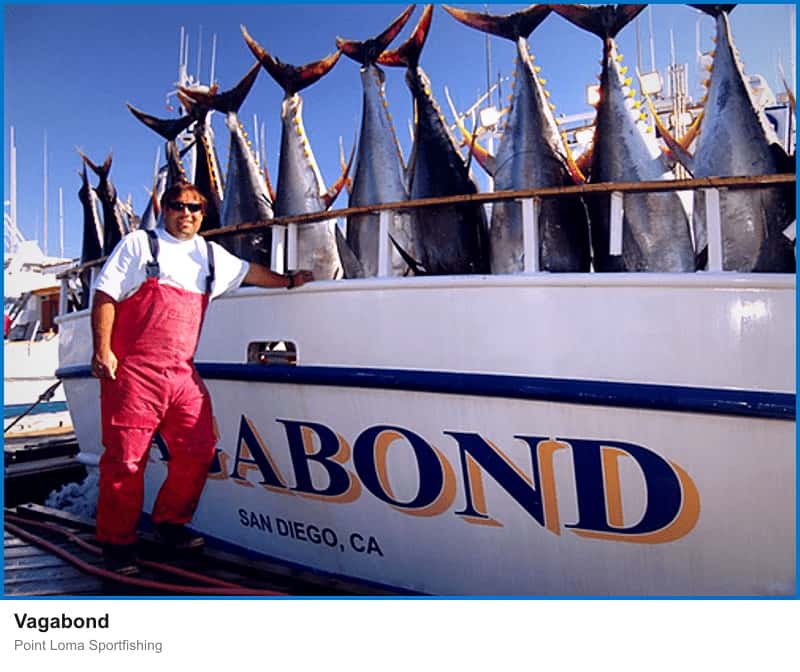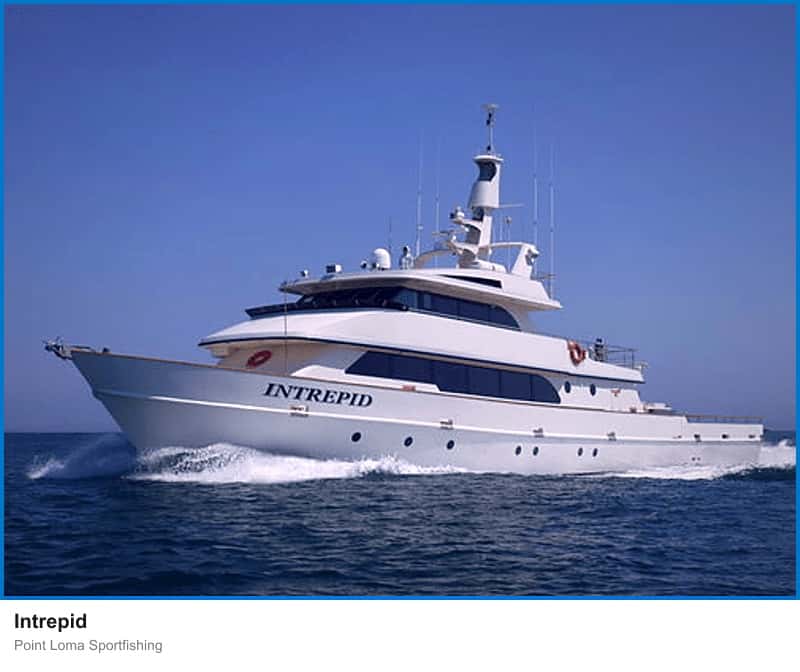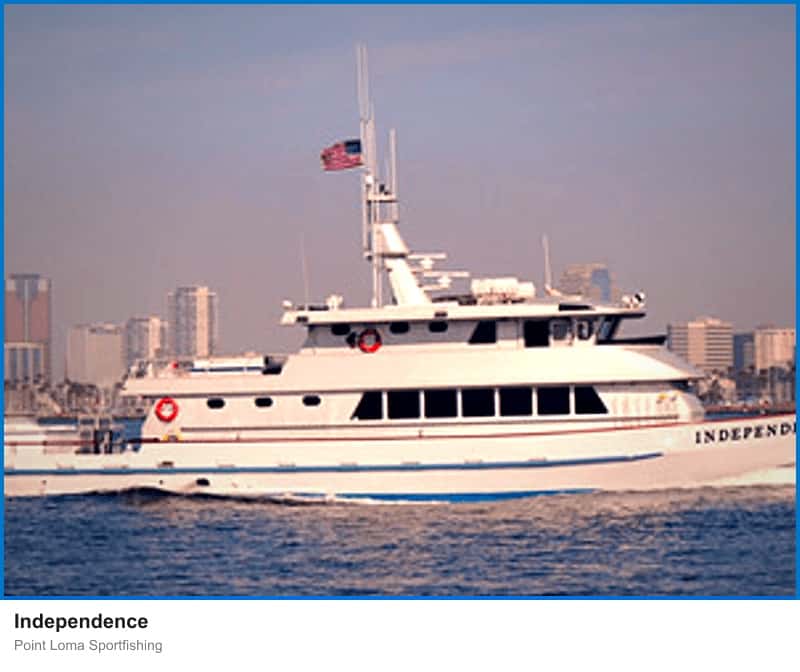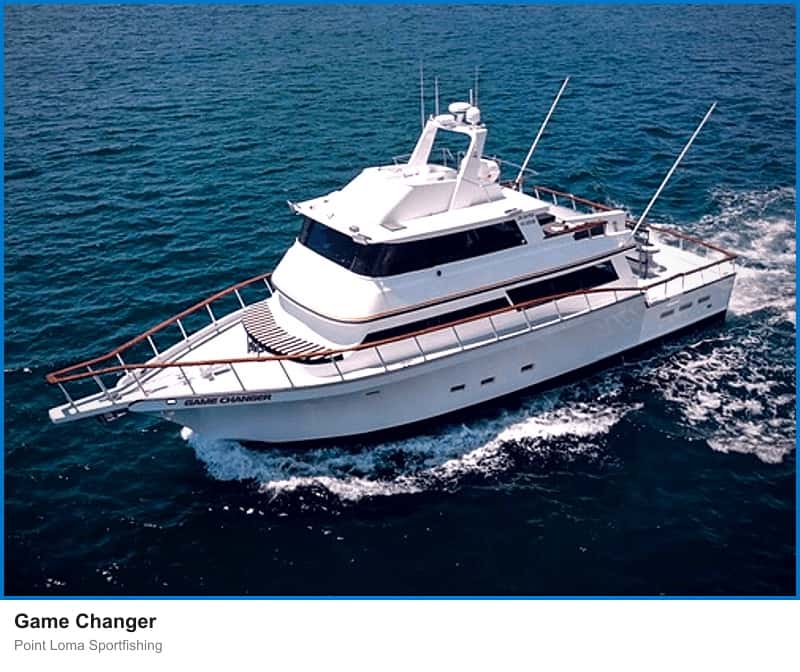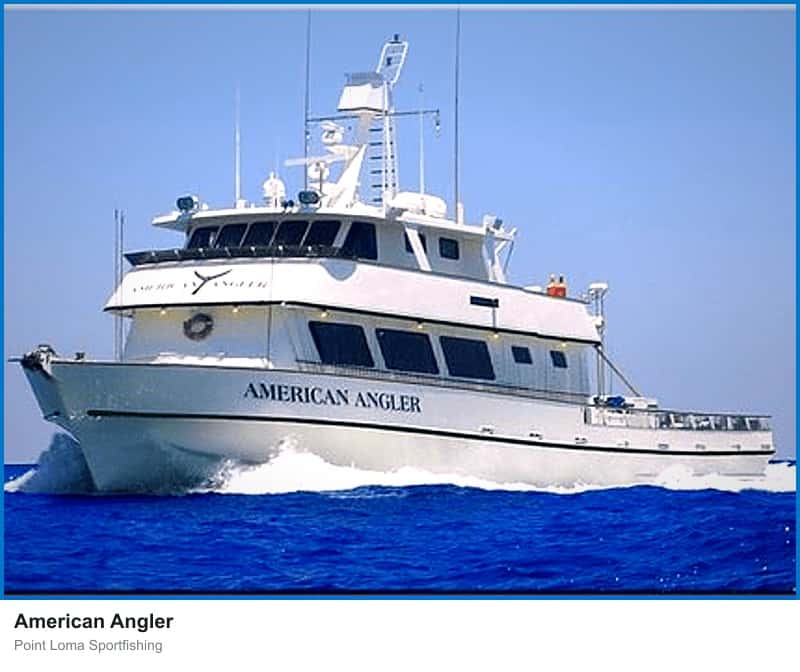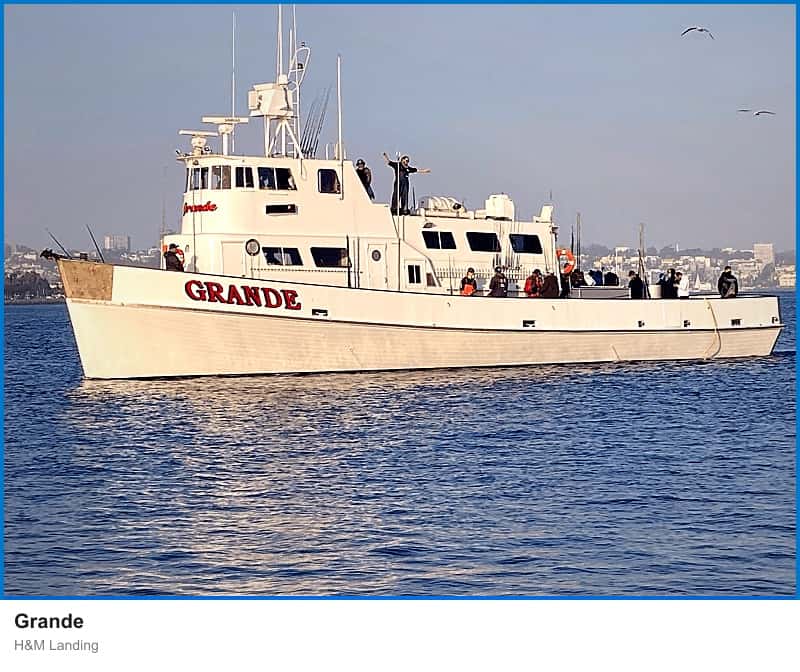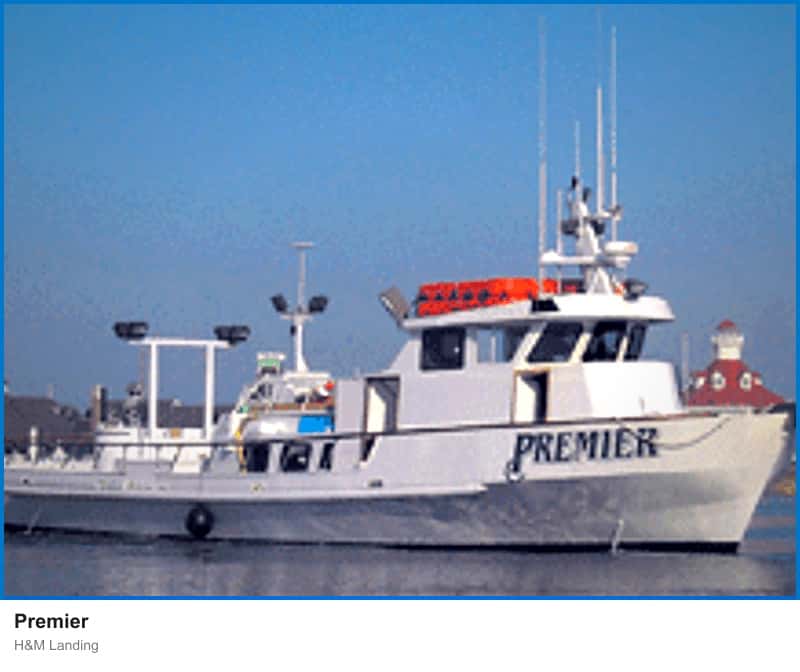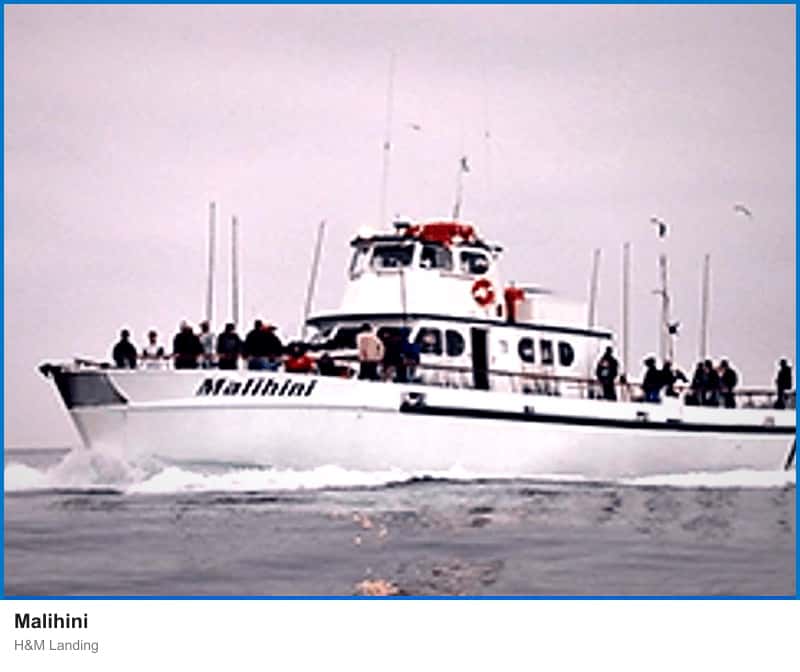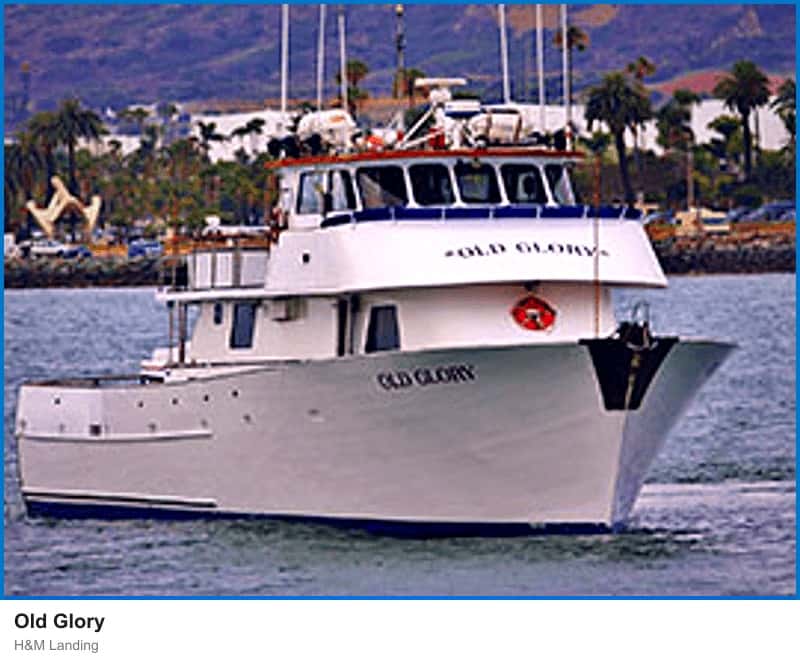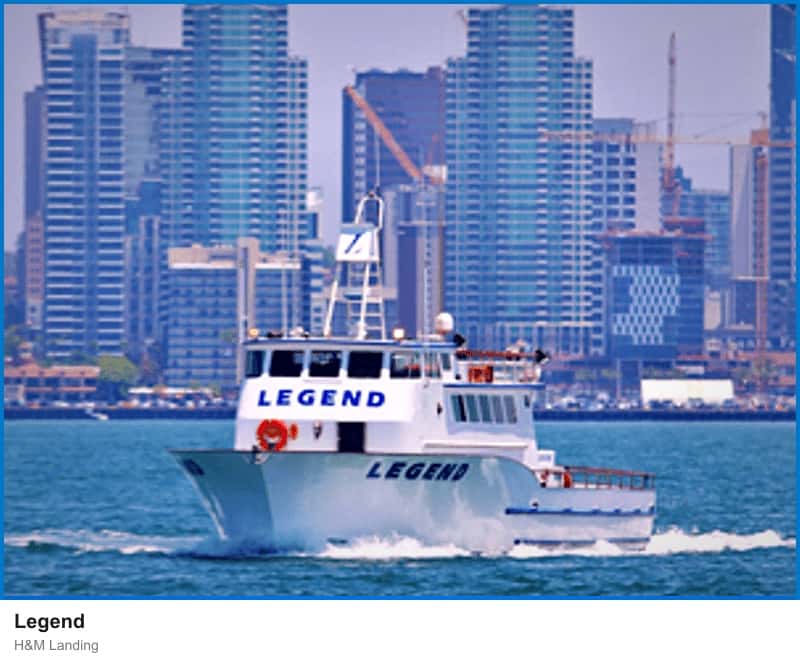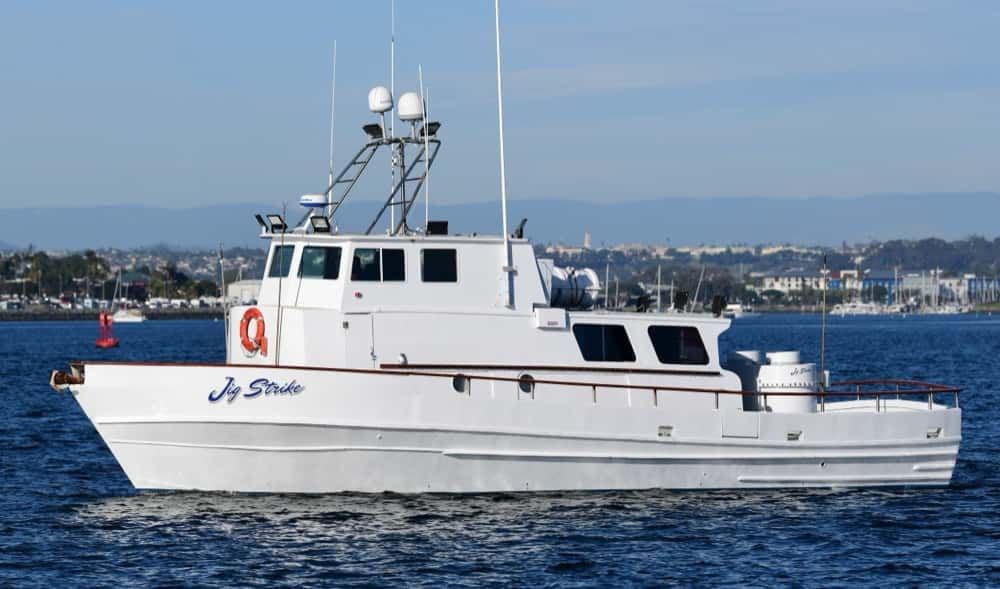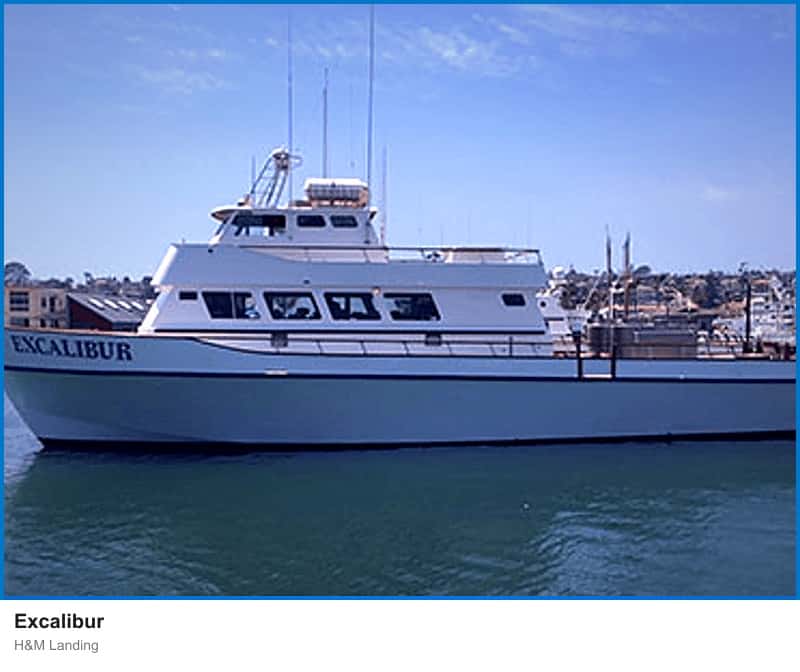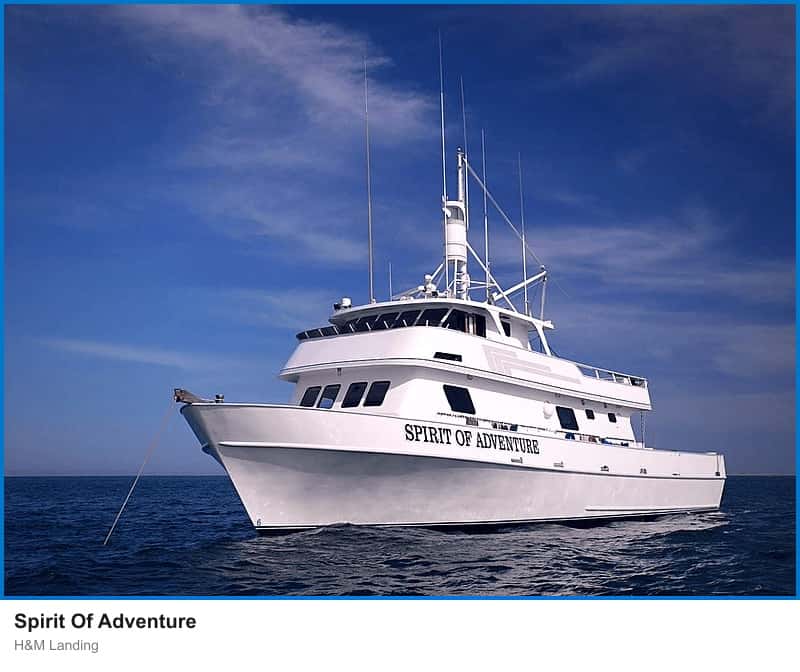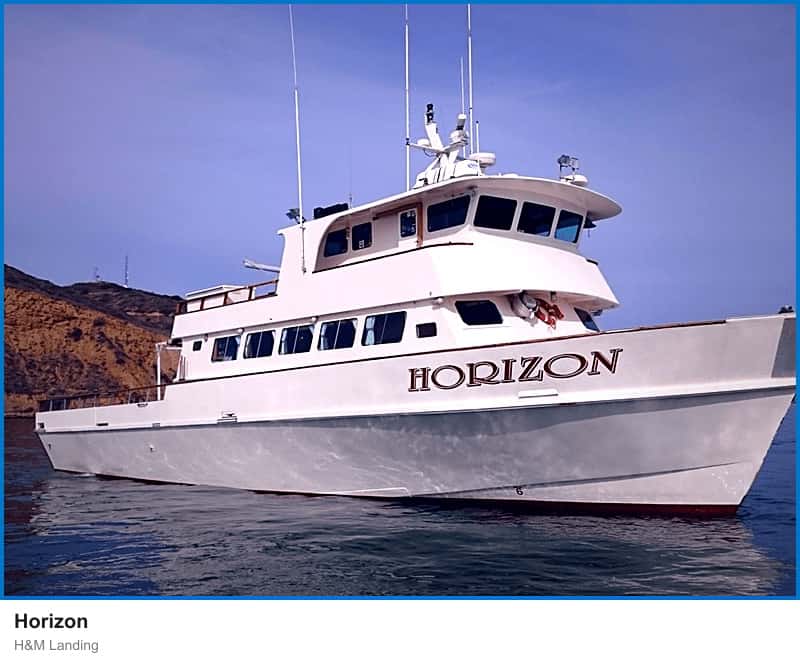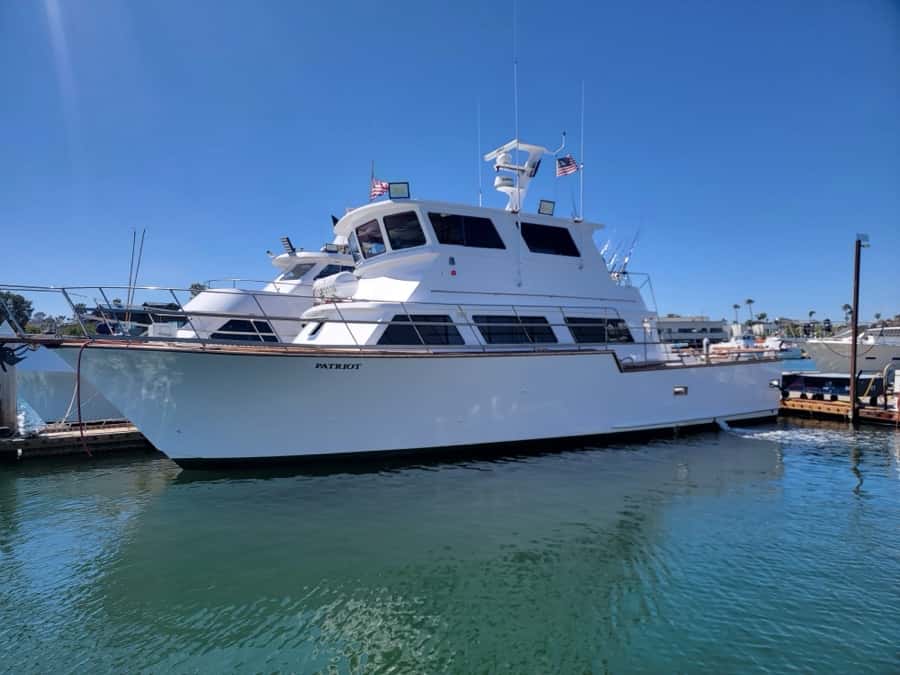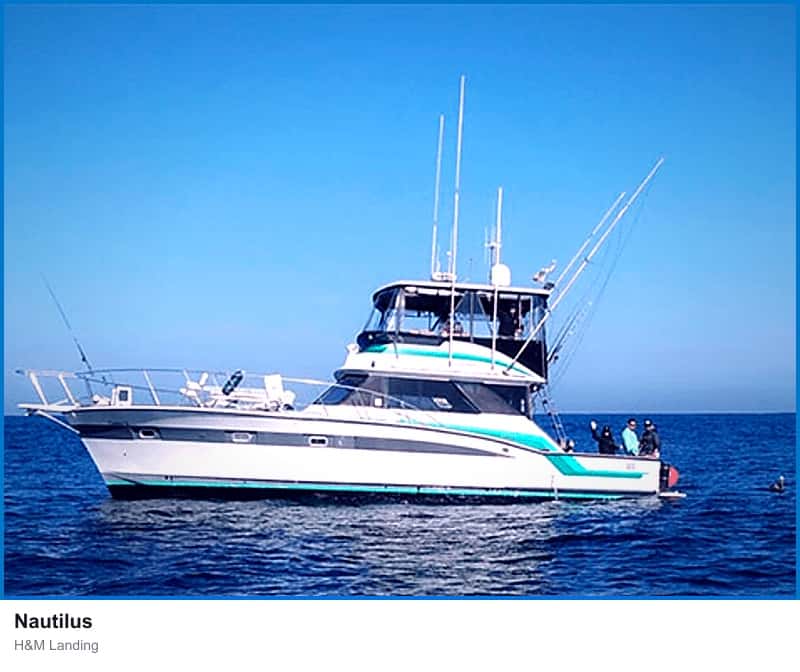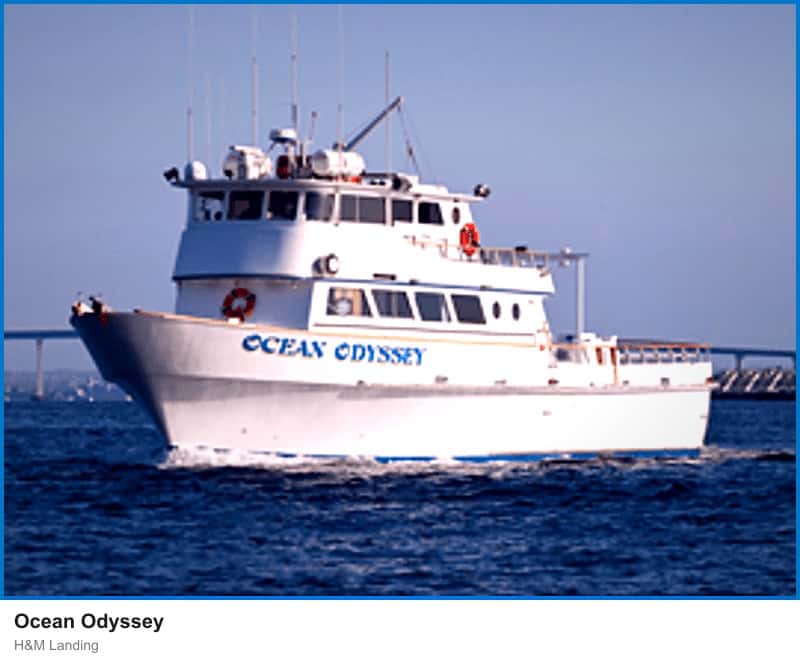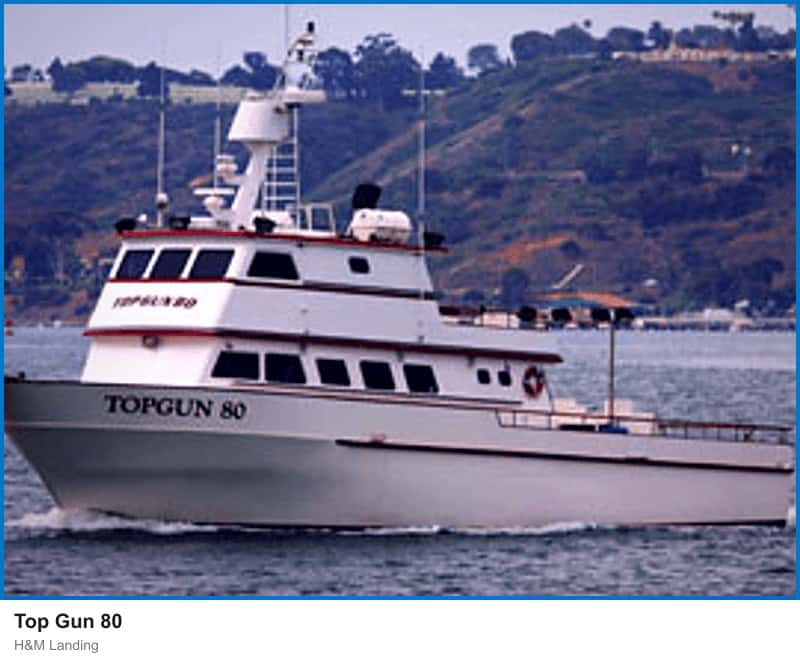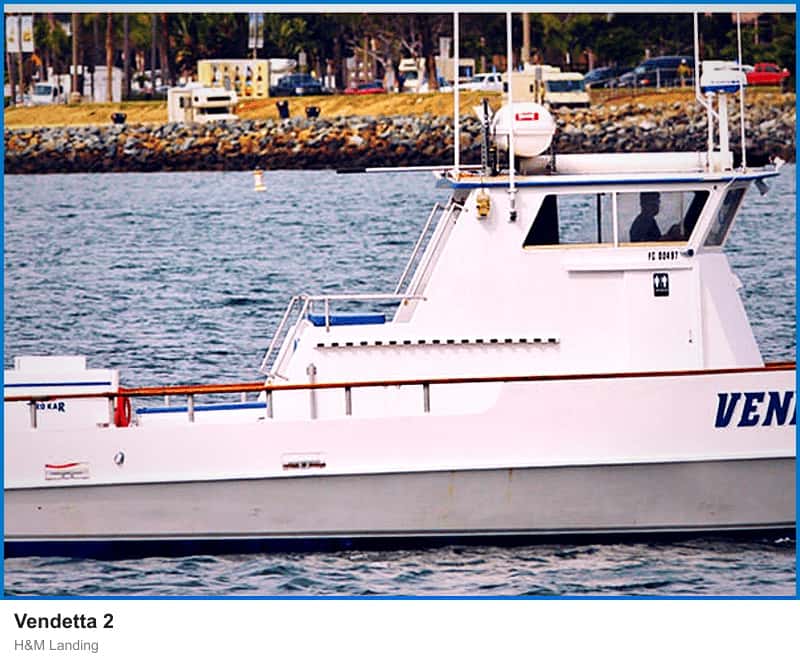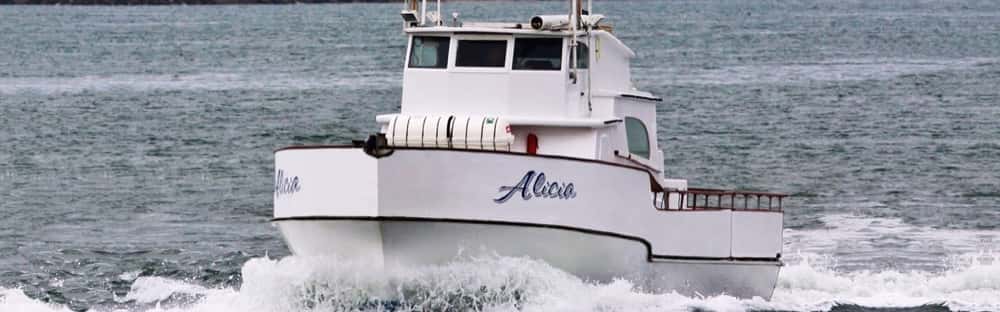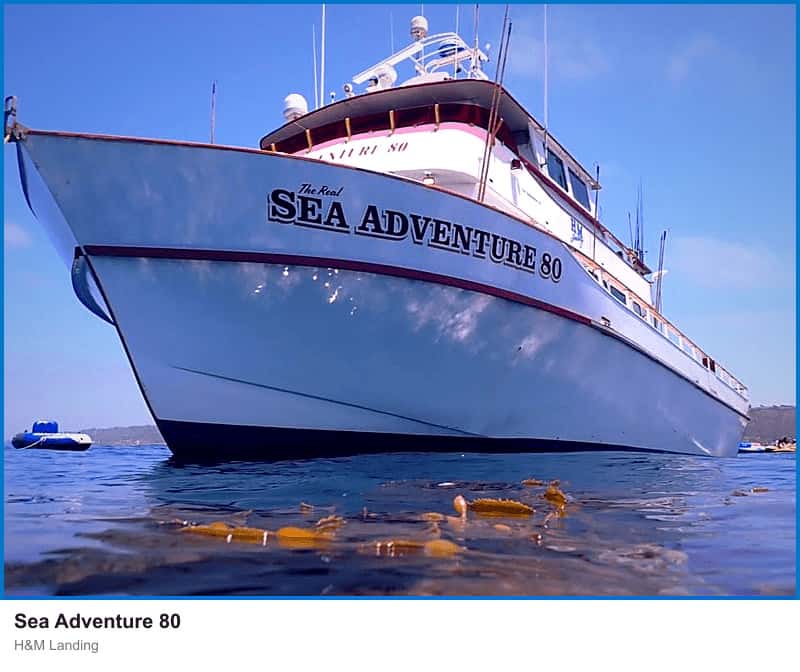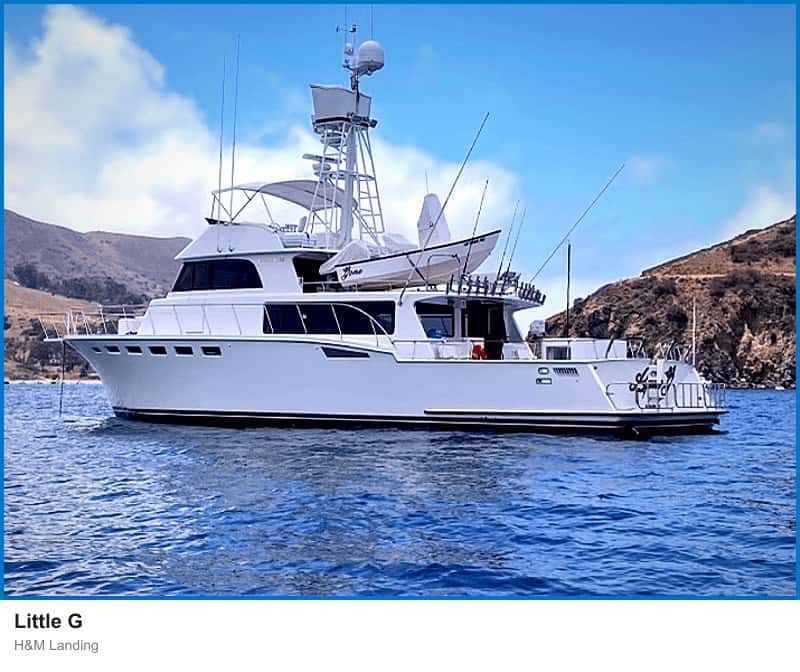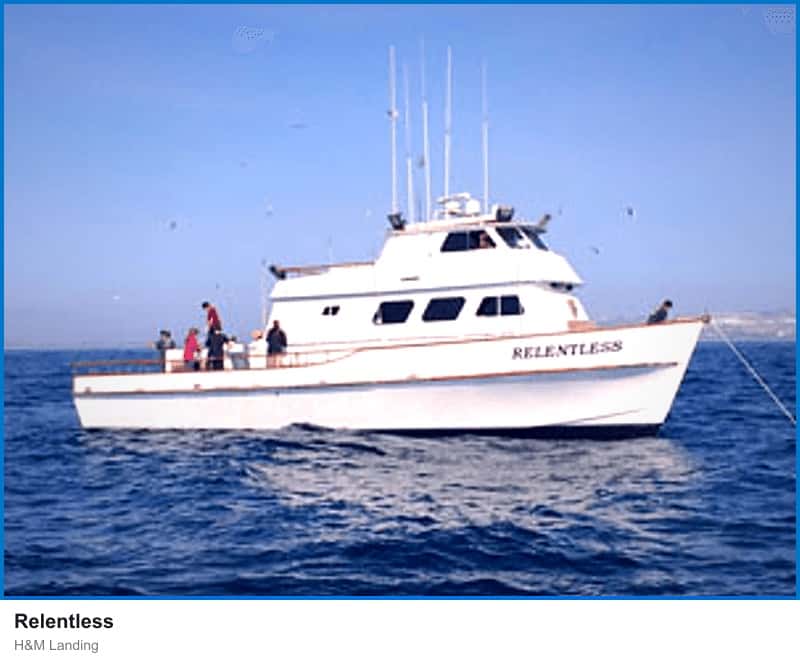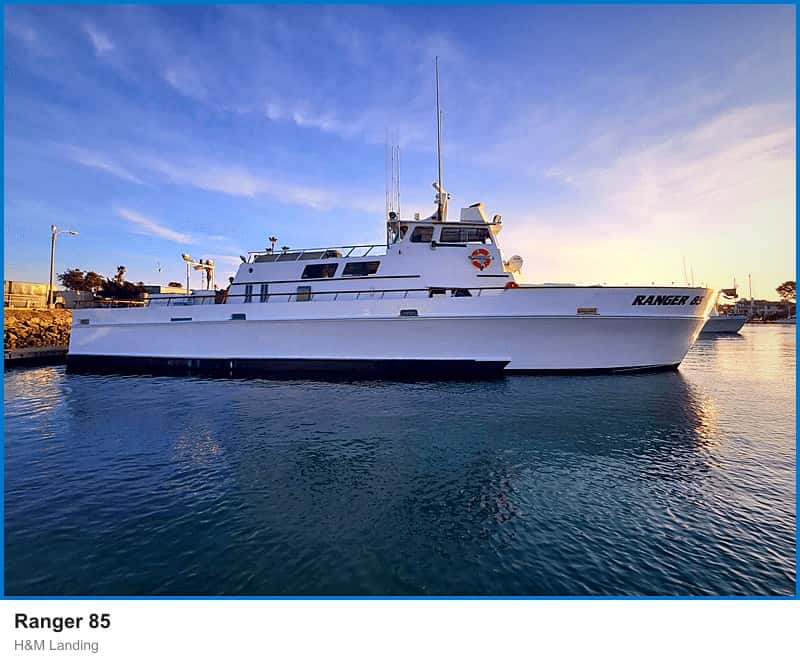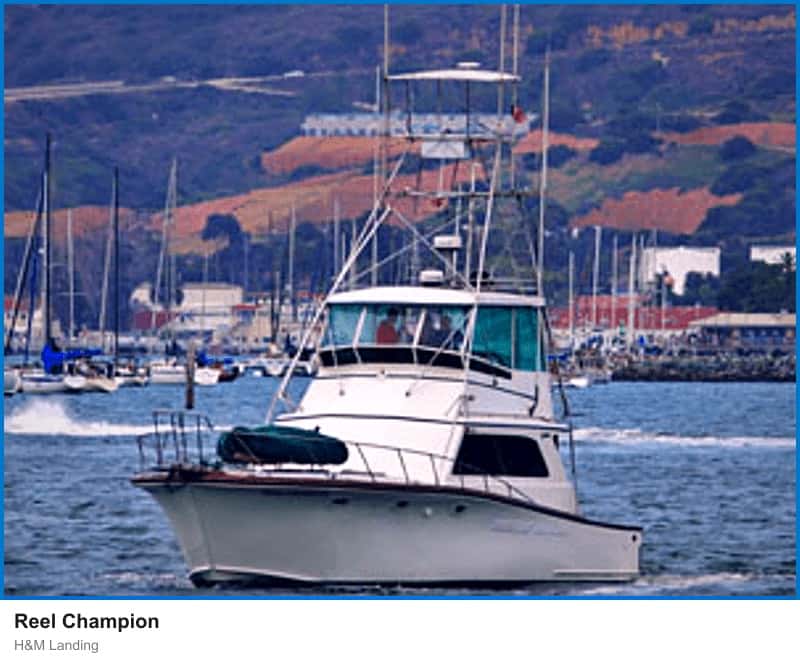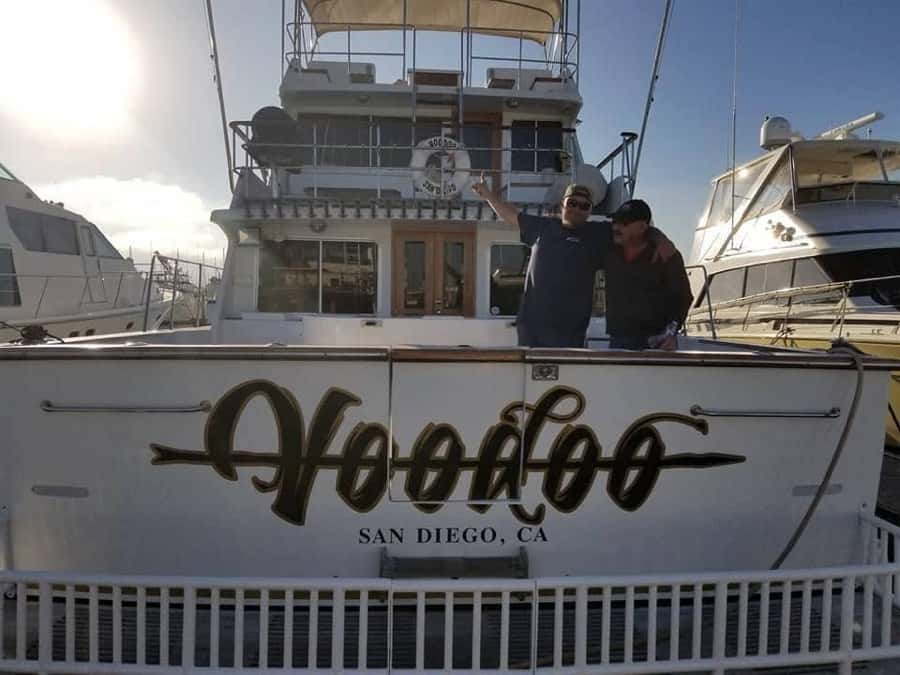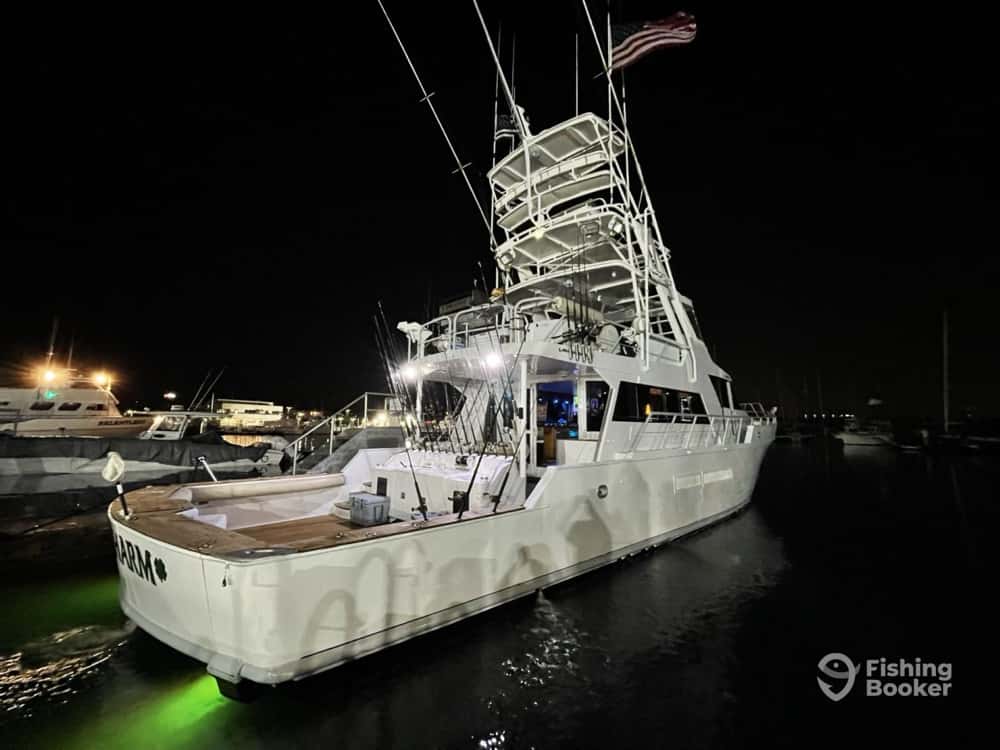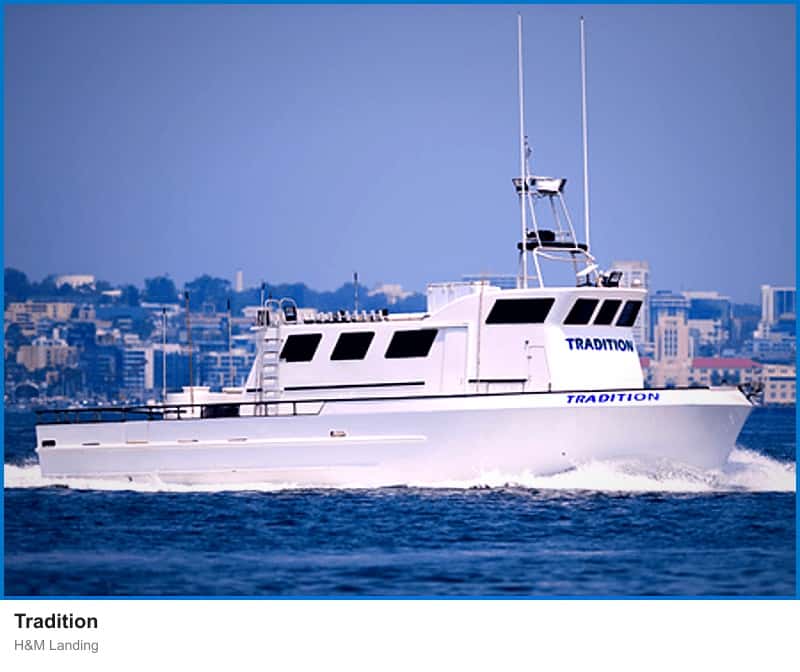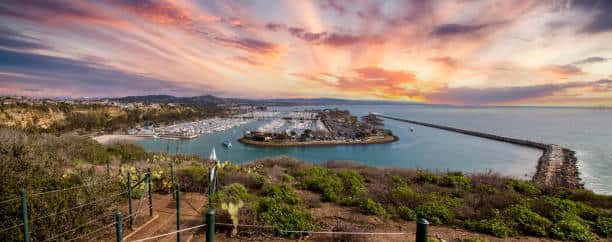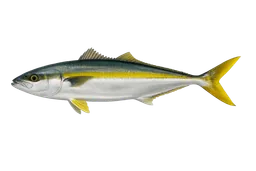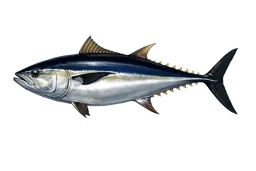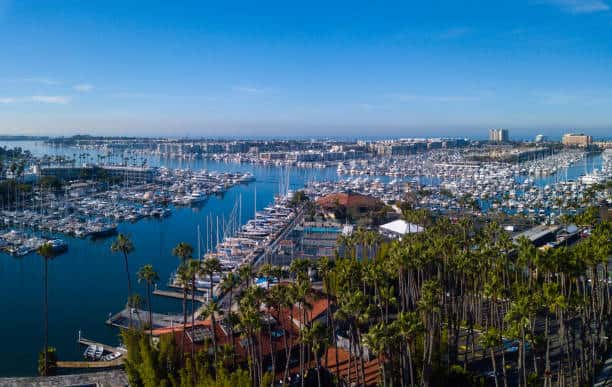

San Diego is the offshore fishing capital of the West Coast. Four active sportfishing landings work two harbors — Point Loma (Fisherman's, H&M, Point Loma Sportfishing) and Mission Bay (Seaforth) — and the calendar barely matters: bluefin tuna hold in local water year-round, the Coronado Islands give up yellowtail every month, and the long-range fleet runs 5- to 16-day trips into Baja chasing 200-pound cow bluefin. Trip menu runs from sub-$100 half-day rockfish runs to multi-thousand-dollar long-range expeditions — broader than anywhere else on the coast.
The fleet hubs
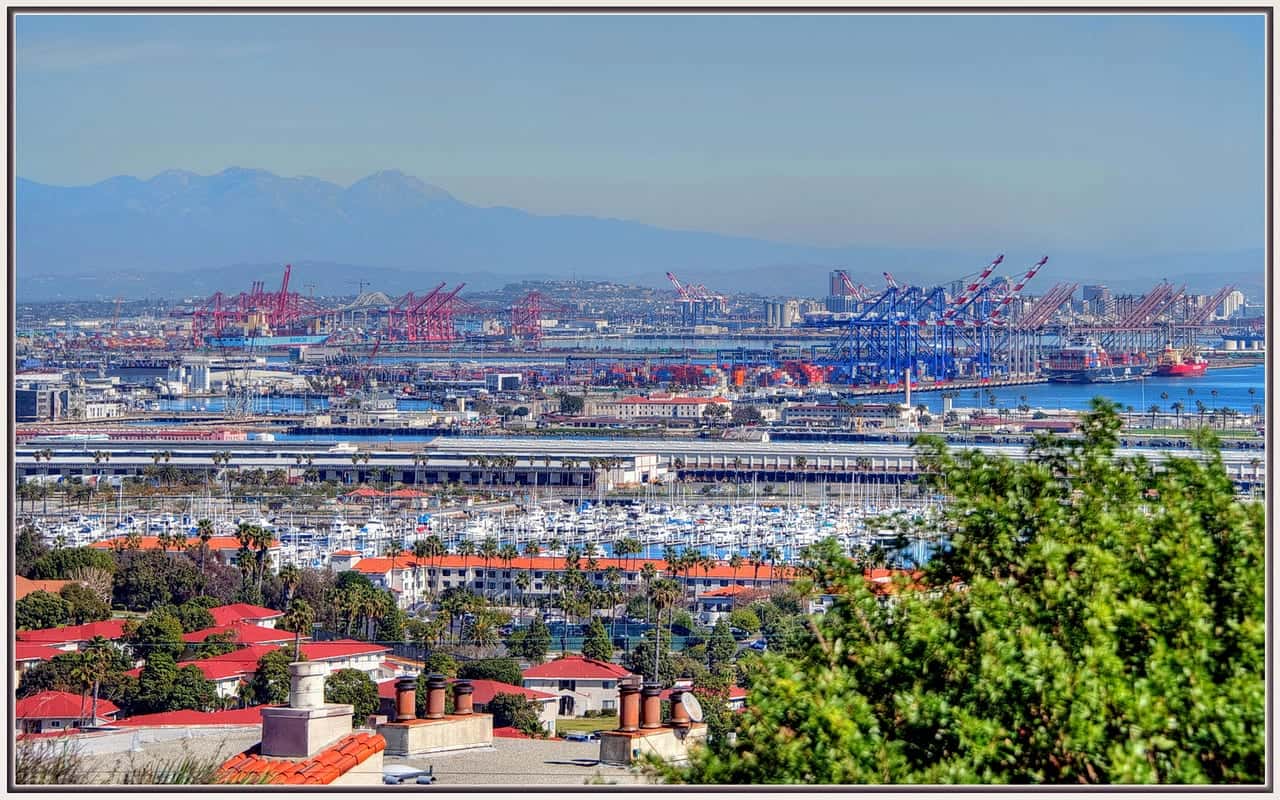
Today, Point Loma hosts "the biggest sport fishing fleet in Southern California" with "half a dozen small-boat marinas on the Bay side." Shelter Island, originally a submerged sandbank, was built into dry land between 1934 and the late 1940s from bay-dredge material, and its public launch ramp "tallies upward of 50,000 launches per year." The second fleet hub, Mission Bay, was dredged into its current form beginning in the late 1940s — "twenty-five million cubic yards of sand and silt" reshaped 2,000 acres of former wetland into the modern 4,235-acre park.
Grounds
Named grounds ring out from the harbor:
- 9-Mile Bank — an underwater ridge rising to roughly 330 feet, about 14 miles out on a 220-degree bearing from Mission Bay.
- Coronado Islands — four Mexican islands 8 miles off Baja and 7 miles south of the U.S. maritime border — the signature full-day target for yellowtail, tuna, and bottomfish.
- Tanner Bank and Cortez Bank — roughly 100 and 111 miles from San Diego respectively. These long-range grounds "hold the biggest bluefin in SoCal waters."
Trips to the Coronados require a valid passport, a Mexican fishing permit ($13/day or $63/year), and a biosphere bracelet.
Regulations
Cabrillo State Marine Reserve extends off Point Loma covering 0.39 square miles of kelp forest, surfgrass, and rocky reef from the mean high tide line to roughly 30 feet deep; take of any living marine resource is prohibited. Most charter work sits outside the reserve.
Getting there
Climate is mild year-round — downtown highs average 78°F in summer, lows around 50°F in winter — with 9–13 inches of annual rainfall concentrated December through March. The I-5 freeway is the primary access; San Diego International (Lindbergh Field) sits two miles north of the Point Loma fleet docks.