About Opah
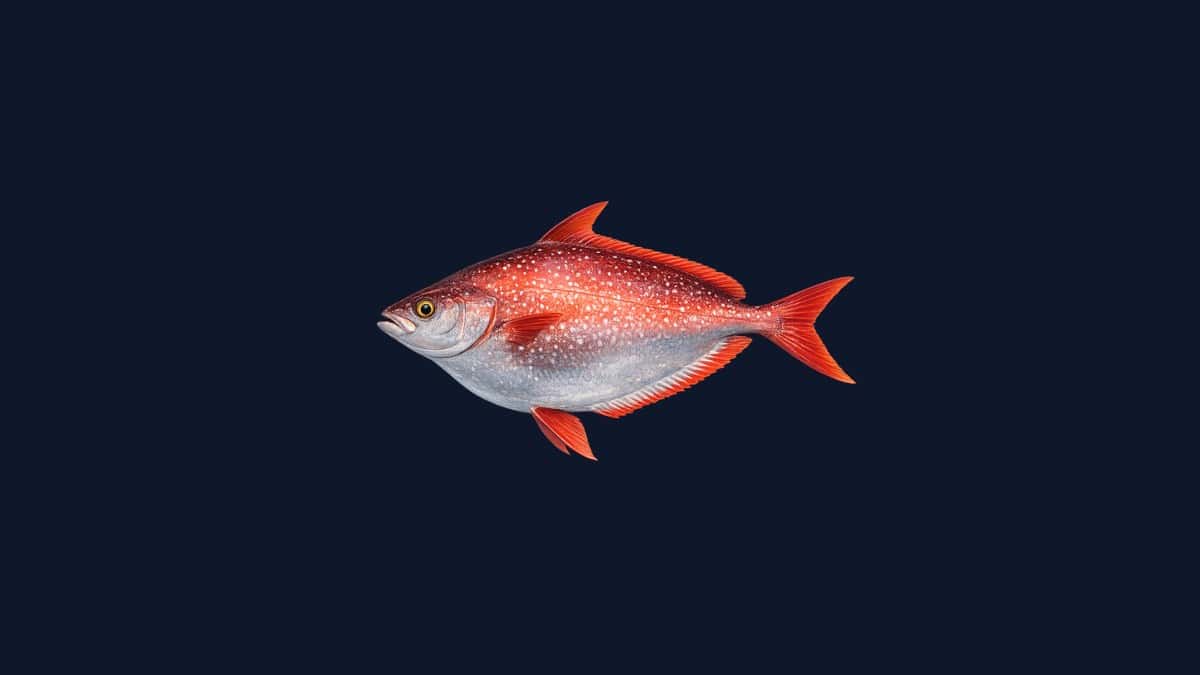
Opah — also called moonfish — are one of the stranger entries in the SoCal offshore catalog. They look wrong: a round, disc-shaped body up to 3 ft in diameter, bright red-orange fins, silver skin covered in white spots. Nothing else in California water looks like them.
They live deep. NOAA pegs them at 50 to 200 meters depth, with deeper movements during the day and shallower at night following prey. FishBase gives a preferred temperature range of 5 to 20°C (41–68°F). They're not warm-water visitors in the way dorado and yellowfin are; they're deep-water residents that just happen to range through SoCal offshore waters.
Most California anglers catch opah exactly once and remember it permanently.
How to Catch
You won't find a dedicated opah trip out of San Diego. The fish are caught as incidental bycatch — most commonly on the daytime swordfish buoy-drop program, where a squid bait rigged at depth attracts whatever is feeding down there. Opah take swordfish rigs.
Heavy flat-fall jigs dropped to 400 to 600 ft also produce opah incidentally, especially on deep-water overnight trips targeting swordfish. If you're using the same deep-water program and an opah picks up the bait, the fight is substantial — a 100-lb round fish has a lot of cross-sectional area, and they pull.
There is no specific opah tackle program distinct from what you'd use for deep swordfish fishing. Same heavy conventional gear, same leader materials, same circle hooks.
Eating Profile
Genuinely outstanding, and underappreciated. The flesh of a fresh opah divides into distinct sections with different textures and fat content: the belly section is fatty and pink, similar in richness to bluefin tuna belly; the main body loin is white-to-pink and firm, similar in texture to halibut but richer. Chefs who've worked with it compare it to a cross between tuna and halibut.
Sear the fatty belly sections as you would tuna — hot pan, short time, rare. Grill the firm loins simply with olive oil and salt. The fat content makes it forgiving to cook. Opah commands premium restaurant prices when it's available; catching one incidentally means a genuinely excellent meal.
Common Mistakes
- Expecting a targeted fishery. There isn't one. If you book a trip specifically to catch opah, you're going to be disappointed — you need to be on a deep swordfish or offshore tuna program and get lucky.
- Not bleeding immediately. Opah flesh is high in fat; fat goes rancid faster than lean flesh. Bleed immediately, ice hard, and process quickly.
- Underestimating the fight. A round disc-shaped fish 3 ft across creates huge drag coming up through the water column. On deep-drop swordfish gear, a 100-lb opah is a serious, prolonged fight.
Month-by-Month
- Jan–Apr: No opah reported in California recreational catches. Cold, shallow activity.
- May: Occasional incidental catch begins as offshore swordfish programs start.
- Jun–Sep: Most likely window. Offshore swordfish and deep tuna programs active; opah reported as bycatch.
- Oct–Nov: Possible into late fall on deep offshore trips.
- Dec: No significant California opah bycatch reported.