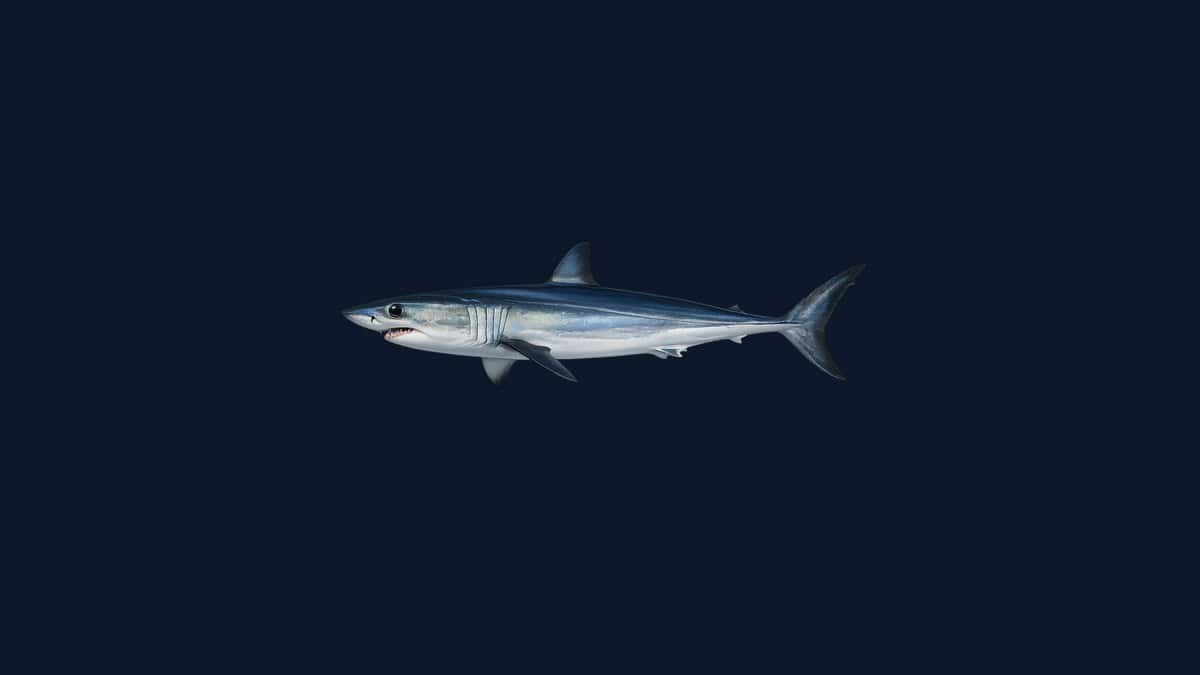
About Shortfin Mako Shark
Shortfin mako sharks are the offshore shark that SoCal anglers actually target on purpose. They're warm-blooded, fast, and acrobatic — a mid-sized mako (150–200 lb) will jump clear of the water three or four times before you see color. The California state record is 1,098 lb 12 oz (Sean Gizatullin, Anacapa Island, 2010); that fish is the heaviest saltwater fish in California's record book, period.
FishBase lists maximum length at 445 cm (roughly 14.6 ft) and max weight at 505 kg (1,114 lb). Most fish encountered on SoCal offshore trips run 80–200 lb; anything over 300 is a trophy. IUCN lists mako globally as Endangered (2018 assessment), with an estimated population decline of over 30%. The North Pacific stock is assessed separately and was found not overfished in 2024.
Do not confuse with great white sharks. Great whites are fully prohibited from recreational take in California under Fish & Game Code § 5517. Great whites are broader, blunt-nosed, with triangular serrated teeth. Makos have a pointed conical snout and slender build. If you're not certain what you have, don't bring it aboard.
How to Catch
Mako fishing is drift fishing with live bait and a chum slick. The standard program:
Live mackerel is the go-to bait. A fresh Pacific mackerel (8–12 in) on a 9/0–12/0 circle hook, 200 lb mono leader, no weight, dropped back 50–100 feet off the stern while the boat drifts. Makos eat on the move; they don't need a sinker to find the bait.
Chum draws fish up and keeps them in the spread. Mackerel or sardine chunks, ladled overboard slowly in a trail behind the boat. Once you have a fish in the slick, keep the chum going — they'll circle before they commit.
Multiple rods at different distances — near (30 ft), mid (60 ft), and far (100+ ft) — cover the slick and give finicky fish an option away from the boat.
When a mako eats, resist the urge to set the hook on a conventional reel. With circle hooks: let the fish take the bait, reel down, the circle sets itself as the fish turns. Stand-up tackle and a harness are standard for fish over 150 lb.
Eating Profile
Mako is the best-eating shark from California. Dense, mild, pinkish-white flesh that holds up to grilling and smoking without falling apart. The urea problem common in cold-water sharks (leopard, smoothhound) is less pronounced in mako because their elevated metabolic rate processes waste differently. That said: bleed the fish immediately on the boat, ice it hard, and fillet within 12 hours. Grill medium-rare with black pepper and lemon; overcooked mako turns dry and chalky.
NOAA Fisheries manages Pacific mako under the Pacific Coast HMS FMP; the 2024 stock assessment found the North Pacific population not overfished.
Common Mistakes
- Using light leaders. Makos roll and spin — a 100 lb mono leader will be cut on the first roll. 200 lb mono minimum; wire when they're aggressive and biting off leaders.
- Setting hard on circle hooks. The circle sets itself. Swinging on a mako hookset straightens hooks or loses fish. Just reel.
- Standing in the cockpit during color. A fresh mako at the stern is dangerous. Keep the deck clear, never gaff near the tail, and use a flying gaff on anything over 100 lb.
- Not checking white shark regulations. Great whites are protected. Every mako angler on the water should be able to distinguish the two on sight before they go out.
Month-by-Month
- Jan–May: Rare. Fish are deeper and further offshore; not a productive window for targeted mako.
- Jun–Jul: First fish show on offshore banks as water warms. Mostly smaller fish (80–150 lb).
- Aug–Sep: Peak. Larger fish on the deeper banks; good numbers on chum slicks offshore. Best trophy window.
- Oct: Still productive on longer-range trips; fish begin moving offshore as water cools.
- Nov–Dec: Rare. Season effectively over for targeted mako in SoCal.