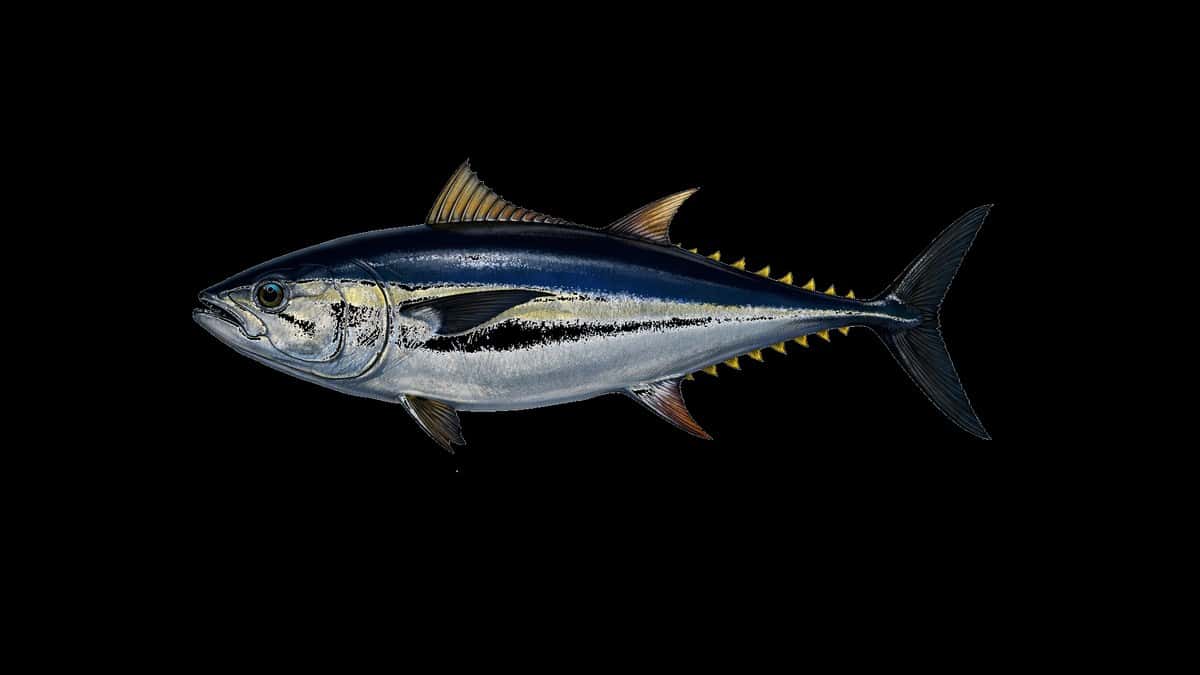
About Bluefin Tuna
Pacific bluefin tuna are the reason SoCal has a serious offshore fleet. A 100–200-pound fish on the end of your line is the defining SoCal fish story of the last decade — and since roughly 2016, they've been within reach year-round, from deep Baja water up to the 9-Mile Bank.
Most fish caught on 1.5-day runs out of San Diego run 40–120 lbs. The 200+ pound "cows" come on overnight and longer trips to the 302, 371, and the outer banks. The California state record is 395 lb 6 oz (Floyd Sparks, Tanner Bank, 2021); the IGFA all-tackle world record is 907 lb 6 oz (Donna Pascoe, Three Kings, NZ, 2014). Mexican waters hold even larger.
How to Catch
Bluefin have rewritten SoCal offshore tackle. The modern approach is jigs on the night drift — a fast-falling lure dropped into the zone and worked back up. You're not setting the hook; the fish eats the jig on the fall, loads the rod, and you crank.
Dawn and dusk bites are usually on top — kite rigs or fly-lined live bait when the boat chums up a school. When fish sink to the thermocline, the game shifts to jigs — and the night drift is where the bigger class shows up.
Heavier line than you'd think. 20-lb fluoro is light line out here. 30 lb fished correctly can whip a 60-pound fish — it'll take some time, but it's definitely possible. Start at a 40–50 lb topshot and drop down if nobody's bit.
Eating Profile
Sashimi-grade on arrival. Dense, red, fatty — closer to steak than white-flesh fish. A fresh bluefin loin gets seared, sliced thin, and eaten raw or near-raw. Seared steaks with black pepper and sea salt are hard to beat. In October 2024, Seafood Watch upgraded Pacific bluefin to a yellow "Good Alternative" rating for U.S. pole-and-line and California/Mexico FAD-free purse-seine fisheries — the first non-red rating in the program's 25-year history, reflecting a stock that exceeded rebuilding targets a decade ahead of schedule. Mexican ranching operations remain red-rated.
Bleed the fish immediately, ice it hard, and get it off the boat and into a vacuum bag the same day.
Common Mistakes
- Light line on heavy fish. 30 lb fluoro can whip a 60-pounder fished right, but it's a long fight — and a 120-pound bluefin that goes deep will out-gun it. Start at 40–50, drop down if nobody's bit.
- Setting the hook on the fall-bite. The fall-bite loads the rod on its own. If you swing, you rip the jig out of the fish's mouth. Just start cranking.
- Chasing the meter. Marks on the sonar aren't always biters. Find a foamer, a feeding surface school, or a chum-line-worked area first — then drop.
- Skipping the leader bleed. Not bleeding a bluefin on deck means mushy, dark flesh that loses 30% of its value. Cut gills + tail immediately after boga.
Month-by-Month
- Jan–Mar: Deep and scattered. Longer-range boats pick at fish offshore; not a high-percentage window for SoCal half-day or overnight.
- Apr–May: Fish start pushing up into the SoCal ridges. Early jig action at the 182 and 9-Mile.
- Jun–Aug: Peak. Surface boils, kite action, and hot jig bites on the night drift. Water at 64°F+ and bait stacks up.
- Sep–Oct: Still hot. Bigger average fish on overnight trips as the summer class fills out.
- Nov–Dec: Fish sink again but remain in-zone. Dedicated targeting on long-range programs; half-days run for other species.