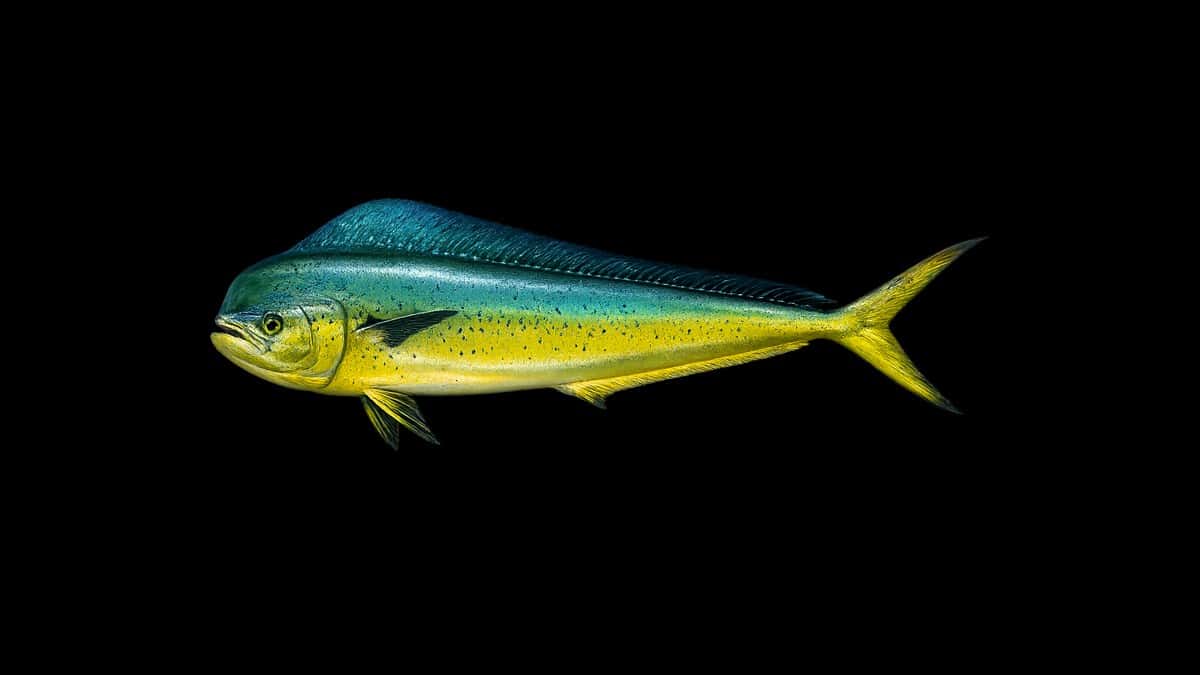
Dorado (mahi-mahi) studio illustration — electric blue back, neon green flanks, gold belly — against a black background.
All Species

Dorado (Mahi-Mahi)

Coryphaena hippurus

Updated · Published

Season: July through October (warm-water dependent; peak Aug–Sep)5 lbs – 50+ lbs locally (IGFA all-tackle world record 87 lb, Exuma, Bahamas, 1998)

One of the most colorful and acrobatic gamefish in the ocean. Dorado arrive in SoCal during warm-water years and provide explosive surface action under offshore kelp paddies.

Illustration: Fish City

Dorado Season California

California dorado run July through October — peak August–September in warm-water years. The fishery is 100% temperature-dependent: you need 68°F+ minimum, and 72°F+ to have them stacked on paddies. Cold summers produce almost no local dorado.

Where to Catch Dorado in California

Offshore kelp paddies 15–60 miles out, floating debris and weed lines, and San Diego offshore banks (302, 371). The Nine Mile Bank, 43-Fathom Spot, and Coronado Islands vicinity hold paddy fish in warm-water years. Any floating object in 70°F+ water is worth fishing.

Best Baits for Dorado

Live sardine fly-lined on a 1/0 circle with no weight at the kelp edge is the SoCal standard. Live mackerel works for bigger bulls. Surface poppers (Yo-Zuri Sashimi Bull, Zara Spook) crush boiling fish; cedar plugs and green/yellow feathers trolled at 6–8 knots locate schools.

Dorado Bag Limit California

California has no dorado-specific sub-limit and no minimum size — they count toward the general 20-finfish daily bag with no more than 10 of any single species under 14 CCR § 27.60. Federal HMS rules apply in the U.S. EEZ; Mexican limits apply south of the border.

How to Catch Dorado

Approach a paddy slowly, kill the motor 50 yards out, and drift in. Chum with chopped sardine. Fly-line a live sardine at the kelp edge — the bite is fast and visual. Keep one hooked fish in the water to hold the school; the rest will follow a hooked buddy right to the boat.

About Dorado

Dorado — also called mahi-mahi or dolphinfish — are the most colorful fish in SoCal water, period. Electric blue on top, neon green flanks, gold belly. A bull dorado at the end of your line, skying out of the water six feet in the air, is a sight you don't forget.

They're warm-water visitors. In a strong El Niño summer, paddy fishing can get lights-out — 10 to 15 fish per stop on live sardines, schoolies in the 10–15 lb range, bulls pushing 40+. In a cold summer, they might not show at all.

How to Catch

Dorado live under floating structure. A single kelp paddy 30 miles offshore can hold 50 fish. The game is: find the paddy, approach quietly, throw live bait.

Fly-line a live sardine at the kelp edge with no weight. The bite is usually fast and visual — you'll see the fish flash, then the bait disappears. Set the hook and hold on. Dorado jump immediately and repeatedly.

If they're in a feeding frenzy, you can cast poppers at boils. Any bright topwater works — they're not picky when they're on. Just reel fast; they hit moving lures.

Keep one fish on the line when you hook up. Dorado are schooling fish and the rest of the school will follow a hooked buddy right up to the boat — deckhands call this "keeping a dog on" and it lets the whole boat hook up.

Eating Profile

Lean, white, mild. Grills great with olive oil and lime. Not fatty like tuna, so it cooks fast and gets chalky if overdone — pull it early and let carryover finish it. Fish tacos with dorado, pickled onion, and cilantro crema are hard to beat. Keep it iced hard — dorado go off fast in warm weather.

Common Mistakes

  • Crashing the paddy. Running up in gear and stopping hard scatters the fish. Approach slow, kill the motor 50 yards out, and drift in.
  • Skipping the chum. Even one handful of chopped sardine brings them up. Deckhands who chum catch more fish than deckhands who don't.
  • Wire leader. Dorado don't need it — they don't cut line like king mackerel. 30 lb fluoro is plenty, and wire scares them off.
  • Leaving too quick. The first fish off a paddy is rarely the last. If one comes up, keep fishing it — even if nobody's hooked up, the school is there.

Month-by-Month

  • Jan–Jun: No dorado. Water's too cold. Don't bother.
  • Jul: Early arrivals in warm years. Scout trips start finding paddy fish late in the month.
  • Aug–Sep: Peak. If the water's 72°F+, this is the window. Schoolie dorado stacked on paddies, bulls mixed in.
  • Oct: Still catchable through mid-month, then fish drift south as water cools.
  • Nov–Dec: Gone. They push back down into Baja water.

Where to Catch Dorado (Mahi-Mahi) in California

  • Offshore kelp paddies (15–60 miles out)
  • Floating debris and weed lines
  • San Diego offshore banks (302, 371)
  • Coronado Islands vicinity
  • Nine Mile Bank and 43-Fathom Spot
  • Any floating object in 70°F+ water — pallet, rope, dead whale

Conditions & Habitat

Water Temp

68–84°F (preferred 77–82°F per FishBase); show up locally when SoCal water hits 68°F+

Typical Depth

Surface to 30 ft; almost always in top 10 meters under kelp paddies and debris

Diet

Flying fish, small mackerel, squid, crabs, sardines — aggressive surface feeders

How to Catch Dorado (Mahi-Mahi)

Techniques

  • Pull up to a kelp paddy, cut the motor, and fly-line a live sardine right at the edge
  • Cast surface poppers at boiling fish — they'll crush anything that moves
  • Troll feathers and cedar plugs at 6–8 knots along weed lines to locate schools
  • Chunk fresh sardine pieces to hold a school behind the boat once hooked up
  • Fly-line live mackerel for bigger bulls — bigger bait = bigger fish

Lures & Baits

Line & Leader

20–30 lb braid or mono mainline, 30–40 lb fluorocarbon leader (3–4 ft). Drop to 20 lb fluoro on picky fish; bump to 50 lb if you're in a school of 40+ pound bulls.

Rod & Reel Combos

Product links may earn Fish City a small commission at no extra cost to you. We only recommend gear we'd use ourselves.

Regulations

General daily bag limit of 20 finfish per angler with no more than 10 of any single species — dorado are counted toward this limit (14 CCR § 27.60). No California minimum size; no closed season. Federal HMS rules apply in U.S. EEZ; Mexican limits (CONAPESCA) apply south of the border. Always verify current CDFW + federal HMS + CONAPESCA regulations before every trip.

As of April 20, 2026 — CDFW source

Did You Know?

Dorado are one of the fastest-growing fish in the ocean — males (the blunt-headed 'bulls') can put on more than 20 lbs in their first year and researchers have documented growth up to ~4 cm per week on peak forage. Their lifespan is short — most die by age 4 or 5 — so every fish you catch is living life in fast-forward.

Boats Known for Dorado (Mahi-Mahi)

Charter boats with a track record on this species.

Pacific Queen

Fisherman's Landing

1.5-day and overnight trips — dorado bycatch on tuna runs

Tomahawk

Fisherman's Landing

1.5-day runs chasing paddies in warm years

Pacific Voyager

Seaforth Landing

overnight trips to offshore ridges

Book a Dorado (Mahi-Mahi) Charter

Find charter boats targeting Dorado (Mahi-Mahi) at these California landings:

Frequently Asked Questions

Warm years only. The fishery is 100% dependent on water temperature — you need 68°F+ minimum, and 72°F+ to have them stacked on paddies. Typical window is July through October, with peak action in August and September during El Niño years. Cold-water summers (like 2022) can produce almost no local dorado.

Sources

Ready to Find the Bite?

Join thousands of California anglers using Fish City for real-time fish counts, reports, and charter data.

Download on the App StoreGet it on Google Play

Free — no subscription required