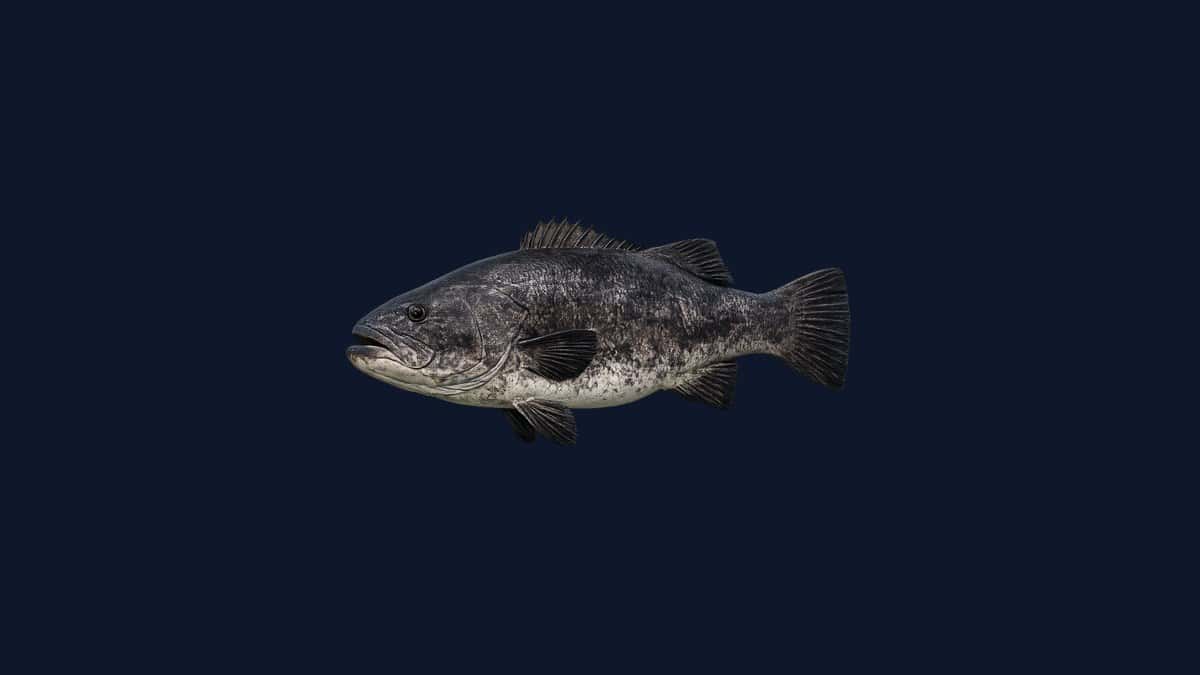
Giant sea bass studio illustration — massive dark-spotted grouper-like fish profile against a light background.
All Species

Giant Sea Bass

Stereolepis gigas

Season: May through November — when they move into shallow kelp to aggregate and spawn50 lbs – 400+ lbs

NO-TAKE SPECIES in California waters under 14 CCR § 28.10. Giant sea bass (Stereolepis gigas) are the largest predator in the kelp forest — once hunted nearly to extinction, now slowly recovering. If you hook one accidentally, release it immediately. Retention is illegal.

Illustration: Fish City

About Giant Sea Bass

Giant sea bass are not a fishery. They are a conservation story.

Stereolepis gigas — the largest bony fish in the eastern Pacific kelp ecosystem — was once common enough that commercial boats targeted them by the boatload. Between the 1920s and 1970s, the population collapsed. By the 1980s, anglers could go entire seasons without seeing one. California banned recreational take in 1982 and commercial take in 1984. The IUCN currently lists the species as Critically Endangered.

The slow recovery since then is real. Channel Islands boats encounter more giant sea bass than they did in the 1990s. CDFW and citizen science tagging programs document returning fish. But they grow slowly — a 200-pound fish might be 40 years old — and full recovery will take generations, not seasons.

A 300-pounder was once considered a normal commercial catch. Today an encounter with a 150-pound fish is unusual enough that boats stop to watch.

How Anglers Encounter Them

You don't go out to catch giant sea bass. You go out for calico, white seabass, or bottom fish near Channel Islands structure — and occasionally one of these shows up on your line.

The most common accidental hookup scenario: live mackerel on heavy conventional gear near kelp-edge structure at the Channel Islands, 60–100 ft. The bite feels like a very large calico or grouper — heavy, slow runs rather than explosive speed. When the fish comes up and it's the size of a small person, you're looking at a giant sea bass.

At that point, your job is to get it back in the water fast. Fight it to the surface — don't play it to exhaustion. Keep it in the water alongside the hull. Remove the hook with pliers. If the hook is too deep, cut the leader. Get it out of your hands.

Do not lift a large fish vertically. Spinal stress and internal barotrauma can kill a fish you think you're releasing.

Why They're Protected

The numbers tell the story. Historic commercial landings in Southern California peaked in the 1930s at tens of thousands of pounds per year. By 1977, the CPUE (catch per unit effort) had collapsed by over 95% from peak. The fish couldn't recover fast enough because they mature late, grow slowly, and aggregate predictably for spawning — which made them easy to target and nearly impossible to fish sustainably at scale.

The 1982 recreational closure and 1984 commercial closure were emergency measures. That was 40+ years ago. The fish are still Critically Endangered.

What's changed is the trajectory. Increased sightings near the Channel Islands and Catalina suggest the population is moving in the right direction. CDFW's California Collaborative Fisheries Research Program includes giant sea bass tagging. The comeback is slow and fragile — any reopening of the fishery would set it back.

Common Mistakes

  • Not recognizing the species. Juvenile giant sea bass have orange-red coloring with black spots — they can look like a large calico or grouper at first glance. Adults are dark olive-brown to near-black with faint spots. Huge body, wide pectoral fins. If you're not sure, it's probably a giant sea bass.
  • Trying to get a photo out of water. Keep it in the water. A 200-pound fish held up for a photo is a dead fish.
  • Panicking and cutting the line immediately. A quick fight and careful boat-side removal is better for the fish than a deep hook with a long leader dragging behind it.
  • Not reporting the encounter. CDFW wants to know. Call the Marine Region or use their online species sighting report — it feeds recovery data.

Month-by-Month

  • Jan–Apr: Rare encounters. Fish in deeper structure, less movement.
  • May–Jun: Fish begin moving shallower. Channel Islands encounters increase.
  • Jul–Sep: Peak encounter window. Spawning aggregations form at Channel Islands. Sightings near kelp edges.
  • Oct–Nov: Fish still present but beginning to disperse.
  • Dec: Encounters rare. Fish return to deeper offshore structure.

Where to Catch Giant Sea Bass in California

  • Channel Islands kelp forests — primary recovery zone
  • Catalina Island structure and coves
  • San Clemente Island rocky reefs
  • Palos Verdes rocky outcrops
  • La Jolla and Point Loma kelp edges

Conditions & Habitat

Water Temp

60–72°F; favor warmer water around kelp forests and rocky structure

Typical Depth

15–120 ft; inhabit rocky reefs and kelp forest edges; smaller fish in shallower kelp, larger adults deeper

Diet

Spiny lobster, sheephead, octopus, crabs, rays — slow-moving ambush predator that eats large prey

How to Catch Giant Sea Bass

Techniques

  • NOT a target fishery — giant sea bass cannot legally be retained in California
  • Accidental encounters most common when fishing live mackerel or large swim baits near kelp-edge structure at depth
  • If hooked: fight the fish to the surface, keep it in the water alongside the boat, remove the hook with long-nose pliers or cut the leader close if needed
  • Do not lift a giant sea bass vertically out of the water — barotrauma and spinal stress can be fatal for large fish
  • Report sightings to CDFW Marine Region — data supports recovery monitoring

Line & Leader

Not applicable for targeted fishing. If you regularly fish live mackerel or large baits in Channel Islands structure, 80 lb braid to 60–80 lb fluorocarbon is standard — heavy enough to steer a large fish for safe release without prolonged exhaustion.

Rod & Reel Combos

  • Not applicable for targeted retention fishing. Heavy conventional gear (80-class reel, 60–80 lb line) used in Channel Islands overnight fishing may incidentally hook giant sea bass — this gear allows safe, fast retrieval for quick release.
  • Circle hooks recommended for all big-bait fishing near structure — easier hook removal on incidental catches.

Regulations

PROHIBITED TAKE in California: giant sea bass (Stereolepis gigas) may not be taken in California waters under 14 CCR § 28.10. All fish encountered must be immediately returned to the water where taken. There are no bag limits because there is no legal take. A limited exception exists only for fishing in Mexican waters south of the U.S.-Mexico border with valid Mexican fishing authorization — this does NOT apply to recreational anglers in California waters. Violation is a misdemeanor under the Fish and Game Code and can result in fines, license revocation, and confiscation of gear.

As of April 20, 2026 — CDFW source

Did You Know?

Giant sea bass can live 75+ years and grow to over 7 feet and 400 pounds — making a large fish you encounter today potentially older than most living people. They are slow to mature (around 11–13 years) and slow to recover, which is why they nearly didn't survive the 20th-century fishery.

Boats Known for Giant Sea Bass

Charter boats with a track record on this species.

Any Channel Islands overnight boat

Various SoCal landings

Accidental encounters on Channel Islands overnight trips; captains are required to facilitate immediate release

Book a Giant Sea Bass Charter

Find charter boats targeting Giant Sea Bass at these California landings:

Frequently Asked Questions

No. Giant sea bass are a no-take species in California under 14 CCR § 28.10. You cannot legally retain one regardless of size, season, or location. If you accidentally hook one, you are required to release it immediately. Retention is a misdemeanor under California Fish and Game Code.

Sources

Ready to Find the Bite?

Join thousands of California anglers using Fish City for real-time fish counts, reports, and charter data.

Download on the App StoreGet it on Google Play

Free — no subscription required