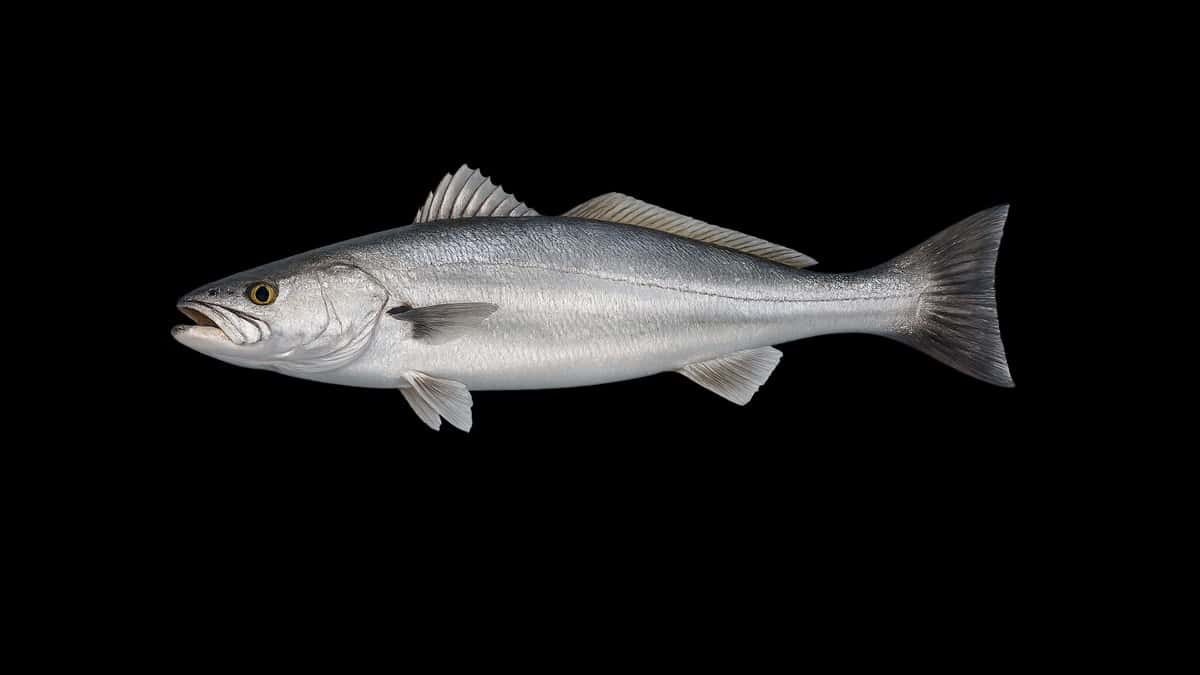
About White Seabass
White seabass are the prestige fish of SoCal. Not the biggest, not the most common, not the easiest — but catch a 40-pounder and you've earned a story. Despite the name, they're not a true seabass — they're a croaker (family Sciaenidae), the largest member on the U.S. west coast, more closely related to weakfish, corbina, and the other drumming fish than to any true bass.
Fish run 10 to 40 pounds on a typical overnight trip. The 60+ pounders are rare — a once-a-season boat fish — and they're almost always caught on live squid at dawn during the spring spawn. The IGFA all-tackle world record is 88 lb 0 oz (La Paz, Mexico, 2020); the California angling record is 79 lb 0 oz (Pajaro River, 2011).
How to Catch
This is a squid fishery. Eighty percent of what works comes down to: get on a squid bed, rig a dropper loop with squid, and sit quietly.
The dropper loop is a simple setup — a torpedo sinker at the bottom, a 12–16 inch loop tied a foot above it with a spider hitch, a 7/0 circle hook on the loop baited with a whole squid. Drop to bottom, reel up two cranks, wait. The bite is subtle — a slow pull, not a slam. Let the circle do its work; don't swing.
Lead-head jigs work too, especially on fish that are picky on bait. A white banana jig head with a squid body, retrieved slowly through the school, can outfish dropper loops when fish are lockjawed.
Quiet is the multiplier. Engines off. No banging the deck. No radios. A boat that understands this outfishes one that doesn't 3-to-1.
Eating Profile
The best-eating fish in California water, full stop. Mild, flaky, firm white flesh — somewhere between halibut and sea bass. Sushi-grade on arrival. Try it seared with lemon and capers, or broken up into fish tacos with a cilantro crema. A 20-pound fish gives you multiple dinners.
Bleed immediately. Ice hard. WSB flesh is delicate and soft fish lose 30% of their value at the fillet table.
Common Mistakes
- Talking on the deck. Sound travels through the hull. Whisper if you have to.
- Setting the hook on a circle. Reel down and let the fish pull itself tight. A swing pulls the hook out of the soft mouth.
- Fishing squid that's been in the sun. WSB key on fresh scent. Bait that's been thawing for 4 hours on a hot deck won't produce. Ask for fresh from the bait tank.
- Giving up at dawn. The bite often doesn't turn on until the first gray light. Sit through the dark hours — morning makes the trip.
Month-by-Month
- Jan–Feb: Deep and scattered. Winter fish hold at 90–150 ft. Low-percentage window.
- Mar: First schools push into shallow water as squid arrive. Bite turns on.
- Apr–Jun: Peak window. Spawning fish, squid bed action, 28-inch-plus average. 1-fish limit protects breeders but the action is real.
- Jul: Squid thin out, bite slows. Still possible at dawn on remaining beds.
- Aug–Oct: Scattered fish on deeper reefs. Targeted charters rare.
- Nov–Dec: Deep water, tough bite. Private boaters pick fish off squid schools that push offshore.