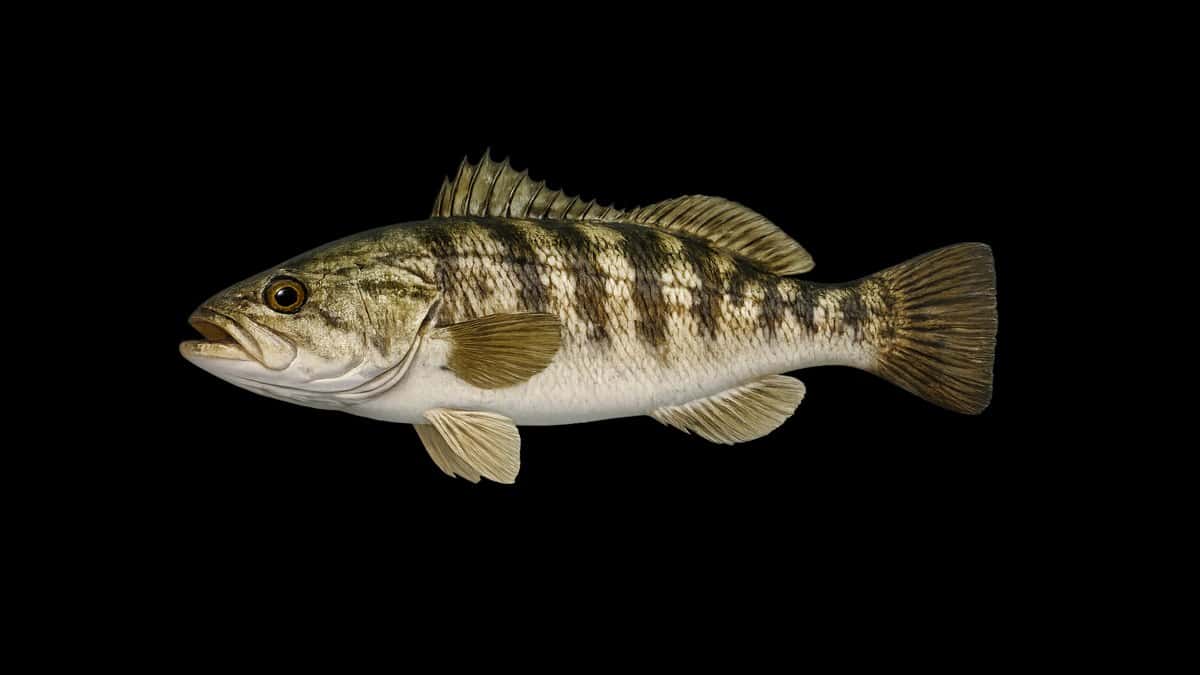
Barred sand bass studio illustration — pale tan body with vertical bars — against a black background.
All Species

Sand Bass (Barred Sand Bass)

Paralabrax nebulifer

Updated · Published

In Season Now1 lb – 8+ lbs

Sandy-bottom ambusher and bay-boat staple. Sand bass provide year-round light-tackle action in SoCal bays and nearshore flats.

Illustration: Fish City

Sand Bass Size Limit California

California barred sand bass have a 14-inch total-length minimum (or 10-inch alternate length) under 14 CCR § 28.30. Daily bag is a 4-fish sub-limit within a 5-fish saltwater bass aggregate shared with kelp and spotted sand bass, effective June 1, 2025 through 2028.

Sand Bass Season California

Barred sand bass are open year-round in California — no seasonal closure. Peak window is June through September when fish school up on sandy flats to spawn. January–March fishes scattered in 60–100 ft; April–May sees fish push up onto flats as water warms.

Best Spots for Sand Bass

Huntington Flats is the classic summer spawning ground. Seal Beach and Bolsa Chica flats produce shoulder-to-shoulder action on peak summer days. San Diego Bay, Mission Bay, Long Beach harbor, and Santa Monica Bay sandy bottoms hold fish year-round at 30–80 ft.

How to Catch Sand Bass

Bounce a 3–5 inch pearl white or smelt swimbait on a 1/4–1 oz jig head along sandy bottom — two cranks, let it fall, two more. On party boats, shrimp flies with a 2–4 oz torpedo or a live anchovy on a sliding egg sinker is the default. Keep the line light — 15 lb braid is plenty.

Best Bait for Sand Bass

Live anchovy nose-hooked on a 1/0 circle with a sliding egg sinker rig outfishes plastics when sand bass are finicky. Small curly-tail grubs on a 1/4 oz darter head work for bay sight-fishing. Gulp! grubs and Big Hammer swimbaits are the go-to soft plastics.

About Sand Bass

Sand bass are the unglamorous workhorse of SoCal fishing. They don't jump like dorado, they don't pull like tuna, and nobody writes magazine covers about them. But they're reliably there, they bite light tackle, and a summer day on Huntington Flats can put 30 fish on ice.

Most run 1 to 3 pounds. A 5-pounder is a good fish; an 8-pounder is a lifetime catch. The California state record is 13 lb 3 oz (Robert Halal, Huntington Flats, 1988) — the same fish also holds the IGFA all-tackle world record.

How to Catch

This is sandy-bottom ambush fishing. Sand bass sit on flats and wait for baitfish to drift past. Your job is to present something that looks like a drifting baitfish.

The go-to on a private boat is a small swimbait on a light jig head bounced along the bottom — white or smelt pattern, 1/4 to 1 oz depending on depth and current. Let it hit bottom, two cranks, let it fall, two cranks. The bite is a tap; set and reel.

On a party boat, the default is shrimp flies with a torpedo sinker or live anchovy on a sliding egg sinker rig. Both work. Live anchovy out-fishes plastics when the fish are finicky.

Keep the line light. Sand bass spit anything that feels tight — 15 lb braid is plenty for a 5-pound fish in open sand.

Eating Profile

Mild white flesh — very similar to calico. Pan-fried with lemon works great; so does fish tacos. Not as firm as halibut, so they get soft if overheld on ice. Cook them same-day or vacuum-seal for the freezer. Seafood Watch rates California sand bass as a "Good Alternative."

Legal size is 14 inches. Consider releasing anything over 5 pounds — those are mature breeders and the population leans on them.

Common Mistakes

  • Heavy line. Sand bass on 40 lb fluoro feels the resistance and drops the bait. Light line and light leader dramatically outfish heavy setups on sand.
  • Setting too hard. Their mouths are soft — a hard swing rips the hook through. Reel down and let the rod load.
  • Ignoring the drift. Sand bass feed with the current. Drift your bait into structure, not past it. If you're upwind, cast short and let the drift carry the bait across the zone.
  • Fishing slack water. No current = no bite. Tide-change windows produce; slack tide sits dead.

Month-by-Month

  • Jan–Mar: Scattered fish on deeper sand (60–100 ft). Slow but catchable.
  • Apr–May: Fish start pushing up onto the flats as water warms. Action picks up.
  • Jun–Sep: Peak. Spawning flats light up. Huntington and Bolsa Chica are shoulder-to-shoulder on boats. 20+ fish days common.
  • Oct: Still good, fish move slightly deeper as water cools.
  • Nov–Dec: Slower, fish drop back to 60+ ft. Party boats mix sand bass with bottom fishing.

Where to Catch Sand Bass (Barred Sand Bass) in California

  • San Diego Bay and Mission Bay sandy areas
  • Long Beach harbor and sandy flats
  • Santa Monica Bay sandy bottoms
  • Huntington Flats — the classic summer spawning grounds
  • Seal Beach and Bolsa Chica flats
  • Nearshore sandy areas throughout SoCal, 30–80 ft

Conditions & Habitat

Water Temp

58–72°F; most active spawning at 60–68°F

Typical Depth

20–100 ft over sandy bottoms; move shallow in spring/summer to spawn on flats

Diet

Sardines, anchovies, squid, small crustaceans, octopus

How to Catch Sand Bass (Barred Sand Bass)

Techniques

  • Live anchovy nose-hooked, sent to bottom with a sliding egg sinker
  • Small swimbait (3–5 inch) on 1/4–1 oz jig head bounced along sand
  • Drift with live bait over sandy edges and drop-offs
  • Shrimp fly rig with 2–4 oz torpedo sinker for party-boat trips
  • Curly-tail grub on 1/4 oz jig head for bay fishing on trolling motor

Lures & Baits

Line & Leader

15–30 lb braid to 12–20 lb fluorocarbon leader (2–3 ft). Light enough that fish feel no resistance on the take. Bay fishing: drop to 10–15 lb for stealth.

Rod & Reel Combos

  • Light spinning: 7 ft medium rod with Shimano Stradic 3000 or Daiwa BG, 15–20 lb braid
  • Light conventional: Penn Fathom 15 or Daiwa Sealine on 7 ft 10–20 lb rod
  • Party boat: any medium-action rail rod, 20 lb line, shrimp fly rig

Product links may earn Fish City a small commission at no extra cost to you. We only recommend gear we'd use ourselves.

Regulations

Part of a 5-fish aggregate daily bag limit shared with kelp bass and spotted sand bass (14 CCR § 28.30), with a 4-fish sub-limit specifically for barred sand bass effective June 1, 2025 and sunsetting June 1, 2028 pending stock review. Minimum size 14 inches total length (or 10-inch alternate length). Always verify current CDFW regulations before your trip.

As of April 20, 2026 — CDFW source

Did You Know?

Sand bass are *functional gonochores* — they keep their sex for life — but they still carry a vestigial ability to change from female to male, a genetic echo of their hermaphroditic sea-bass ancestors. Fewer than 1% of fish ever actually make the switch. Size limits still matter: the biggest fish on the flats are the most productive breeders.

Boats Known for Sand Bass (Barred Sand Bass)

Charter boats with a track record on this species.

New Seaforth

Seaforth Landing

half-day sand bass on Huntington Flats

Daily Double

Point Loma Sportfishing

half-day bay and nearshore bass

Malihini

H&M Landing

3/4-day runs hitting sandy structure

Freedom

22nd Street Landing (San Pedro)

half-day sand bass and mixed bag

Book a Sand Bass (Barred Sand Bass) Charter

Find charter boats targeting Sand Bass (Barred Sand Bass) at these California landings:

Frequently Asked Questions

Habitat, mostly. Calicos live in the kelp, sand bass live on the sand. Same family (Paralabrax), same 5-fish aggregate limit, same 14-inch minimum — but sand bass are on Huntington Flats and calicos are in La Jolla kelp. They can overlap on the edges. Sand bass also don't jump into the kelp when hooked, so you can fish them on lighter line.

Sources

Ready to Find the Bite?

Join thousands of California anglers using Fish City for real-time fish counts, reports, and charter data.

Download on the App StoreGet it on Google Play

Free — no subscription required