About California Sheephead
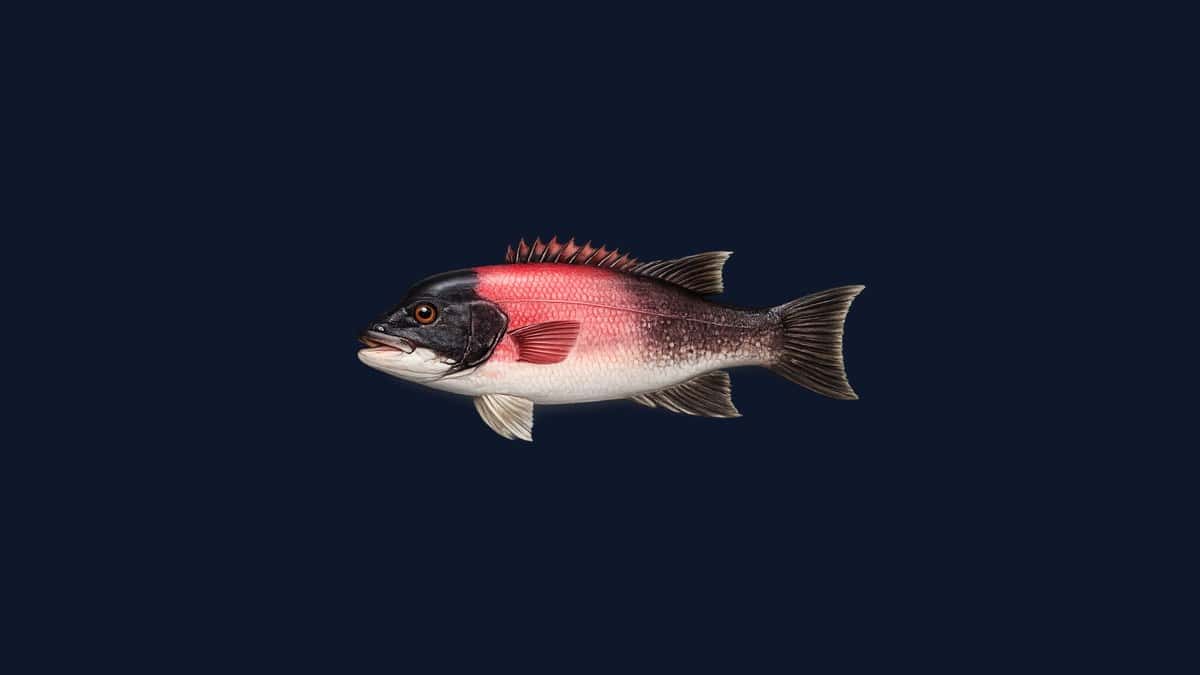
California sheephead are the fish that makes new anglers do a double-take. The dominant male looks like something assembled from three different fish: a fire-engine red midsection, a jet-black head with a white chin, and a serious set of teeth that look like they belong in a dental model. The females are plain orange-pink. They're the same species. You're seeing the results of a sex change.
Semicossyphus pulcher is a member of the wrasse family — intelligent, territorial, and slow-growing. A 10-pound fish might be 25 years old; a large male exceeding 15 pounds is likely over 40. They inhabit rocky reefs and kelp beds from Monterey to Baja, but the densest populations are in the Channel Islands system and around Catalina.
They're not glamorous in the way of a white seabass or yellowtail. But catching a large sheephead on appropriate gear — a crab or mussel presentation in rocky structure — is a genuine test of technique, and the fish fights hard.
How to Catch
Sheephead are bottom feeders with powerful crushers designed to break shells. You're imitating the things that live in their home: crabs, mussels, urchins, shrimp.
The most consistent approach is fresh mussels on a 2/0 circle hook, dropped on a dropper loop to the bottom near rocky structure. Sheephead can smell mussel from across a reef, and a fresh chunk is hard to ignore. Use 4–6 oz of weight to get the bait to the bottom quickly in current.
Live crabs — rock crab, shore crab, even hermit crabs pulled from shells — are the premium bait. If you can source live crab, use it. Dropper loop, same depth, near crevices. Let it sit.
Cut squid works when crabs aren't available. It's the fallback, not the first choice.
The challenge is the structure. Sheephead live in and around rocks, and when they bite they immediately make for a crevice. You can't play them slowly — you need to crank hard immediately on the hook-set to pull them away from the rocks before they disappear.
Eating Profile
Better than most anglers expect. Firm, white, mild flesh that holds up well to high-heat cooking. Popular in Chinese and Japanese seafood markets, where sheephead is often sold live — a market signal for quality.
The skin is thick and tough; remove it before cooking. Best preparations: pan-fried with garlic and herbs, steamed whole with ginger and scallion, or cubed for fish tacos where the firm texture holds together.
Handle the bag limit seriously. Two fish per day is the hard limit. At legal size (12 inches), a sheephead gives you modest fillets. Take what you'll eat.
Common Mistakes
- Fishing off structure. Sheephead don't roam open reef. They're in and around rocks, pinnacles, and kelp holdfasts. Position the bait right at the structure edge.
- Soft hooksets. The teeth are hard. A glancing hookset into the crushing dentition of a sheephead doesn't stick. Drive the hook in.
- Playing the fish. Crank immediately. Every second after the bite is an opportunity for the fish to reach a crevice. There's no gentle landing here.
- Bad bait quality. Old, freezer-burned mussels get ignored. Fresh is the word. If your mussel smells like the sea, it's good. If it smells like the fridge, sheephead will walk past it.
Month-by-Month
- Jan–Feb: Boat closure in effect for this species. Shore-based and divers only. Fish are active but protected from boat pressure.
- Mar–Apr: Boat season reopens March 1. Fish active on reef structure. Good early-season bite.
- May–Jun: Excellent. Fish well-distributed across Channel Islands and Catalina reefs.
- Jul–Sep: Peak availability at depth. Overnight and 1.5-day Channel Islands trips produce the best numbers and size.
- Oct: Still good. Fish holding on reef through warm water.
- Nov–Dec: Decent bite continues. Fish may push slightly deeper as water cools.