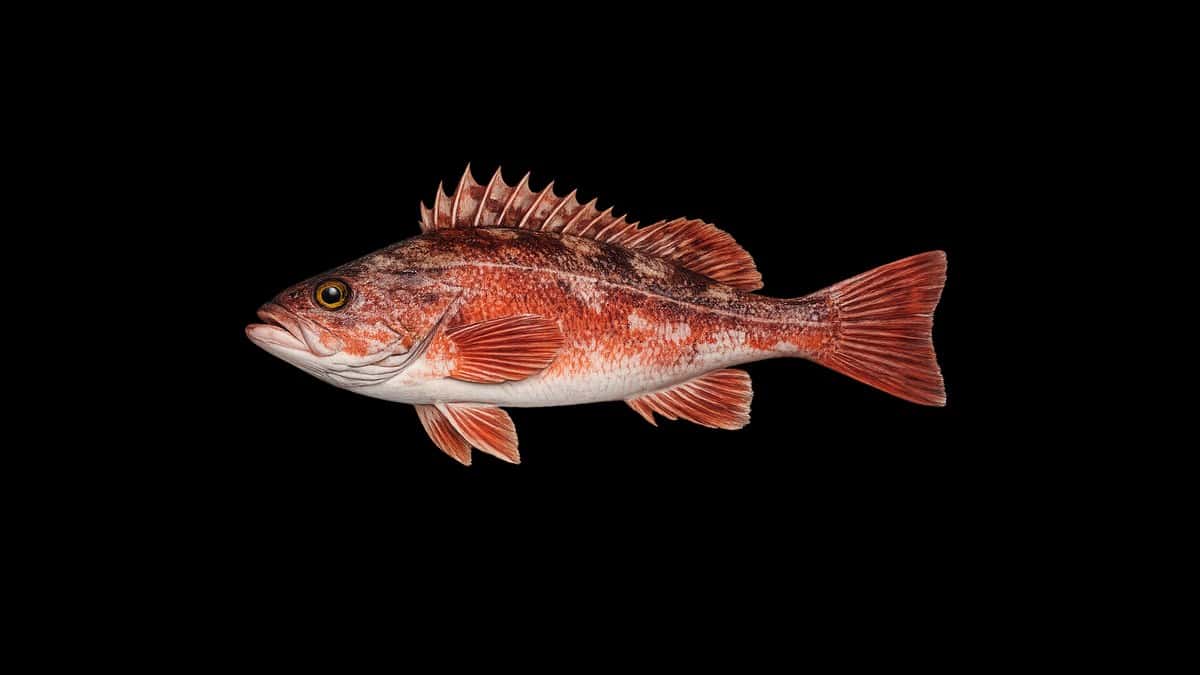
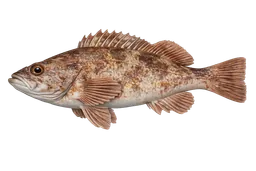
About Rockfish
Rockfish are the reason half-day boats sell out. You can book a trip out of any SoCal or Central Coast landing, show up with a rented rod, and come home with 10 fish on ice. The species are forgiving, the tackle is simple, and the ride is usually under an hour each way.
Sixty-plus species fall under the umbrella. The ones you'll most often see on ice: Vermilion (reds), Bocaccio, Chilipepper, Copper, Brown, Black, Blue, Olive, Greenspotted, Gopher. Most run 1 to 4 pounds. A 10-pounder is the high-end of any trip. Lingcod and cabezon mixed in are bonuses.
How to Catch
Cut squid on a dropper loop is the SoCal standard. Strip off a 2- to 3-inch piece of squid, thread it onto a #2 to 1/0 hook, tie the hook into a dropper loop 18 inches above an 8- to 16-oz torpedo sinker, and drop to the bottom. Reel up two cranks, wait. This rig outfishes bare shrimp flies on most boats — scent works. Cut sardine and whole anchovies do the same job when squid isn't around, and a chunk of sardine tends to pick off the bigger fish on the reef.
Shrimp fly gangions still produce. Party boats run them because they cover volume — a 2- or 3-hook rig lets you double or triple up on a single drop. Most regulars tip each fly with a small squid strip anyway; bare flies catch fish but tipped flies catch more. The rig costs a couple bucks and you can re-tie gangions at the rail between drifts.
Rubber swimbaits for shallow rock. In 60 to 150 ft on private boats or kayaks (common Central Coast and nearshore SoCal), a 4-inch Berkley Gulp swimming mullet or Big Hammer on a 2- to 4-oz leadhead will outcatch a gangion — especially for browns, coppers, gophers, and the occasional lingcod. Bounce it along the bottom. Reds prefer the deeper meat program.
Metal jigs work but you'll lose them. Diamond jigs, Shimano Butterfly flat-falls, and similar metals catch big reds and lingcod on deep structure. They also catch rocks, gorgonians, and sunken gangions. Plan on losing 1–2 jigs per trip if you fish them hard. If you're not willing to pay that tax, stick with squid on dropper loops.
Deeper is usually better for reds. The 300-to-400-ft zone holds the biggest vermilion and bocaccio. That means 10-oz-plus sinkers and braid that can handle the lift. If you show up to a 3/4-day boat with 20 lb mono and a 2-oz sinker, you're fishing wrong.
Descend what you release. A red pulled from 300 ft with bulging eyes will die if you throw it back at the surface. Descending devices are required — every boat has one. If you're a keeper short and you just caught an oversized red, send it back down; you might save the fishery.
Eating Profile
Excellent. Firm, flaky, mild white flesh — the exact texture you want for fish and chips or pan-fried with lemon. Not greasy like black cod, not as sweet as halibut, but consistently good across species. Reds and bocaccio are the top of the heap; coppers and chilipepper are close behind.
Fillet on the boat or the cleaning station. Two fillets per fish. A 10-fish limit of 2-lb rockfish is roughly 10 to 15 pounds of clean fillets — enough for half a dozen dinners. Vacuum-seal and freeze anything you can't eat in 3 days; rockfish stay good for 4 months in a deep freezer.
Seafood Watch rates California hook-and-line rockfish as Good Alternative to Best Choice depending on species. The fishery is well-managed and healthier now than it was in 2000.
Common Mistakes
- Too light a sinker. A 4-oz sinker in 300 ft of current swings 100 ft behind the boat. You're fishing out of the zone. Match the sinker to depth and drift — most party boats announce the right weight at the start of the trip.
- Setting the hook. Rockfish inhale the bait and get pinned by their own weight plus your reeling. A hard hookset pulls the rig through their soft mouth. Just reel up two cranks and wait for them to load the rod.
- Not clearing your rig. Party boats call "clear" when someone's boating a fish. If you hold your rig down while a sinker is passing yours, you tangle. Reel up immediately when the deckhand calls it.
- Keeping protected species. Yelloweye, Cowcod, Bronzespotted, and (new for 2026) Quillback are no-retention regardless of size. Canary rockfish reopened in 2026 with a 2-fish sub-bag; copper rockfish dropped to 1-fish. Know what you're looking at — deckhands help sort, and it's worth asking before you drop a fish in the sack.
- Slack line on the drop. Your rig needs to hit bottom quickly and on taut line. If you feed slack, your bait hangs 20 ft above the rocks and catch nothing. Thumb the spool, feel the bottom, click the reel into gear.
Month-by-Month
- Jan–Mar: Closed in most management areas for boat-based fishing. Shore and kayak options continue in some nearshore zones.
- Apr: Opener week. First crowds on the boats. Fish are hungry post-spawn — often the best quality of the year. Book early.
- May–Jun: Steady. Weather is improving, conditions stable. Nearshore and deep both producing.
- Jul–Aug: Peak summer action. Warm water pushes some species shallower; deep reds still reliable at 250–400 ft.
- Sep–Oct: Excellent conditions — often the calmest seas of the year and full limits common.
- Nov–Dec: Weather windows shrink. When the boats run, the fish are there. Book around storm fronts.