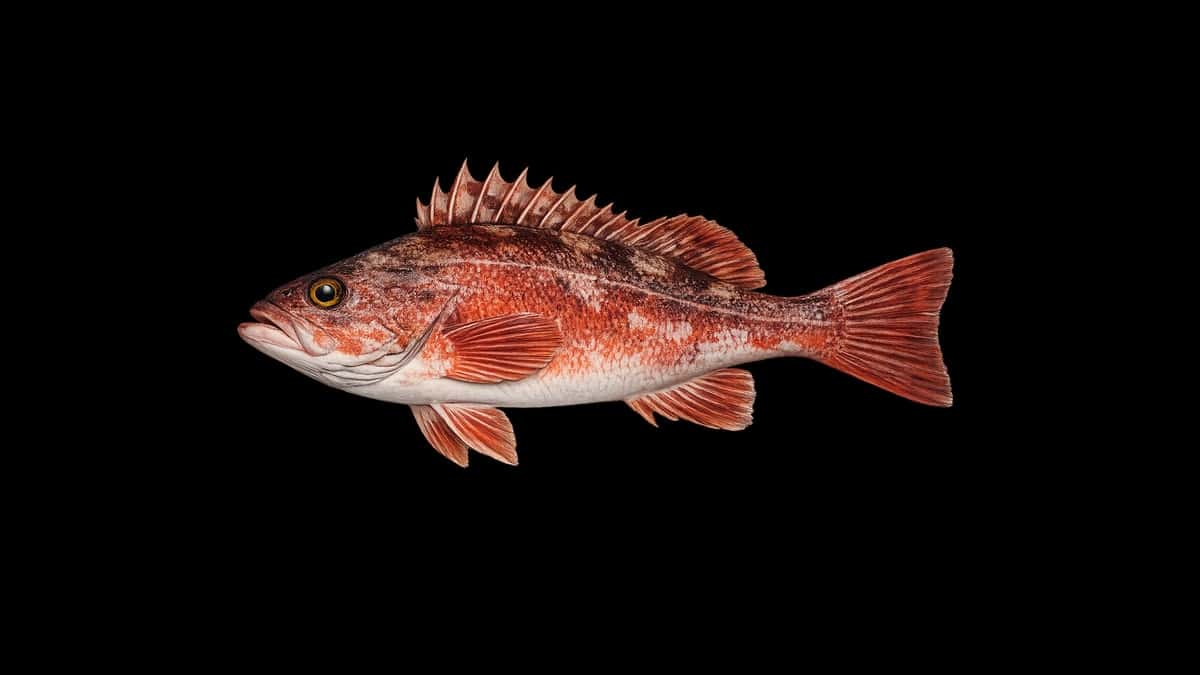
Vermilion rockfish studio illustration — bright red-orange body with spiny dorsal fin and distinctive rockfish profile against a black background.
All Species

Vermilion Rockfish (Reds)

Sebastes miniatus

Updated · Published

In Season Now1 lb – 12+ lbs

The iconic 'red' of California rockfish. Vermilion live deep, eat shrimp flies and cut squid with equal enthusiasm, and cook up into the best white-fleshed fillet in the Sebastes family.

Illustration: Fish City

Vermilion Rockfish Bag Limit California

Vermilion rockfish count toward the 10-fish RCG (Rockfish, Cabezon, Greenling) aggregate. The 2026 sub-limit is 2 fish south of Point Conception and 4 fish north. Descending devices are required onboard when releasing fish from depth.

Vermilion Rockfish Depth

Vermilion live at 150–450 ft on rocky reefs and pinnacles most of the year, with a biological range of 50–900 ft. Most party-boat keepers come up from 250–350 ft. 2026 restored all-depth access north of Point Conception; south has some seasonal depth limits on certain trips.

Vermilion Rockfish Season California

Boat-based groundfish season for vermilion typically runs April 1 through December 31, closed January 1 through March 31 in most management areas. April opener produces the best average-size fish; July–October delivers the calmest seas and most full limits.

Where to Catch Vermilion Rockfish

Deep rocky reefs and pinnacles at 150–350 ft. Channel Islands (San Clemente, San Nicolas, Santa Rosa), Cortes and Tanner Banks, San Diego offshore banks (302, 371, 43-fathom), plus Central Coast deep reefs at Morro Bay and Monterey, and Farallon Islands structure.

How to Catch Vermilion Rockfish

Drop a 2-hook shrimp fly gangion with a 12–24 oz torpedo to bottom at 250–350 ft, reel up two cranks, wait. Tip the flies with cut squid strips on picky days. Flat-fall jigs (150g Butterfly) pick off bigger average fish. Don't swing — they hook themselves, just reel.

About Vermilion Rockfish

Vermilion are the prestige rockfish. Out of the 60+ species in the Sebastes genus, vermilion are the one anglers show off. Bright red-orange body, dramatic spiny dorsal, and an honest 5 to 10 pounds of fight coming up from deep water.

They're the #1 table fish of the rockfish family. Firm, snow-white, mild flesh under the red skin — arguably better than bocaccio and chilipepper, and certainly better than the shallow blue and black rockfish. San Diego bait barges sell frozen vermilion fillets for $18/lb; the boats producing them sell out trip after trip.

A typical vermilion runs 2 to 5 pounds. A 10-pounder is a very good fish. The California state record is just under 15 lbs.

How to Catch

Deep-water shrimp fly work. This is the playbook.

The rig is a 2-hook gangion tied to 50 lb mono, with a 12–24 oz torpedo sinker at the bottom. Each hook gets a shrimp fly — small feathered jigs in chartreuse, red/white, or glow patterns. Drop to bottom in 250–350 ft, reel up two cranks, wait. When you feel a tap, don't set — just reel up another 2 cranks. If they're hungry, you'll have two fish at once.

Cut squid on the same rig often outfishes bare flies when fish are picky. Tip each fly with a 2-inch squid strip; the scent turns reluctant fish into biters.

Flat-fall jigs produce bigger average fish. A 150g Shimano Butterfly in glow or blue sardine, dropped to bottom and worked with slow lifts, picks off the largest reds on the reef — often before the bait-fishers even find the school.

Keep your line vertical. In 300 ft of water with current, a 16-oz sinker will still swing. If the captain calls for "20-ounce weight" and you're on 12, you're fishing 50 yards behind the boat. Match the rig to conditions; don't cheap out on sinkers.

Speed your retrieve. From 350 ft, it takes 30 seconds of fast cranking to bring a gangion up. If the captain is drifting and you spend 2 minutes reeling per drop, you're fishing half as much as the guy next to you. An electric reel (Daiwa Tanacom 500) is legal on many party boats and doubles your drops per trip.

Eating Profile

Top-tier white-flesh fish. Mild, flaky, slightly sweet — ideal for pan-frying, baking, and fish tacos. The classic SoCal preparation is pan-fried in olive oil with lemon and parsley; the fish is so clean-flavored that you don't need much.

A 3-lb vermilion yields ~1.5 lbs of boneless fillets. Fillet skinless (the red skin is thick). Eat within 3 days fresh or vacuum-seal and freeze for 4 months. The cheeks and throat meat on larger fish are sweet and worth the extra knife work.

Seafood Watch rates California hook-and-line vermilion as Good Alternative — the stock is stable and the fishery is well-managed under the RCG aggregate and RCA depth restrictions.

Common Mistakes

  • Light sinkers in deep water. 8 oz in 300 ft with current means your rig is 30 yards behind the boat. Match sinker to depth and drift. Party boat captains announce the right weight at the start.
  • Setting the hook. Vermilion inhale flies and hook themselves as soon as they move. A hard swing rips the hook through the soft mouth. Just reel.
  • Ripping them to the surface. Bring fish up steadily, not frantically. A rushed ascent from 300 ft guarantees severe barotrauma and kills any fish you planned to release.
  • Not using a descending device on releases. Required equipment. If you're short of limit and just caught a fish you want to release, send it back down. Every surface-released deep fish dies.
  • Fishing the Jan–Mar closure. Groundfish is closed in most areas January through March. Plan April onward.

Month-by-Month

  • Jan–Mar: Closed in most management areas for boat-based groundfish.
  • Apr: Opener. Fish hungry post-closure. Best average-size fish of the year.
  • May–Jun: Steady. Weather improving, deep reefs producing consistently.
  • Jul–Aug: Peak summer. Long drifts on deep structure produce full limits.
  • Sep–Oct: Excellent — often the calmest seas and best boat days of the year.
  • Nov–Dec: Fish stay deep. Weather windows shrink. When the boats run, they fill coolers.

Where to Catch Vermilion Rockfish (Reds) in California

  • Deep rocky reefs and pinnacles at 150–350 ft
  • Channel Islands (San Clemente, San Nicolas, Santa Rosa)
  • Cortes Bank and Tanner Bank
  • Central Coast deep reefs (Morro Bay, Monterey)
  • Farallon Islands and offshore NorCal structure
  • San Diego offshore banks (302, 371, 43-fathom)

Conditions & Habitat

Water Temp

50–60°F; year-round in thermally stable deep water

Typical Depth

50–900 ft range; most caught 150–450 ft on rocky reefs

Diet

Small crustaceans, octopus, squid, small fish — opportunistic deep-reef feeders

How to Catch Vermilion Rockfish (Reds)

Techniques

  • Shrimp fly gangion (2-hook) with 12–24 oz sinker over deep rocky structure
  • Dropper loop with cut squid strips at 200–350 ft
  • Flat-fall jig (Shimano Butterfly 150–200g) worked near bottom on big-fish days
  • Diamond jig (chrome, 8–16 oz) with trailer grub
  • Electric reel (where allowed) for repeated deep drops on party boats

Lures & Baits

Line & Leader

50–65 lb braid mainline (400+ yards for 300–400 ft work), 40–50 lb fluorocarbon or mono leader. Heavy enough to lift a 5-fish gangion up from 300+ ft against current.

Rod & Reel Combos

Product links may earn Fish City a small commission at no extra cost to you. We only recommend gear we'd use ourselves.

Regulations

Included in the 10-fish RCG (Rockfish, Cabezon, Greenling) aggregate daily bag limit. 2026 vermilion sub-limit: **2 fish south of Point Conception, 4 fish north**. Boat-based groundfish season typically open April 1–December 31, closed January 1–March 31. 2026 restored all-depth access north of Point Conception; south of Point Conception, seasonal depth limits apply on some trips — verify the current CDFW bulletin. Descending devices REQUIRED onboard when releasing fish from depth. Always verify current CDFW groundfish regulations.

As of April 20, 2026 — CDFW source

Did You Know?

Vermilion rockfish can live 60+ years. Their bright red-orange color comes from carotenoid pigments accumulated through their diet of small shrimp and crustaceans — the same pigment family that colors flamingos pink. Scientists still debate whether they're a single species or a sister-species pair (*S. miniatus* and the sunset rockfish *S. crocotulus*) that look nearly identical above 200 ft but diverge in deeper water.

Boats Known for Vermilion Rockfish (Reds)

Charter boats with a track record on this species.

Pacific Queen

Fisherman's Landing

full-day Mexican water reds

Malihini

H&M Landing

3/4-day Coronados and 43-fathom spot

Fiesta

Virg's Landing (Morro Bay)

Central Coast deep reds and lingcod

Sea Wolf II

Chris' Sportfishing (Monterey)

Monterey Bay vermilion and lingcod

Book a Vermilion Rockfish (Reds) Charter

Find charter boats targeting Vermilion Rockfish (Reds) at these California landings:

Frequently Asked Questions

Local anglers call them reds because of the bright red-orange body. The 'red snapper' nickname is a marketing leftover — vermilion are NOT the Atlantic red snapper (Lutjanus campechanus); they're Pacific rockfish (Sebastes miniatus). Some SoCal fish markets label them as red snapper, which is technically incorrect. The taste is similar; the biology is completely different.

Sources

Ready to Find the Bite?

Join thousands of California anglers using Fish City for real-time fish counts, reports, and charter data.

Download on the App StoreGet it on Google Play

Free — no subscription required