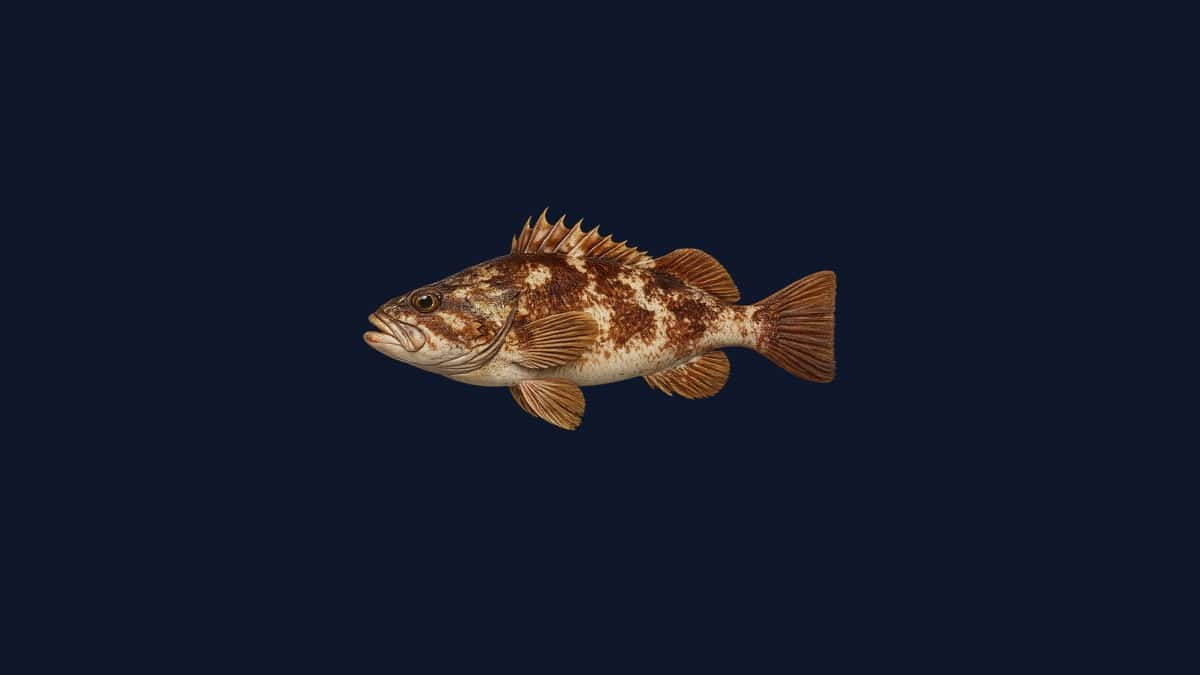
Brown smoothhound shark studio illustration — slim unpatterned shark with brownish-gray dorsal surface and pale belly against a black background.
All Species

Brown Smoothhound Shark

Mustelus henlei

In Season Now2 lbs – 8 lbs

A small nearshore shark most often caught while fishing for something else. Brown smoothhounds are nearly identical in habits to gray smoothhounds — same bays, same bait, same light-tackle fight — but prefer slightly cooler water.

Illustration: Fish City

About Brown Smoothhound

Brown smoothhound sharks are the close cousin to the gray smoothhound — same body plan, same bay habits, same niche. The easy-to-see difference is color: brown smoothhounds have a distinctly brownish or copper-brown dorsal surface; grays are plain medium-gray. For most California anglers the two species are functionally interchangeable — the regulation is the same (no species-specific rule, general finfish limit), and most people don't distinguish them at all.

FishBase records a maximum length of 100 cm TL (about 3.3 ft). Fish in California bays typically run 2–3 ft and 2–5 lbs. CDFW does not maintain a state record for brown smoothhound. IUCN assessed the species as Least Concern — it's a productive shark with early maturity (2–3 years), modest fecundity, and annual reproduction. No species-specific management measures apply in California.

The distribution is broader than the gray's: brown smoothhound ranges from northern California through the Gulf of California and separately from Ecuador to Peru. Gray smoothhound is limited to northern California south to the Gulf of California.

How to Catch

Brown smoothhounds share feeding habits with gray smoothhounds and leopard sharks. They eat crabs, ghost shrimp, mantis shrimp, polychaete worms, squid, and small bony fish off sandy and muddy bay bottoms. Any standard bay bottom-fishing presentation will produce them.

Ghost shrimp threaded on a 2/0 circle hook with a light sinker and enough leader to lay flat is the top bait. Fresh squid strips, pile worms, and cut bait all produce. Shrimp fly jigs worked slowly along the bottom are effective when covering ground.

Brown smoothhounds are slightly more cold-tolerant than grays — San Francisco Bay holds a substantial resident population, and they remain active earlier and later in the year than grays in SoCal bays.

Eating Profile

Edible but rarely targeted for the table. Like all sharks, smoothhound meat contains urea that requires proper handling: bleed immediately on the boat, ice hard, fillet within 12 hours, and soak fillets in salted brine or milk for several hours before cooking. The flesh is firm and mild after proper prep — historically used in UK and New Zealand fish and chips shops as "grayfish." Most California anglers release them.

Common Mistakes

  • Not distinguishing smoothhound from leopard. The regulation difference is significant — leopard is 36-inch minimum and 3-fish daily; smoothhound falls under general finfish limits. If you can't make the ID with certainty, treat the fish as a leopard and measure.
  • Assuming "brown = endangered." It's not. The brown smoothhound is Least Concern; only some Mustelus species in other oceans (notably M. mustelus in the Mediterranean) are Endangered. Don't conflate them.
  • Heavy tackle. A 5 lb brown smoothhound on 40 lb gear is a drag-in. Drop to 15–20 lb braid and the fish becomes legitimate light-tackle fun.
  • Keeping the whole bucket. The general 10-any-one-species cap applies. No reason to box ten unless you've got a strong plan to cook them — which you probably don't.

Month-by-Month

  • Jan–Feb: Present in bays year-round but less active. SF Bay produces through winter.
  • Mar–May: Activity picks up as water warms. Solid bay fishing begins.
  • Jun–Aug: Peak action in SoCal bays; routine bycatch on leopard and halibut trips.
  • Sep–Oct: Still good. Brown smoothhounds remain active later into the cooling season than grays.
  • Nov–Dec: Slowing. Deeper channel edges hold the residents.

Where to Catch Brown Smoothhound Shark in California

  • San Diego Bay and Mission Bay
  • San Francisco Bay — substantial resident population
  • Bodega Bay and Tomales Bay (NorCal)
  • Newport Bay and Huntington Beach flats
  • Sandy and muddy nearshore shelves statewide

Conditions & Habitat

Water Temp

54–68°F; slightly more cold-tolerant than gray smoothhound

Typical Depth

Surface to about 920 ft (281 m); typically 6–150 ft on sandy and muddy shelves

Diet

Crabs, ghost shrimp, mantis shrimp, isopods, squid, polychaete worms, tunicates, small bony fish — benthic opportunist

How to Catch Brown Smoothhound Shark

Techniques

  • Ghost shrimp on a 2/0 circle hook, dropper rig with light sinker
  • Squid chunk or fresh cut bait on light line near bottom
  • Pile worm or bloodworm on a small offset hook
  • Shrimp-fly jig (1/4–1/2 oz) worked slowly near bottom

Lures & Baits

  • Ghost shrimp — consistent top bait in bays
  • Fresh squid (1–2 in strip) on a 2/0 hook
  • Pile worm or bloodworm on small offset hook
  • Shrimp fly or small jig (1/4–1/2 oz) near bottom

Line & Leader

10–20 lb mono or 15–20 lb braid to a 15–20 lb fluorocarbon leader (2 ft). No special leader required — brown smoothhounds have smooth skin and small teeth, they don't cut line.

Rod & Reel Combos

  • 7 ft medium spinning rod with 3000-size reel (Shimano Stradic, Daiwa BG), 15–20 lb braid
  • Light conventional: 7 ft light rod with a small star-drag reel, 15 lb mono

Regulations

California does not set a species-specific minimum size or bag limit for brown smoothhound shark. They fall under the general finfish rule in 14 CCR § 27.60: no more than 20 finfish in combination of all species, with no more than 10 of any one species. Open year-round. CDFW publishes an enhanced status report for the species but does not assign a species-specific bag limit. Always verify current CDFW regulations before your trip.

As of April 20, 2026 — CDFW source

Did You Know?

Brown smoothhounds are viviparous with a yolk-sac placenta — they give birth to live young, typically 3–5 pups per litter, born 19–21 cm long. Unlike leopard sharks, which aggregate in large numbers in Mission Bay in summer, brown smoothhound births happen in smaller, quieter groupings in shallow bay habitat. The pups are already fully formed and immediately independent.

Boats Known for Brown Smoothhound Shark

Charter boats with a track record on this species.

Shore and kayak anglers — SoCal bays and SF Bay

No landing — bay access

brown smoothhounds are a routine shore and kayak catch; not a party-boat target

Book a Brown Smoothhound Shark Charter

Find charter boats targeting Brown Smoothhound Shark at these California landings:

Frequently Asked Questions

Color and range. Brown smoothhounds have a distinctly brownish or copper-brown dorsal surface; gray smoothhounds are plain medium-gray. In practice the two species look very similar on the deck and anglers often don't distinguish them at all — the regulation is the same for both (no species-specific rule, general finfish limit applies). Brown smoothhound runs slightly larger on average (FishBase max 100 cm TL vs. gray at 124 cm). Brown has a broader range — documented from Washington to Peru; gray is confined to Northern California south to Gulf of California.

Sources

Ready to Find the Bite?

Join thousands of California anglers using Fish City for real-time fish counts, reports, and charter data.

Download on the App StoreGet it on Google Play

Free — no subscription required