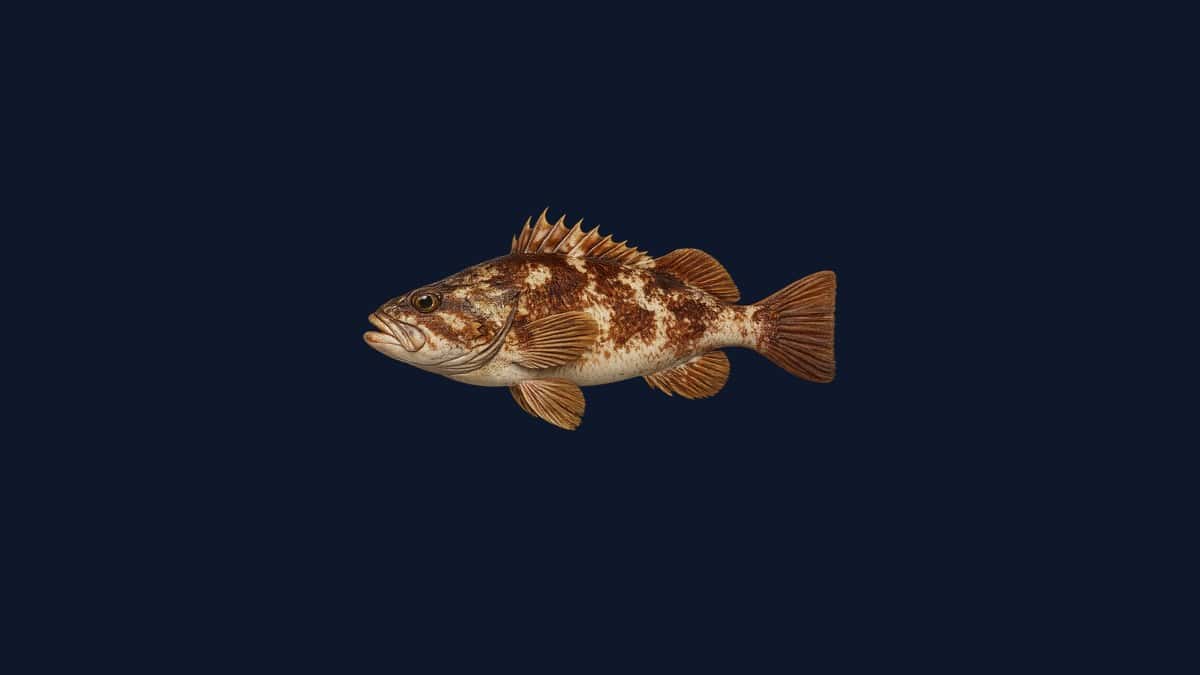
About Gray Smoothhound
Gray smoothhound sharks are the quiet bay shark in California. They're small, unpatterned, and common in shallow sandy and muddy bottoms from northern California south to the Gulf of California. Most anglers catch them as bycatch while fishing for leopard shark, spotted bay bass, or halibut — a smoothhound bite looks identical on the rod and at color the two sharks are often confused.
FishBase records a maximum length of 124 cm TL (roughly 4 ft) for females. Fish encountered in California bays typically run 2–3 ft and 2–5 lbs. CDFW does not list a state record for gray smoothhound, so there's no official trophy benchmark for the species in California. IUCN assessed Mustelus californicus as Least Concern on August 12, 2024, noting the species is widely distributed and the California population appears stable.
The key ID point: gray smoothhounds have no pattern. No spots, no saddle bars, nothing. Leopard sharks are unmistakably spotted. If you see any dark markings, it's not a smoothhound. This matters because leopard shark is regulated under a 36-inch minimum and a 3-fish bag limit (14 CCR § 28.56); the smoothhound has no species-specific rule.
How to Catch
Gray smoothhounds eat the same things leopard sharks eat — crabs, ghost shrimp, innkeeper worms (Urechis), and small fish. Your standard bay leopard-shark presentation will catch smoothhounds incidentally.
Ghost shrimp threaded on a 2/0 circle hook with a small sinker and enough leader to lay flat on the bottom is the go-to rig. Squid chunks and pile worms work equally well where ghost shrimp aren't available. A light jig or shrimp fly worked slowly near the bottom will also produce.
If you're specifically after smoothhound (uncommon goal), fish the muddy margins of bay channels, sandy flats adjacent to bay mouths, and areas of transition between sand and structure. These are the same spots leopards hold in.
Eating Profile
Edible but uncommon on California tables. Smoothhound flesh has urea content like most sharks; bleed immediately, ice hard, fillet within 12 hours, and soak fillets in salted brine or milk for several hours before cooking. Most California smoothhound anglers release them — the ratio of handling work to dinner-plate payoff doesn't favor keeping unless you specifically want shark for tacos or fish and chips.
Common Mistakes
- Calling it a "baby leopard shark." A small plain-gray shark in Mission Bay is almost certainly a smoothhound, not a leopard. Leopard shark pups are born fully patterned.
- Assuming there's a size minimum. There isn't — but if you can't ID a smoothhound with certainty, treat the fish as a leopard (36-inch minimum) until you're sure. Measure before you keep.
- Using heavy tackle. 40 lb braid on a 4 lb smoothhound is absurd. Light spinning gear on 15–20 lb braid makes these fish actually fun.
- Keeping the whole bucket. The general 10-any-one-species cap applies. Kevin's usual pattern: keep one or two if you're going to cook, release the rest.
Month-by-Month
- Jan–Mar: Present year-round but less active. Cooler bay water thins them out; deeper spots produce more.
- Apr–Jun: Bay water warms. Smoothhounds become more active in the shallows alongside leopards.
- Jul–Sep: Peak. Mission Bay and San Diego Bay hold summer populations; smoothhounds are routine on any leopard-shark trip.
- Oct–Dec: Still catchable, less reliable. The year's-best fishing shifts toward the mud flats and deeper channel edges.