About Leopard Shark
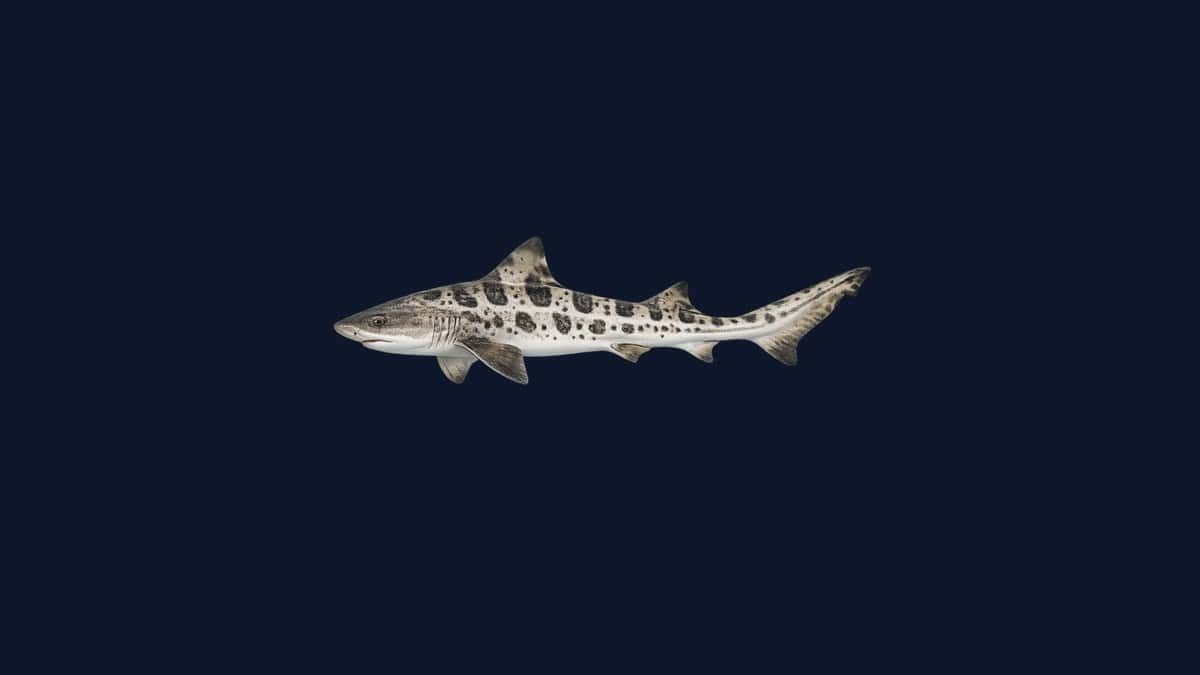
Leopard sharks are the most recognizable shark in California waters — the dark saddle-bar and spot pattern is unmistakable. They're common in bays, estuaries, and nearshore sandy habitat from Oregon to the Gulf of California. In Southern California, Mission Bay and San Diego Bay hold year-round populations; summer aggregations of pregnant females in Mission Bay's warm shallows can number in the thousands.
FishBase records maximum length at 198 cm (about 6.5 ft) and maximum weight at 18.4 kg (40 lb) — the California state record is 47 lb 1 oz (Ronald Schmidt, Palos Verdes, 2007). Most fish in bay fisheries run 3–5 ft and 5–15 lbs. IUCN lists leopard shark as Least Concern, with a stable California population.
The minimum legal size is 36 inches TL (14 CCR § 28.56), bag limit 3 fish per day. This is one of the most commonly violated regulations in the California shark fishery — sub-legal fish are abundant in bays, and 33–35 inch fish are easy to mistake for legal without measuring. Measure everything.
How to Catch
Leopard sharks are benthic opportunists. They cruise sandy and muddy bay bottoms looking for ghost shrimp, pile worms, and crabs. Your job is to put something that smells like those prey items on or near the bottom.
Ghost shrimp are the traditional top bait — the oily scent trail carries through the water column and draws leopards from distance. Thread a ghost shrimp on a 3/0–4/0 circle hook, barely enough weight to hold bottom in the current, and let it sit. A bite is usually a steady pull rather than a tap — pick up the rod and reel; the circle sets itself.
Pile worm and bloodworm work similarly, especially in areas where ghost shrimp aren't available. Small squid chunks are a reliable standby.
Light jigging with small shrimp-fly rigs works if you're covering ground. Walk the flat slowly, short hops near the bottom.
Kayak fishing in Mission Bay in July–August is extremely productive — paddle the shallow flats near the muddy margins, where aggregating females hold in water sometimes less than 3 ft deep. Sight-casting to visible fish is possible in gin-clear water on calm days.
Eating Profile
Edible but generally not the target of California anglers for the table. Leopard shark flesh has significant urea content (like most sharks) and requires proper handling: bleed immediately, ice hard, and soak fillets in milk or salted water for several hours before cooking to leach the ammonia. The flavor after proper prep is mild and acceptable, but the effort relative to simpler species makes it uncommon on California dinner tables.
Most California leopard shark anglers fish catch-and-release. Given the species' role in bay ecosystems and its relatively low bag limit (3/day), releasing is the conservative choice.
Common Mistakes
- Not measuring. Sub-legal fish are everywhere. A 33-inch leopard looks legal; it isn't. Bring a tape measure.
- Too-heavy tackle. 40 lb braid on a stiff rod in 4 ft of bay water is overkill and will spook fish. Use 15–20 lb class light tackle; the fish fight well and it's more fun.
- Fishing open water. Leopards concentrate in transitions — the edge where sandy flat meets a channel, near storm drain outflows, near mussel or rock structure. Open sandy flat with no relief holds fewer fish.
- Lifting fish vertically. When releasing, lower the fish into the water horizontally; lifting by the tail stresses these animals significantly. Wet your hands, support the body, place in water.