About Sevengill Shark
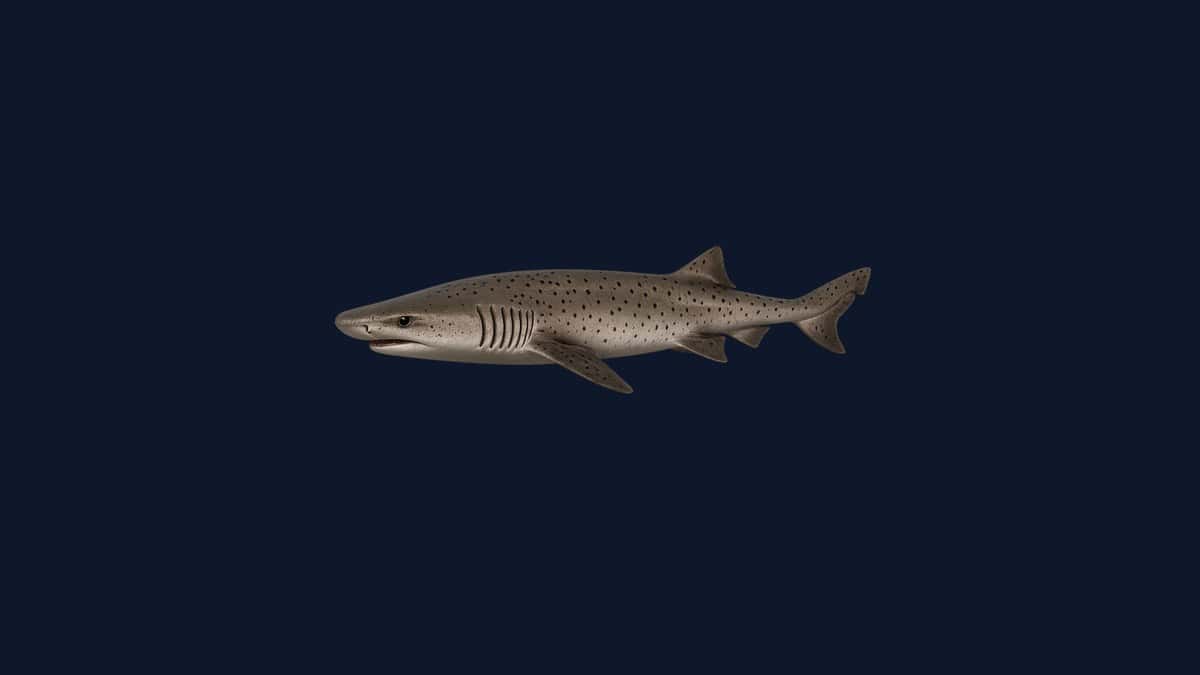
Broadnose sevengill sharks are the most primitive large shark in California waters — members of order Hexanchiformes, a lineage with a fossil record extending back 200 million years. The seven gill slits (most sharks have five) are the obvious field mark; at close range, the broad flat head, single dorsal fin (most sharks have two), and scattered small dark spots on the gray-brown body confirm the ID.
FishBase records maximum length at 300 cm (9.8 ft) and maximum weight at 107 kg (236 lb). The California state record is 276 lb (Cliff Brewer, Humboldt Bay, 1996). IUCN classifies broadnose sevengill as Vulnerable (assessed February 2020), with a declining population trend. Litter size is 82–95 pups, but the biennial reproductive cycle means population recovery from fishing pressure is slow.
These are bay-interior sharks. While they range in open water to at least 450 m depth, they regularly move into shallow bays, estuaries, and inlets — particularly along the Northern California coast. Humboldt Bay is the premier California sevengill fishery, with dense resident populations year-round. San Francisco Bay holds a population through its deep Golden Gate channels.
How to Catch
Sevengills are opportunistic carnivores that key on scent. The entire approach is about getting fresh, bloody bait to the bottom near where these fish patrol.
Fresh, bloody chunk bait is the consistent producer — a mackerel or bonito half, cut to expose the viscera and blood, drifted near bottom in bay channels. Freezer-burned bait doesn't work. Sevengills find food by olfaction first; the scent trail matters more than presentation.
Ray sections work particularly well in bay environments where the sharks actively hunt bat rays. A wing section or body chunk from a freshly-caught bat ray will draw sevengills in Humboldt Bay reliably.
Chumming is effective but overkill in already-productive locations like Humboldt Bay. Ground fish meal or blood meal distributed from the boat creates a scent column; sevengills follow the trail to the source.
Deep structure in open water requires vertical presentation — heavy sinker to get bait to 100+ ft in channel current, large circle hook. This is night-fishing territory for bay-based anglers.
Eating Profile
Sevengill meat is edible but rarely targeted for the table by California anglers. Like all sharks, urea is a concern — bleed immediately, ice hard, and soak fillets in milk or salted brine for several hours before cooking. The flesh is firm and mild after proper prep, and occasionally smoked. The 1-fish bag limit further discourages harvesting.
Most California sevengill anglers fish for the experience of catching a primitive, powerful fish — the fight on appropriate gear is compelling — and release after documentation.
Common Mistakes
- Using stale bait. Sevengills find food by scent. Day-old mackerel from the cooler produces a fraction of the bites that fresh-cut bait produces. Source fresh bait before the trip.
- Too-light leaders. Sevengill skin is rough and the fish rolls when hooked. 150–200 lb mono or cable is needed to survive a roll-up. Standard 80 lb fluoro leaders get chewed through.
- Targeting SoCal when you want sevengills. Humboldt Bay is the destination. San Diego and LA are low-probability targets for sevengill. If sevengill is the goal, plan a NorCal trip.