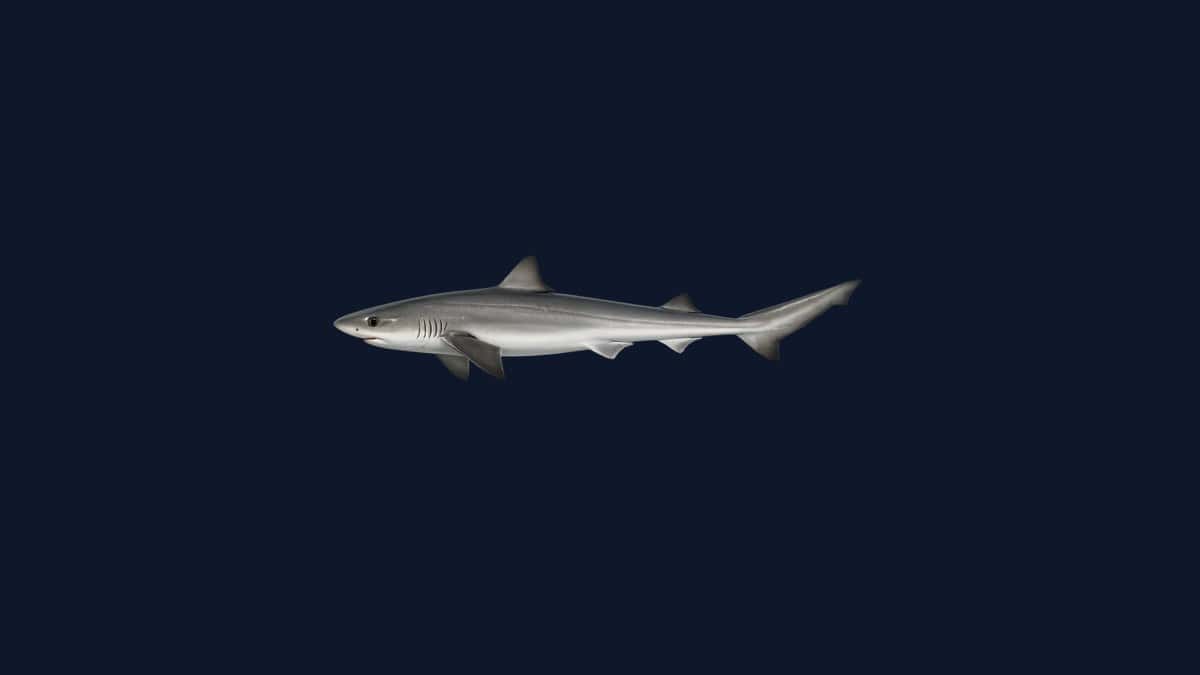
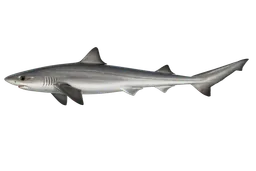
Soupfin shark studio illustration — slender shark with large pectoral fins, dark gray-brown dorsal surface, white ventral surface, prominent second dorsal fin, against a black background.
All Species

Soupfin Shark

Galeorhinus galeus

Season: May through October10 lbs – 60+ lbs

Also called tope shark. A species with a troubled recent history — collapsed by overfishing in the 1940s and recovering slowly. IUCN lists the species as Critically Endangered globally; a 2026 NOAA proposed ESA rule covers the Southern Africa and SW Atlantic DPSs only, with the Northeast Pacific (California) DPS explicitly determined not to warrant listing. Recreational retention is allowed but the conservation picture warrants caution.

Illustration: Fish City

About Soupfin Shark

Soupfin sharks (also called tope sharks) have one of the more consequential histories of any California shark species. In the late 1930s, their vitamin A-rich livers drove a fishing frenzy that collapsed the California population within a decade. The population has not recovered to pre-1940 levels. IUCN assessed Galeorhinus galeus as Critically Endangered globally in February 2020.

FishBase records maximum length at 195 cm (about 6.4 ft) and maximum weight at 44.7 kg (98 lb). The California state record is 38 lb 4 oz (Kevin Cheeseman, Torrey Pines, San Diego County, 2017). Most fish encountered off California today run 15–40 lbs. They prefer cool-temperate water (54–64°F) along the continental shelf, which means they're more prevalent in Central and Northern California than in the warmest SoCal waters.

In April 2026, NOAA Fisheries published a proposed ESA rule to list soupfin as Threatened (Federal Register 2026-07294). The proposed listing covers only the Southern Africa and Southwest Atlantic DPSs; NOAA explicitly found that the Northeast Pacific DPS (which includes the California population) did not warrant listing. Public comment is open through June 15, 2026. California recreational retention (1 fish/day under 14 CCR § 28.49) is unaffected while the proposed rule is under comment. Even so, given the global Critically Endangered status and the unrecovered North Pacific stock, most conservation-minded anglers release soupfin.

How to Catch

Soupfins are pelagic hunters over continental shelf water — they're not strictly bottom-dwellers like leopard sharks, but they patrol mid-water column and near bottom, following prey concentrations of sardines, anchovies, and squid.

Small live mackerel is the most productive bait — drifted on a circle hook with minimal weight in the mid-water column or near bottom in 100–400 ft of water. Fresh cut mackerel or squid chunk works when live bait isn't available. A chum trail of ground mackerel or sardine chunk brings them to the boat.

This is not a targeted recreational species in SoCal the way mako or thresher is. Most soupfins are caught incidentally on mixed offshore bottom trips. If you're specifically targeting them, Central California (Monterey Bay area) has historically been more productive than San Diego, and spring-through-fall produces the best encounters.

Eating Profile

Soupfin is edible with proper handling — firm white flesh that benefits from the standard shark protocol (bleed immediately, ice hard, soak fillets in salted brine or milk for several hours before cooking). The meat has historically been marketed as "grayfish" in fish and chips shops in the UK and New Zealand. The California commercial fishery was negligible after the 1940s collapse.

Given the Critically Endangered IUCN status and the ESA Threatened listing, the conservation-minded choice is catch-and-release for any soupfin encountered today.

Common Mistakes

  • Retaining without checking current regs. The proposed ESA rule (April 2026) is under comment through June 15, 2026. Even though the California DPS is NOT in the proposed listing, the regulatory picture could shift. Verify with CDFW and NOAA before every trip.
  • Assuming it's the same as leopard shark. Soupfins are larger, unmarked, have a distinctive large second dorsal fin, and have very different conservation status. They're not interchangeable on the deck or in the regulations.
  • Ignoring the bigger picture. The state bag limit allows take, but this species' Northeast Pacific population still hasn't recovered from the 1940s collapse. Catch-and-release is the conservation default even where it's legal to keep one.


Where to Catch Soupfin Shark in California

  • Continental shelf and shelf edges along the California coast
  • Deeper nearshore waters (50–300 ft) off San Diego and Ventura
  • Central California coast (Monterey, Morro Bay area)
  • Northern California deeper nearshore structure
  • Offshore rocky and mixed-substrate areas

Conditions & Habitat

Water Temp

54–64°F; cool-temperate preference along the continental shelf

Typical Depth

20–700 ft; patrol mid-water column and near bottom over sandy/rocky substrate

Diet

Sardines, anchovies, squid, small flatfish, crustaceans — pelagic and demersal prey

How to Catch Soupfin Shark

Techniques

  • Small live mackerel on 6/0–8/0 circle hook, moderate leader, drifted near bottom
  • Cut mackerel or squid chunk on a dropper rig near bottom
  • Small live fish drifted with no weight in the mid-water column
  • Chum with mackerel or sardine chunks to attract to the area

Lures & Baits

  • Live small mackerel (6–8 in) — primary bait
  • Cut mackerel or sardine chunk on a dropper rig
  • Fresh squid (whole or strip) near bottom

Line & Leader

30–50 lb braid mainline, 80–100 lb mono leader (3–4 ft). Soupfin are not particularly leader-shy and won't typically bite through standard mono.

Rod & Reel Combos

  • Penn Fathom 25 or 30 on a 7 ft 30–50 lb class rod — appropriate for 20–60 lb fish
  • Spinning: 6000-size spinning reel on a 7 ft medium-heavy rod, 40 lb braid

Regulations

Daily bag limit: 1 soupfin shark per angler. No minimum size (14 CCR § 28.49). Season open year-round in all depths, except in Groundfish Exclusion Areas where soupfin shark may not be taken or possessed. Restricted to not more than two hooks and one line when angling. Conservation note: NOAA Fisheries published a proposed ESA rule on April 15, 2026 (Federal Register 2026-07294) to list Galeorhinus galeus as Threatened — BUT only for the Southern Africa and Southwest Atlantic DPSs. The Northeast Pacific DPS (including California) was explicitly determined NOT to warrant listing. Public comment period runs through June 15, 2026, and the rule is not final. California recreational retention is unaffected at this time. Verify current status with CDFW and NOAA before your trip.

As of April 20, 2026 — CDFW source

Did You Know?

Soupfin shark livers contain squalene, a hydrocarbon that serves as a buoyancy organ — soupfins (like many deepwater and open-water sharks) rely on oil-filled livers rather than swim bladders to maintain neutral buoyancy. In the 1940s, the soupfin's large, vitamin-rich liver drove one of the most severe shark population collapses in North American fishing history, a cautionary case study now used in fisheries management courses.

Boats Known for Soupfin Shark

Charter boats with a track record on this species.

Not a primary target of SoCal party boats

Various

occasionally caught on mixed offshore trips and deep nearshore structure runs

Book a Soupfin Shark Charter

Find charter boats targeting Soupfin Shark at these California landings:

Frequently Asked Questions

Globally, yes — IUCN assessed Galeorhinus galeus as Critically Endangered in February 2020, primarily due to severe population declines in the Southern Hemisphere and Northeast Atlantic. Global stocks have declined by an estimated 80% since the 1940s. The California population is part of the Northeast Pacific DPS, which was collapsed by intensive fishing in the late 1930s–1940s for Vitamin A-rich liver oil; the population has not returned to pre-1930 numbers. In April 2026, NOAA Fisheries published a proposed ESA rule to list the species as Threatened — but the proposed listing covers only the Southern Africa and Southwest Atlantic DPSs. NOAA explicitly found the Northeast Pacific DPS (California) did NOT warrant listing.

Sources

Ready to Find the Bite?

Join thousands of California anglers using Fish City for real-time fish counts, reports, and charter data.

Download on the App StoreGet it on Google Play

Free — no subscription required