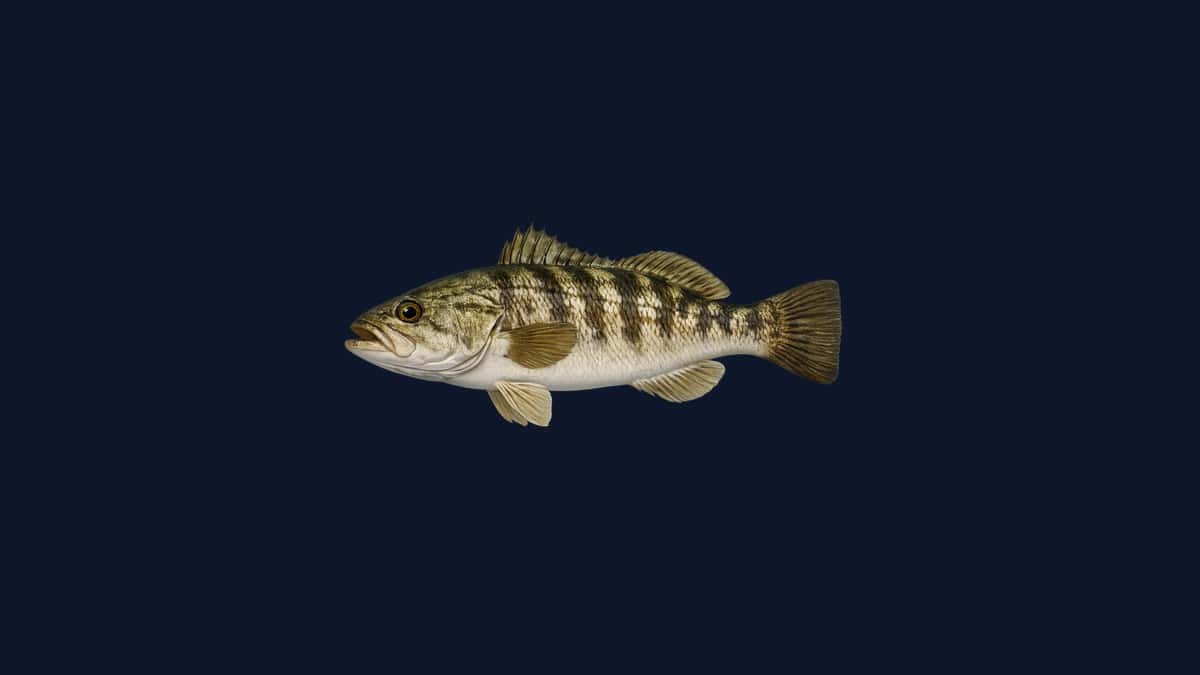
Spotted sand bass studio illustration — brown body with dark spots and faint vertical bars — against a black background.
All Species

Spotted Sand Bass

Paralabrax maculatofasciatus

Season: May through October (peak June–September in warm bay water)8 oz – 3 lbs

SoCal's warm-water inshore bass. Spotted sand bass live in bays, harbors, and eelgrass beds where calicos and barred sand bass don't go. Light tackle, aggressive bites, and genuinely accessible from shore.

Illustration: Fish City

About Spotted Sand Bass

Spotted sand bass are the overlooked third member of SoCal's bass trio. Calico bass get the magazine covers. Barred sand bass get the spawning-flat crowds. Spotted sand bass get the anglers who actually like fishing bay eelgrass on light tackle.

Paralabrax maculatofasciatus is the smallest of the three — a 2-pound spotted is a good fish, and a 3-pounder is a trophy — but they're aggressive biters and they live where the other bass don't: warm, shallow bays and harbors, eelgrass beds, and dock pilings. San Diego Bay and Mission Bay are the core habitat. Newport Back Bay and Oceanside Harbor produce them too.

They're not a destination fish in the way calicos or sand bass are. But for kayak anglers, pier fishermen, and anyone who just wants to catch something on light gear in a bay, spotted sand bass deliver.

How to Catch

This is shallow, structure-oriented bay fishing. Spotted sand bass sit in eelgrass edges, along dock pilings, and in channel-edge transitions — places where current delivers food and structure gives them ambush cover.

The go-to is a small swimbait or shrimp imitation on a 1/8 oz jig head, retrieved slowly near the bottom in 5–30 ft. Big Hammer makes small swimbait profiles that work, but honestly a Berkley Gulp! Shrimp or small curly-tail grub out-fishes most plastics in the bay because of the scent. Cast to the edge of visible eelgrass, let the lure sink, two slow cranks, pause. The bite is a sharp tap.

Live anchovy fly-lined near dock pilings works too, especially for slightly larger fish. No sinker, 1/0 circle hook, let the bait swim naturally in the current. Be patient — spotted sand bass are less aggressive than calicos on live bait.

Keep line light. These are bay fish in clear, pressured water. 10 lb braid and a 10 lb fluoro leader is fine for fish that rarely exceed 2 lbs.

Eating Profile

Mild, flaky white flesh — essentially identical to calico bass and barred sand bass. The fillets are small, so spotted sand bass are more of a light lunch than a dinner centerpiece. Pan-fried with butter and lemon is the right move, or sliced thin for fish tacos.

Legal size is 14 inches. At that size you're looking at a 10–12 oz fish — close to a pound. Consider releasing anything at the margin; spotted sand bass in bay habitat are accessible targets that don't need extra pressure.

Common Mistakes

  • Too-heavy jig head. A 1/2 oz head in 10 ft of water hits bottom before the fish can see it. Drop to 1/8 oz. The bait should fall slowly and flutter.
  • Fishing open sand. Spotted sand bass are structure fish. An open sandy bay bottom holds almost no fish. Find eelgrass edges, dock pilings, channel walls.
  • Ignoring tide. No current = no bite in bays. Moving water pushes bait past structure, which triggers fish. Plan arrival around tide changes.
  • Rushing the retrieve. Slow is better. Spotted sand bass in clear bay water look at a bait before they commit. A fast retrieve doesn't give them time.

Month-by-Month

  • Jan–Apr: Scarce. Fish in deeper bay channels. Not a worthwhile target.
  • May: First fish appear in shallower eelgrass as bay water warms past 64°F.
  • Jun–Sep: Peak season. Eelgrass beds active, fish stacked near dock structure. Best numbers of the year.
  • Oct: Still good. Slightly slower as water cools. Fish move to slightly deeper bay edges.
  • Nov–Dec: Mostly gone from accessible areas. A few fish remain in deeper bay channels.

Where to Catch Spotted Sand Bass in California

  • San Diego Bay — Mission Bay, Shelter Island flats, and eelgrass beds
  • Mission Bay shallow areas and channel edges
  • Newport Bay and Back Bay eelgrass
  • Oceanside Harbor dock pilings and sandy edges
  • Catalina Island shallower bays — Avalon Harbor area
  • Long Beach harbor shallows near eelgrass

Conditions & Habitat

Water Temp

64–76°F; warm-water specialist, most active south of LA in heated bay water

Typical Depth

5–60 ft; shallowest of the three SoCal bass species — prefer bay edges, eelgrass, and dock pilings

Diet

Small crabs, shrimp, anchovies, small fish — sandy-bottom and eelgrass ambush feeder

How to Catch Spotted Sand Bass

Techniques

  • Small swimbait (2–4 inch) on 1/8–1/4 oz jig head, bounced slow across sandy or eelgrass-edge bottom
  • Live anchovy on 1/0 circle hook fly-lined near eelgrass beds with no weight
  • Small curly-tail grub on 1/8 oz darter head — bay sight-fishing from kayak or paddleboard
  • Small surface popper at dawn near dock pilings and boat moorings
  • Shrimp fly rig dropped alongside dock pilings on tidal current

Line & Leader

8–15 lb braid to 8–12 lb fluorocarbon leader (2–3 ft). Bay fishing calls for the lightest setup that still lets you horse fish away from structure. Lighter line means more bites from pressured bay fish.

Rod & Reel Combos

  • Spinning: 7 ft medium-light rod, Shimano Stradic 2500 or Daiwa Revros, 10 lb braid
  • Alternative: 6.5 ft ultralight spinning for kayak sight-fishing in shallow eelgrass
  • Party boat: light conventional with 15 lb line, shrimp fly or small swimbait

Product links may earn Fish City a small commission at no extra cost to you. We only recommend gear we'd use ourselves.

Regulations

Part of the 5-fish aggregate daily bag limit shared with kelp bass (calico) and barred sand bass under 14 CCR § 28.30. Minimum size 14 inches total length (or 10-inch alternate length). The 4-fish barred sand bass sub-limit (effective June 1, 2025 through June 1, 2028) applies only to barred sand bass — NOT to spotted sand bass — but spotted sand bass still count toward the combined 5-fish total. No separate sub-limit exists for spotted sand bass as of the current regulation. Always verify with CDFW before your trip.

As of April 20, 2026 — CDFW source

Did You Know?

Spotted sand bass are gonochoristic — they keep the sex they're born with for life — making them the odd one out among their hermaphroditic bass cousins. California sheephead, for comparison, are born female and change to male. Spotted sand bass just stay whatever they started as.

Boats Known for Spotted Sand Bass

Charter boats with a track record on this species.

New Seaforth

Seaforth Landing

half-day bay trips that produce spotted sand bass in warm months

Daily Double

Point Loma Sportfishing

half-day nearshore bass — mix of spotted, barred, and calico

Freedom

22nd Street Landing (San Pedro)

half-day mixed bass and bay fishing

Book a Spotted Sand Bass Charter

Find charter boats targeting Spotted Sand Bass at these California landings:

Frequently Asked Questions

Spotted sand bass have rows of dark spots covering their body against a brownish background — the spots are the giveaway. Calico bass are mottled green-brown with a darker, kelp-matching pattern and no distinct spots. Barred sand bass have faint vertical bars on a tan body. In practice, spotted sand bass also tend to be smaller (under 2 lbs) and found shallower in bay and eelgrass habitat, while calicos are in the kelp.

Sources

Ready to Find the Bite?

Join thousands of California anglers using Fish City for real-time fish counts, reports, and charter data.

Download on the App StoreGet it on Google Play

Free — no subscription required