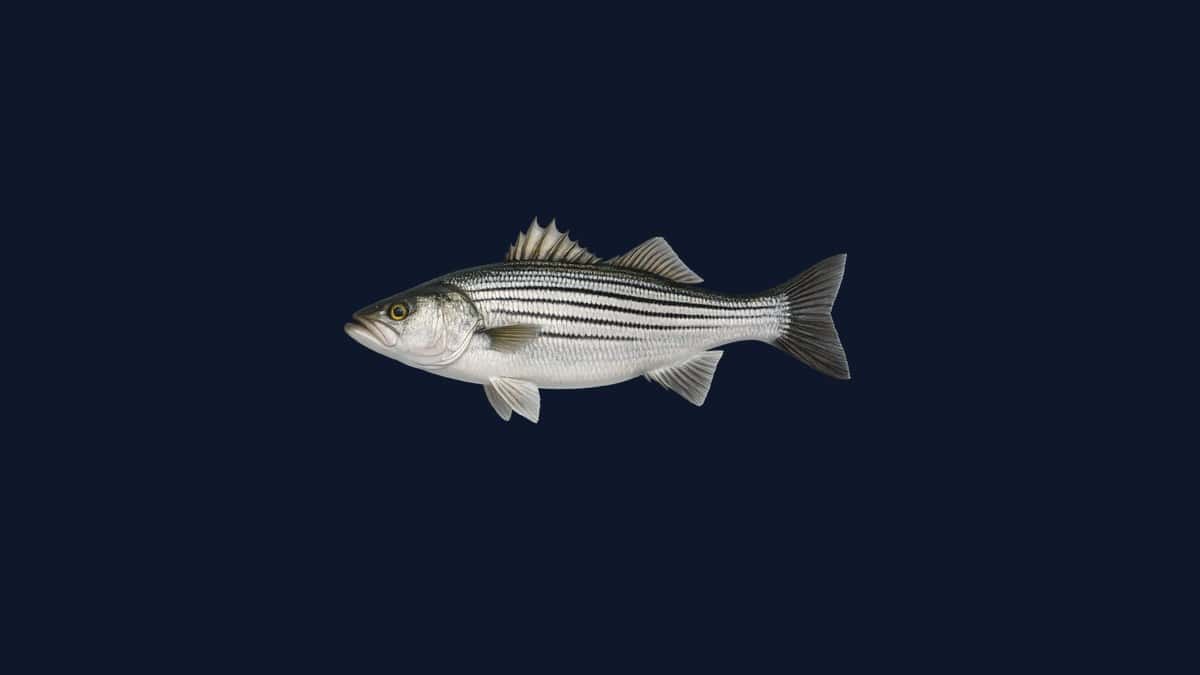
About Striped Bass
Striped bass are the fish that NorCal anglers argue about. The Delta belongs to stripers the way the kelp belongs to calico — it's the defining species of a fishery, and serious striper anglers know every tidal flat, channel edge, and current seam from Stockton to the Golden Gate.
They were introduced from the East Coast in 1879 — 132 fingerlings from New Jersey — and proceeded to take over. By the 1890s, commercial landings were topping 600,000 pounds per year. California eventually banned commercial striper fishing to protect the recreational fishery, which today is one of the most actively managed in the state.
Fish in the Delta run 5 to 20 pounds on average. A 30-pounder is a serious fish; a 50-pounder is a lifetime catch. The California state record is 67 lb 8 oz (Ralph Kincaid, O'Neill Forebay, 1992). Most Delta anglers are realistically targeting 8–15 pound schoolies.
How to Catch
Striper fishing is tidal fishing. The fish follow bait on the current — anchovies, shad, herring, grass shrimp — and position themselves where the current delivers food without requiring effort to hold position. Your job is to find where that is on a given tide.
The most reliable approach on the Delta: live anchovy on a sliding egg-sinker rig, fished near channel edges on an incoming or outgoing tide. Use a 1/0–2/0 circle hook, 2 oz egg sinker, and 18-inch fluorocarbon leader. Drop it near the transition from deep channel to shallow flat, let it swing in the current, and wait.
Trolling works for covering water and locating fish. A Bomber Long A or Yo-Zuri Crystal Minnow at 3–5 mph along channel edges will produce bites when you don't know exactly where the fish are stacked. Once you mark fish with electronics, stop and fish live bait.
Topwater at dawn and dusk is legitimate — a Sammie-style prop bait or walking lure near bait schools produces violent surface explosions in summer and fall. Less consistent than live bait but more memorable.
Eating Profile
Good table fare. The flesh is white and firm with a moderate flavor — stronger than halibut but cleaner than mackerel. Best pan-fried or baked with herbs. Bleed immediately on landing; stripers hold less well on ice than rockfish or halibut. Cook within 24 hours or freeze vacuum-sealed.
California's Delta-resident striper population is not rated by Seafood Watch (it's recreational only), but it's considered a sustainable, well-managed recreational species — no major depletion concerns given current management.
Common Mistakes
- Fishing slack water. There is almost no striper bite at slack tide. Plan your trips around the tide change — incoming and outgoing tides move bait and the fish follow.
- Fishing too fast. Trolling plugs too fast, retrieving too quickly on a swimbait. Stripers are ambush fish, not chasers. Slow down.
- Wrong depth. On a warm summer afternoon, fish drop to 20–40 ft to find cooler water. Early morning, they're up on the flats. Match the depth to the conditions.
- Ignoring sound. Stripers are from the drum family — sound-sensitive. A noisy boat, clunking tackle boxes, or a running electric motor will scatter fish from shallow flats.
Month-by-Month
- Jan–Feb: Slow. Fish in deep Delta channels, inactive in cold water. Low-percentage window.
- Mar: Bite picks up as water warms. First fish appear near bay mouth.
- Apr–May: Peak spring migration. Fish moving through San Francisco Bay into Delta tributaries to spawn. Golden Gate bar, Carquinez, lower Delta all produce.
- Jun: Post-spawn fish scatter through the Delta. Good numbers but fish are less concentrated.
- Jul–Aug: Fish go deep in summer heat. Early morning and late evening windows.
- Sep–Oct: Solid fall bite as bait schools concentrate. Topwater and trolling both work.
- Nov–Dec: Slowing down. Larger fish occasionally show on deep channel edges.