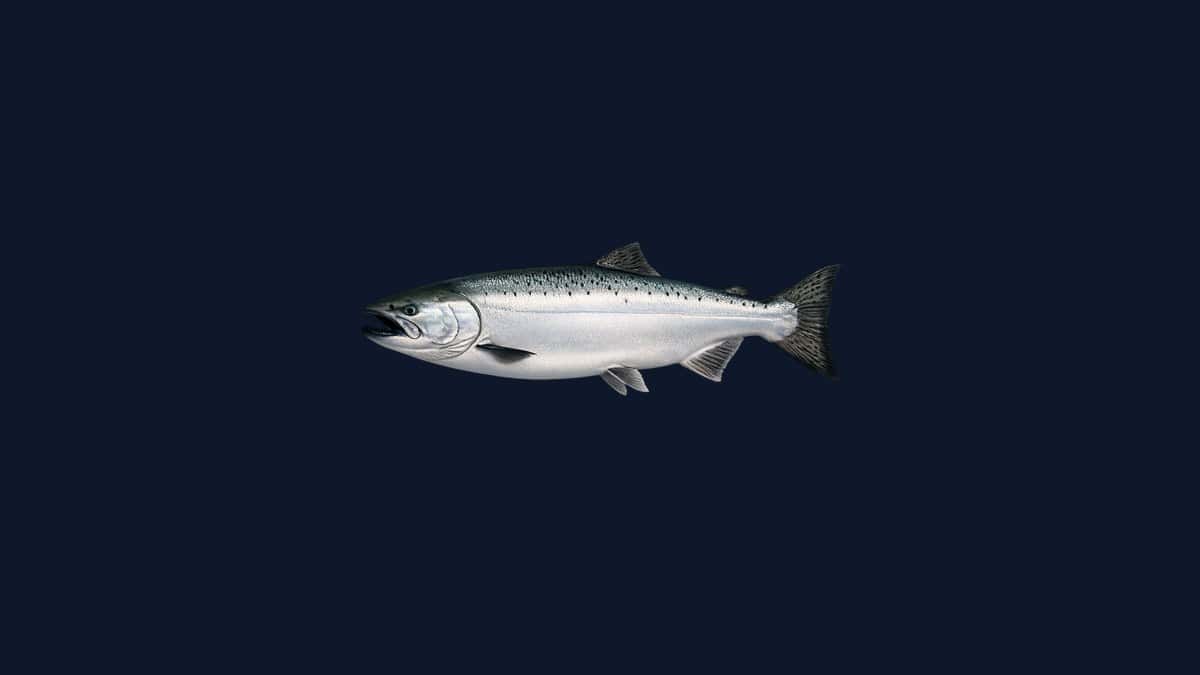
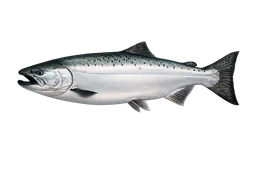
About Salmon (King/Chinook)
Chinook — also called king salmon — are the largest Pacific salmon. The max documented weight is around 61 kg (135 lbs), and fish over 40 lbs are real. Most ocean-caught California Chinook run 10 to 30 lbs. They're anadromous: they hatch in freshwater rivers, migrate to sea, spend 2 to 4 years in the ocean, then return to spawn and die.
The California ocean salmon fishery is based on two things: cold upwelling water along the coast and the Sacramento River fall-run Chinook stock, which PFMC uses as the primary management index for the California fishery. When that forecast falls below conservation thresholds, the fishery closes — as happened in 2023 and 2024.
This is a NorCal fishery. The boats fishing it are based in San Francisco, Half Moon Bay, Bodega Bay, and Fort Bragg. SoCal anglers don't generally run salmon trips; the fish aren't present in numbers south of Monterey.
How to Catch
Ocean trolling is the primary method. The party boat fleet out of San Francisco trolls herring cut-plugs or hoochies behind chrome Hot Spot flashers at 2 to 3 knots, setting downriggers to 40 to 80 ft. The flasher creates a pulsing, flashing attractor; the bait or hoochie runs 18 to 24 inches behind it. When the downrigger releases, the rod loads immediately.
Mooching is the traditional Bay Area alternative — a longer rod (10.5 ft), a live anchovy or herring hooked through the nose on a 3/0 circle, drifted near bottom with no weight or a very light sinker. Let the bait swim naturally. The bite is subtle; a circle hook sets on the pickup without a swing.
Spoon trolling with a large Krocodile or Coyote spoon on leadcore or snap weights covers water between downrigger passes and is effective on aggressive fish in shallower zones.
Salmon follow temperature breaks and bait schools. A meter graph that shows a dense bait column at 60 ft with a sharp thermocline above it is the spot.
Eating Profile
World-class table fish. Rich, orange, high-fat flesh — the same cut that shows up at fish counters for $25/lb. Ocean-caught Chinook (silver, chrome fish) are far better eating than river-caught fish that have begun to deteriorate for the spawning run. Fillet and portion on the day you catch it, refrigerate and eat within 48 hours, or vacuum-seal and freeze.
Best preparations: simply roasted with olive oil and salt at 400°F until just opaque, or cedar-planked over hardwood. The fat content means it's forgiving — harder to overcook than leaner fish.
Common Mistakes
- Booking a trip without checking the current season status. The fishery has closed with little warning in multiple recent years. Confirm with the party boat and CDFW hotline the week of your trip.
- Trolling too fast. Salmon cut-plugs run correctly at 2 to 3 knots max; over 3 knots the cut-plug spins erratically and doesn't roll the way it should.
- Wrong depth. Salmon hold on or just above the thermocline. If nobody's biting, vary the downrigger depth in 10-foot increments until you find the biting layer — 60 to 80 ft is a common productive range.
- No snubber on the trolling leader. Salmon bite hard and shake; a soft rubber snubber between the downrigger ball and the leader cushions the hit and reduces pulled hooks dramatically.
Month-by-Month
- Jan–Mar: Closed for ocean salmon in most years. River fishing possible in some systems.
- Apr–May: Ocean season opens in many areas. Early fish tend to be larger; minimum size is 24 inches through mid-May. Check exact dates by area — the opening varies by zone.
- Jun–Aug: Peak season for most California ocean areas. Best fishing typically May through July.
- Sep–Oct: Fall season — smaller fish on average but fish present. Closes October 31 in northern areas.
- Nov–Dec: Ocean season closed. Wait for PFMC preseason announcements, typically March–April.