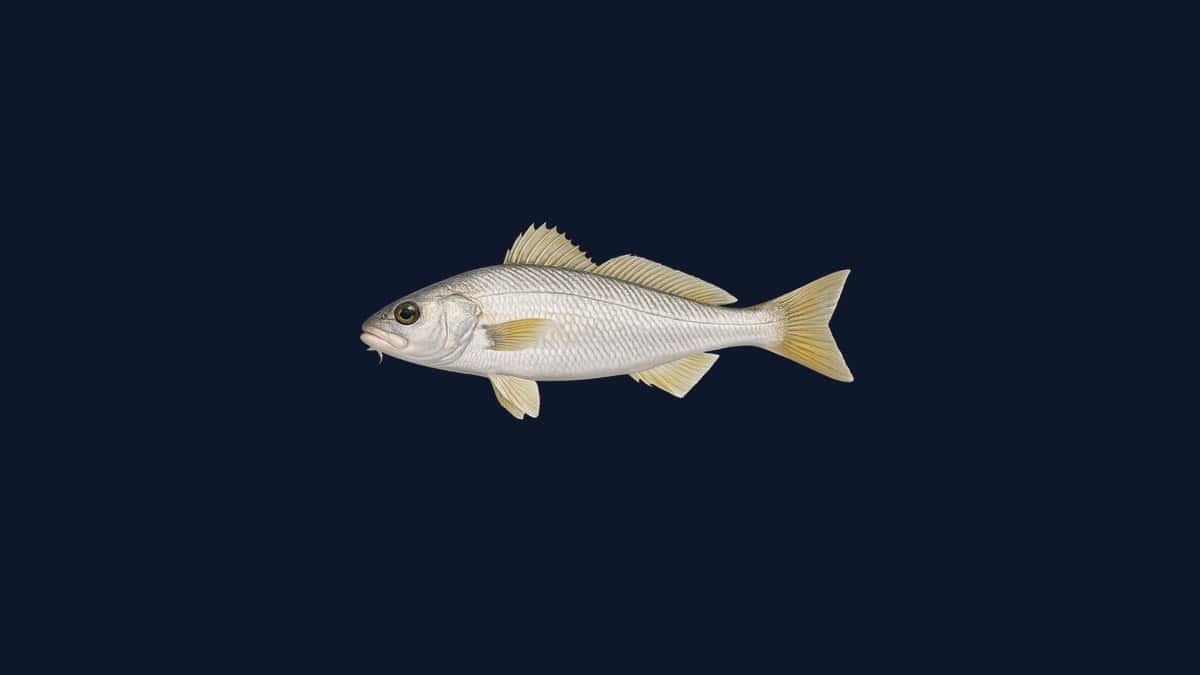
About White Croaker
White croaker (Genyonemus lineatus) are among the most abundant nearshore fish in California — a pier staple, a bait-tank regular, and the fish that introduced countless kids to fishing. They're easy to catch, widely distributed, and genuinely fun on light tackle.
They're also the subject of one of California's most important fish consumption advisories. Before keeping any white croaker, read the advisory section below. If you're fishing the Palos Verdes Shelf or adjacent Southern California waters — San Pedro Bay, Cabrillo Beach, Long Beach, Redondo Beach — California OEHHA says do not eat the fish. This is a documented public health issue, not a precautionary suggestion.
The biology: small, silvery-white fish in the drum family (Sciaenidae), typically 6–10 inches, max around 16 inches. They produce a distinctive audible croaking by vibrating the swim bladder — the sound that gives the family its name. Range extends from British Columbia to Baja, with highest abundance in central and southern California nearshore waters.
Health Advisory: Palos Verdes Shelf
California OEHHA issues a DO NOT CONSUME advisory for white croaker taken from the Palos Verdes Shelf and adjacent waters. The advisory covers San Pedro Bay (Cabrillo Beach area, Long Beach), portions of Santa Monica Bay, and surrounding waters. The contamination source is legacy DDT and PCBs from the Montrose Chemical Corporation Superfund site — decades of DDT discharge that settled into shelf sediments and persists today.
White croaker are a bottom-feeding species that feeds directly in affected sediments. DDT and PCBs bioaccumulate in their tissue. The advisory reflects documented contamination levels that pose health risks if the fish are consumed regularly.
What this means for anglers: You can fish these areas. You can catch and release. You should not retain white croaker for eating from these waters. For the Palos Verdes Shelf, San Pedro Bay, and adjacent areas, catch-and-release is the appropriate approach.
Outside the defined advisory zone, white croaker from other California coastal areas are generally acceptable to eat in moderation — but check the current OEHHA advisory at https://oehha.ca.gov/fish for current geographic scope and guidance before consuming any white croaker from California.
How to Catch
White croaker are among the easiest California fish to catch. Small bait, small hooks, sandy or pier bottom, and patience are the formula.
A size 8–10 hook with a small strip of squid or piece of sand worm, dropped on a 1/2-oz sinker to sandy bottom, is the standard pier approach. Shrimp fly rigs — a two-hook gangion under a sinker — are the party-boat standard that works just as well from a pier.
White croaker school, so when you find one you often find many. They're not finicky biters. The main failure mode is using too large a hook or too large a bait — scale down and the bites come quickly.
Eating Profile
From areas outside the advisory zone: White croaker are edible but small — plan on 8–12 fish for a meal. Mild flavor, soft white flesh. Best fried whole or filleted and pan-fried. They're often used as live bait rather than eaten, which is a reasonable use of a 6-inch fish.
From Palos Verdes Shelf and adjacent waters: Do not eat. See above.
Common Mistakes
- Ignoring the advisory. The OEHHA advisory for Palos Verdes Shelf white croaker is real and documented. Don't dismiss it.
- Hooks too large. Size 8 is about right. Size 2 is too big — you'll miss bites and catch fewer fish.
- Bait too large. A small strip of squid or a piece of worm the size of your thumbnail is all you need.
- Expecting size. White croaker rarely exceed 1 pound. That's the species, not the technique.
Month-by-Month
- Jan–Mar: Present year-round. Piers and nearshore areas produce fish in winter.
- Apr–May: Bite picks up as water warms. School activity increases.
- Jun–Sep: Peak. Schools active, most productive from piers and sandy shore.
- Oct: Solid fall bite continues.
- Nov–Dec: Slower but present. Nearshore piers and jetties produce fish year-round.