About Yellowfin Croaker
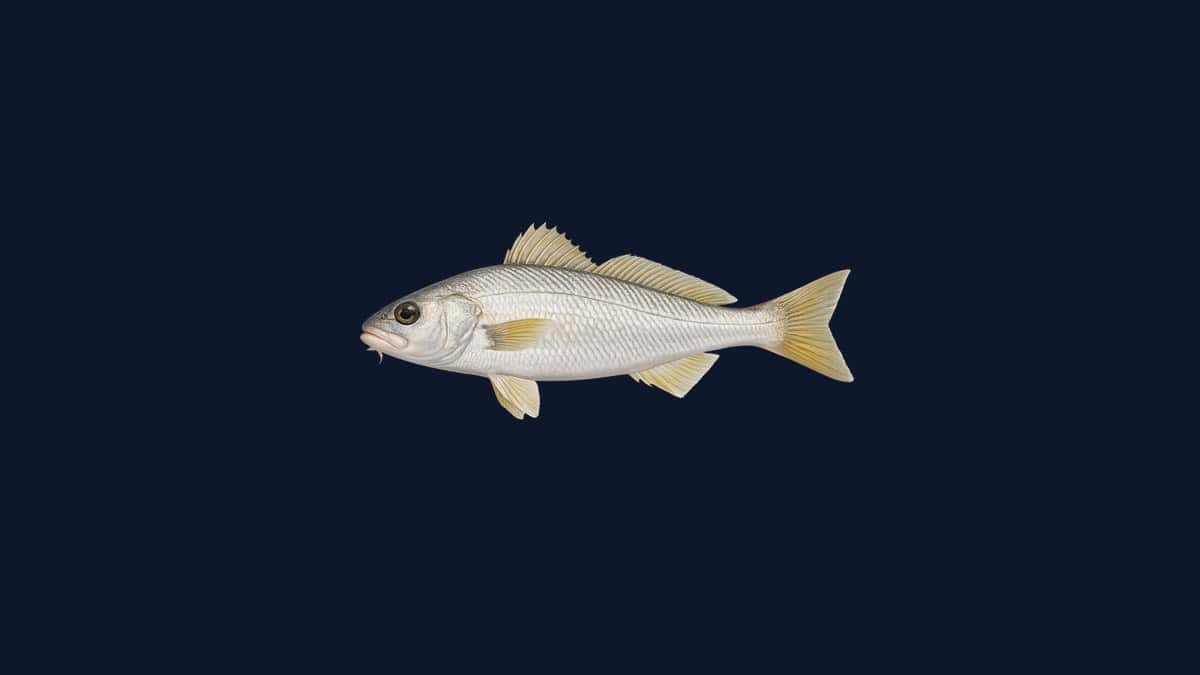
Yellowfin croaker (Umbrina roncador) are the surf-zone croaker of SoCal — a fish you catch standing on a sandy beach with a surf rod, not from a boat anchored over a reef. The golden-yellow fins are the unmistakable field mark; no other California croaker has this coloring. Most California fish run 10–16 inches; the species can reach 22 inches and 5+ lbs in its southern range.
Their distribution says something about the fish. Range runs from Point Conception south through Baja to the Gulf of California — a warm-water zone. You won't find yellowfin croaker in significant numbers north of Santa Barbara. This is a SoCal summer species at its northern limit.
Habitat: sandy surf zones, bays, and tidal sloughs. They're feeding in the wash, right where breaking waves tumble sand crabs and marine worms out of the substrate. This makes them one of very few legitimate trophy fish accessible by foot from a public California beach.
How to Catch
Sand crab is the bait. Mole crabs (also called sand crabs or sand fleas), dug from the wet sand at the wave line, are the highest-percentage yellowfin croaker bait in the surf zone. Tear one in half, thread it on a size 4–6 hook, send it to the break on a sliding egg sinker rig — that's the fundamental approach.
The rig: 15–20 lb braid mainline, 3/4 oz egg sinker sliding on the main line, stop bead, 18-inch fluorocarbon leader (10 lb), size 4–6 octopus hook. Cast beyond the break, let it sink, hold tight to feel the bite. Yellowfin are not subtle biters — the tap is clear.
Timing matters. Fish the incoming tide through high — the active surf-zone bite. Slack tide and outgoing tend to shut off. Fish 1–2 hours either side of high tide and you'll be in the best window.
Bloodworm (sandworm) or marine worm is the alternative bait. Especially productive in bays and tidal sloughs where sand crabs aren't present.
Eating Profile
Better than white croaker in terms of size and flavor. Yellowfin croaker have mild, white, moderately firm flesh — pan-fried in butter with lemon, or done whole under 14 inches. The larger size means real fillets rather than scraps. A 1.5-lb yellowfin croaker from a summer surf session is a legitimate dinner fish.
Common Mistakes
- Wrong time of year. Yellowfin are warm-water SoCal fish. Fishing them in January at a NorCal beach isn't going to produce. Focus effort May through September in SoCal.
- Wrong bait. Squid and soft plastic work for white croaker. For yellowfin in the surf, sand crab dramatically outperforms everything else. Dig your own bait from the wave line.
- Wrong tide. Slack or outgoing tide in the surf zone is dead time for yellowfin. Fish incoming through high.
- Assuming a minimum size exists. Yellowfin croaker have no species-specific minimum size in California ocean waters — they fall under the § 27.60 aggregate (20 finfish combined, 10 of any one species). Some older or secondary sources cite a 10-inch minimum; primary sources (CDFW, Cornell LII) do not list one. A practical 10-inch self-imposed floor makes sense for yield, but it's not a legal requirement. Verify current rules each season.
Month-by-Month
- Jan–Feb: Rare in California. Species is mostly absent or negligible north of the border in winter.
- Mar–Apr: Early fish show up as water warms. Light action.
- May–Jun: Bite picks up substantially. Sandy beach surf zones begin producing.
- Jul–Sep: Peak. Best months for yellowfin croaker in SoCal surf. Sand crab bait, incoming tide, 6-hour windows produce reliably.
- Oct: Good fall bite as water holds warmth.
- Nov–Dec: Declining as water cools. A few fish remain, but this is the end of the season.