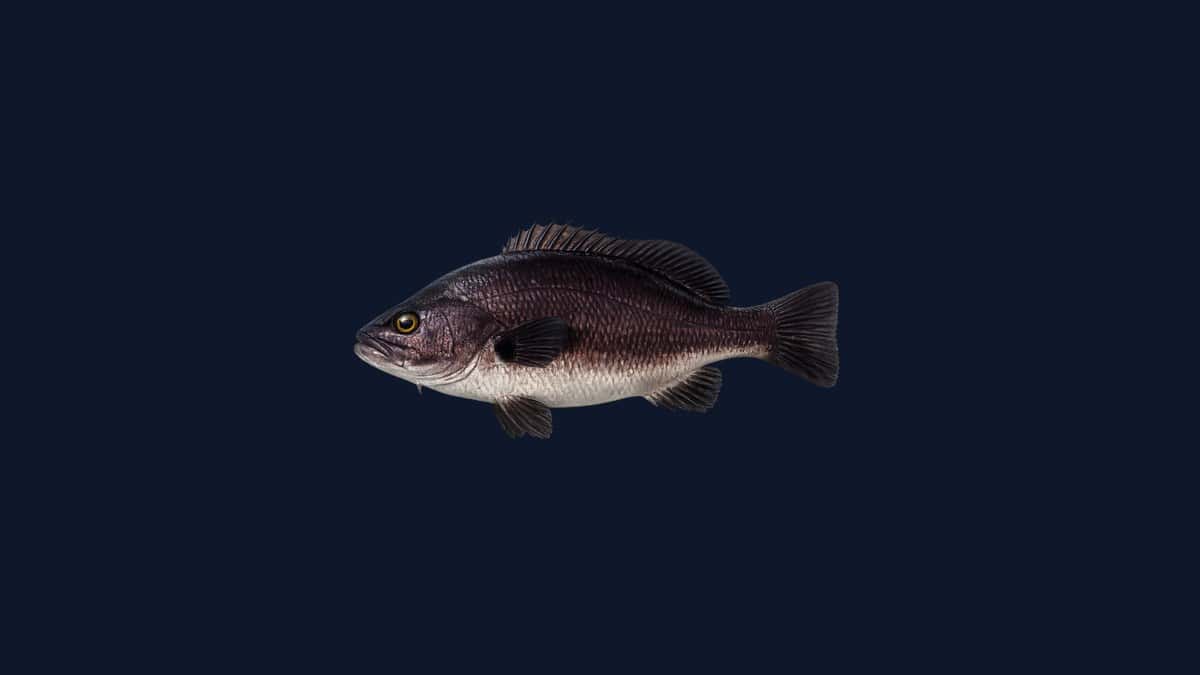
Black croaker studio illustration — dark-sided croaker with pale belly, found in rocky reef caves and crevices — against a light background.
All Species

Black Croaker

Cheilotrema saturnum

In Season Now2 oz – 2 lbs

Black croaker are a SoCal reef croaker that lives in caves and crevices on exposed rocky coasts — a more specialized habitat than the sand-loving white croaker. They're nocturnal feeders that produce the characteristic drumming sound of the Sciaenidae family and provide better sport than their smaller white cousins.

Illustration: Fish City

About Black Croaker

Black croaker (Cheilotrema saturnum) occupy a different ecological niche than the white croaker you'll find schooling on open sand. These fish live in the shadows — caves, crevices, ledges, and the protected underside of rocky structure on exposed coasts and bay edges. FishBase characterizes them as "common species found near the bottom, often in caves and crevices."

The coloration reflects the habitat: dark blue-gray to nearly black on the upper body, pale belly, with the subtle build of a crevice-dwelling predator rather than a schooling open-water fish. Most run 8–14 inches; maximum around 17 inches and 1.5 lbs. They're larger than white croaker and produce better sport on appropriate tackle.

Range: Central California south through Baja, with highest abundance in SoCal from San Diego to Santa Barbara. These are essentially a SoCal and Baja species — uncommon north of Point Conception.

How to Catch

The key behavioral fact is nocturnal feeding. Black croaker are substantially more active and catchable in the 2–3 hours after sunset than during daylight. Their daytime strategy is holding in shelter; night is when they come out to feed near the reef.

Small live crab is the top bait — shore crabs, hermit crabs (pull them from the shell), or rock crabs torn into pieces. Black croaker eat crabs as a primary diet item, and fresh crab is hard for them to ignore near their home structure. Size 4 hook, fished tight to a rocky ledge or crevice edge.

Live shrimp or ghost shrimp on a size 6 hook is a close second and easier to source than live crabs. Mussel chunks placed near crevice openings produce as well.

Presentation is everything — you need to get the bait to rocky structure, not hang it over open water. A short leader (12–18 inches) on a small sinker placed near ledge edges keeps the bait where the fish are.

Eating Profile

Mild white flesh, roughly comparable to white croaker but with larger fillets at legal size. Pan-fried or done whole if under 12 inches. A reasonable keep when you're catching them, but not a destination eating fish. At 10–14 inches you'll get real fillets rather than postage-stamp scraps.

Common Mistakes

  • Fishing in daylight only. Black croaker are night feeders. If you want to specifically target them, plan for the evening bite and fish through dark.
  • Wrong habitat. Open sand and bay centers hold white croaker. Rocky crevices, ledges, and cave edges hold black croaker. Know the habitat before you cast.
  • Hooks too large. Despite being a crab feeder with a reasonable mouth, black croaker are not large fish. Size 2–6 hooks are correct; going larger reduces bites.
  • Misreading the regulation. Black croaker have no species-specific minimum size in California ocean waters; they fall under the § 27.60 finfish aggregate (20 combined, 10 of any one species). If you hear someone cite a 10-inch minimum, ask for the regulation number — primary sources (CDFW, Cornell LII) do not list one. Verify the current rule before every trip.

Month-by-Month

  • Jan–Mar: Present year-round on rocky structure. Night bite available throughout winter.
  • Apr–May: Activity increases as water warms. Rocky ledges and jetty bases begin producing.
  • Jun–Sep: Peak. Night fishing on rocky structure most productive.
  • Oct: Good fall bite. Nocturnal fishing along rocky SoCal coastline continues.
  • Nov–Dec: Fish hold to rocky structure through winter. Night bite remains available to dedicated shore anglers.


Where to Catch Black Croaker in California

  • Rocky reefs and sea caves from San Diego to Santa Barbara
  • Exposed rocky points and ledges with crevice habitat
  • Jetty bases adjacent to rocky structure
  • Catalina Island rocky reef caves
  • Palos Verdes rocky outcrops
  • San Diego rocky nearshore — Point Loma, La Jolla rocks

Conditions & Habitat

Water Temp

60–72°F; SoCal rocky reef and kelp-cave habitat

Typical Depth

3–46 m (10–150 ft); caves, crevices, and rocky ledges on exposed coasts and open bays

Diet

Crabs, small crustaceans — specialized crab-feeding reef croaker

How to Catch Black Croaker

Techniques

  • Small live crab (shore crab, hermit crab) on a size 2–4 hook near rocky bottom
  • Mussel chunk on size 6 hook placed near crevice openings
  • Live shrimp or ghost shrimp on size 6 hook at dusk and after dark
  • Small cut squid on dropper loop near rocky structure
  • Soft crab pieces on size 2/0 hook fished on a sliding sinker near ledges

Lures & Baits

  • Small live shore crab on size 4 hook — the highest-percentage black croaker bait
  • Mussel chunk on size 6 hook with split shot — near crevice openings
  • Live ghost shrimp on size 6 octopus hook — especially productive at night
  • Small squid strip on size 6 hook with 1/4–1/2 oz sinker near ledges
  • Berkeley Gulp! Crab 1" (green, natural) on 1/8 oz jig head near rocks

Line & Leader

10–15 lb fluorocarbon or mono, or 15 lb braid to 10 lb fluorocarbon leader. Black croaker live in rocky structure — abrasion resistance matters more than ultra-light presentation.

Rod & Reel Combos

  • Shore/jetty: 7–8 ft medium-light spinning rod, 2500 reel, 15 lb braid to 10 lb fluoro leader
  • Rocky ledge fishing: same setup with slightly shorter leader to keep bait near bottom structure
  • Night fishing from rocks: add a small light or glow bead above the hook — black croaker respond to visual stimulus at night

Product links may earn Fish City a small commission at no extra cost to you. We only recommend gear we'd use ourselves.

Regulations

Black croaker have **no species-specific minimum size and no species-specific bag limit** in California ocean waters. They fall under the general finfish aggregate (14 CCR § 27.60): 20 finfish combined of all species daily, not more than 10 of any one species. No closed season. Unlike yellowfin croaker, spotfin croaker, and California corbina, black croaker are not among the species whose commercial sale is prohibited under Fish and Game Code § 8373 — but recreational take still falls under the finfish aggregate. Always verify current CDFW regulations before your trip.

As of April 20, 2026 — CDFW source

Did You Know?

FishBase describes black croaker as 'often found in caves and crevices of exposed coasts and open bays' — a habitat description that matches their secretive, cave-dwelling lifestyle. Like all Sciaenidae, they produce sound using specialized sonic muscles that vibrate the swim bladder. The black croaker's geographic range runs from central California to Baja California, making it primarily a SoCal species with limited presence north of Point Conception. The species name saturnum (Latin: of Saturn) may reference the dark, somber coloration of the fish.

Book a Black Croaker Charter

Find charter boats targeting Black Croaker at these California landings:

Frequently Asked Questions

Habitat and behavior, primarily. White croaker are sand-bottom schooling fish that aggregate in open nearshore water and bays. Black croaker are darker, larger, and live in rocky reef caves and crevices on exposed coasts — more like a reef fish than a schooling bay fish. Black croaker are also nocturnal feeders. They're in the same family (Sciaenidae) and both produce the distinctive drum sound, but they occupy completely different habitats.

Sources

Ready to Find the Bite?

Join thousands of California anglers using Fish City for real-time fish counts, reports, and charter data.

Download on the App StoreGet it on Google Play

Free — no subscription required