About Opaleye
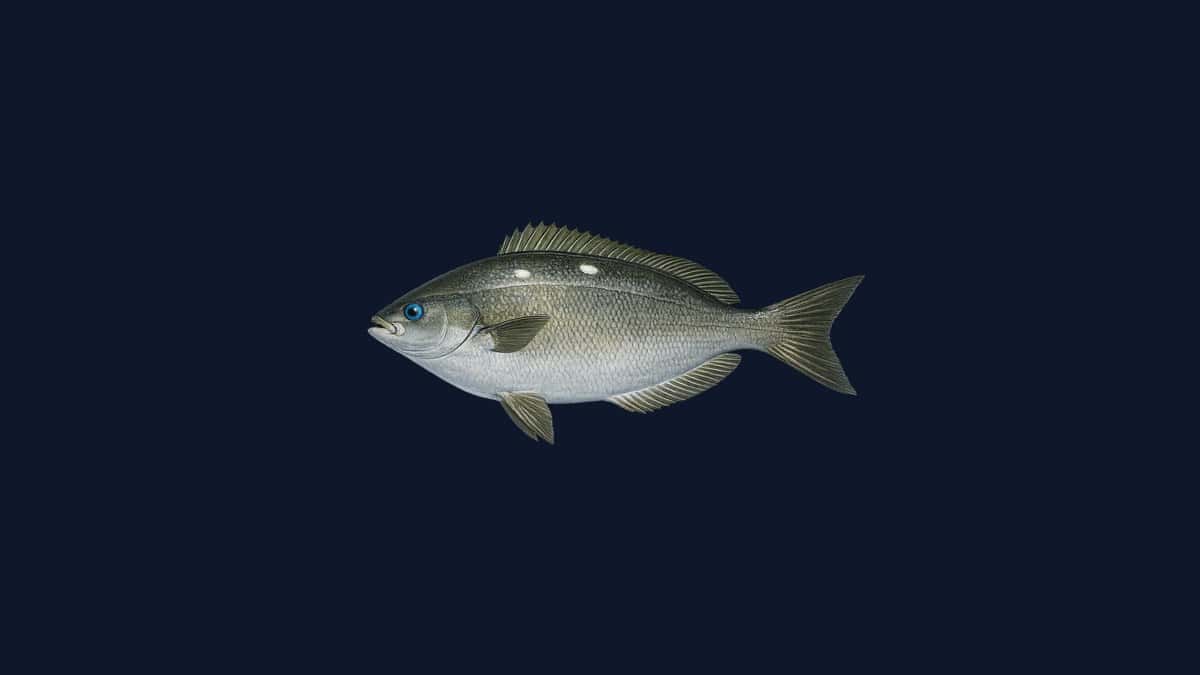
Opaleye (Girella nigricans) are the largest herbivorous fish you're likely to encounter on a California nearshore reef — up to 66 cm (26 inches) by FishBase records, and a solid 2-pound fish at a normal California legal catch. The blue-green iridescent eyes give the species both its name and immediate visual identification.
They're grazers. Opaleye live in intertidal zones, tide pools, and kelp forests where they feed primarily on algae and sea lettuce. This is the key behavioral fact that changes how you fish for them — most live-bait and swimbait approaches that work for calico bass or cabezon will produce little to nothing for opaleye. You need to fish to their actual diet.
Range: San Francisco south to southern Baja California. They're more evenly distributed than halfmoon — present in SoCal but also common on the Central Coast north to Monterey. FishBase notes they're a resident intertidal species with documented homing behavior.
How to Catch
Fresh sea lettuce (green moss) is the top bait. Sea lettuce is the flat, bright-green algae found on exposed rocks at low tide. Tear a piece, thread it onto a size 8–10 hook with no weight or minimal split shot, and present it near the kelp base or rocky reef where opaleye are foraging. This approach takes patience — opaleye are deliberate grazers, not aggressive ambush strikers — but it's the most effective method.
Green peas on a size 8–10 hook work on the same principle and are far easier to source. Thread 2–3 frozen peas onto the hook. This sounds improbable until the first opaleye takes it confidently.
Mussel chunks — a small piece on a size 8 hook — tap into the invertebrate component of their diet. More effective than live fish bait.
A float rig with the bait suspended at the right depth near kelp is effective in calmer water. Opaleye feed at all depths from the surface down through the kelp canopy.
The fight is real. Opaleye make dogged, diving runs that test light gear near structure. Set the drag appropriately and don't try to horse them — they'll break light line on rocks if given the opportunity.
Eating Profile
Good eating that surprises people who assume herbivores taste like their diet. Opaleye have mild, clean, white flesh with a light flavor — some anglers consider them among the better-tasting nearshore species of their size. The herbivorous diet produces cleaner flesh than reef fish that feed heavily on shrimp and bait. Pan-fry with lemon and herbs or prepare whole.
Common Mistakes
- Live bait. Opaleye are herbivores. A live anchovy or sardine will catch other species while ignoring opaleye. Match the diet.
- Too-large hooks. Small mouth. Size 8–10 is correct. Larger hooks reduce hook-ups dramatically.
- Fishing open water. Opaleye are intertidal and reef-associated. They're not cruising offshore. Put the bait in the kelp, on the rocks, or in the tide pool zone.
- Ignoring the 10-per-species limit. Same as halfmoon — 20 fish daily total, not more than 10 of any one species.
Month-by-Month
- Jan–Mar: Present year-round. Shore fishing in tide pools and rocky areas available even in winter. Fish are active but slower in cold water.
- Apr–May: Bite picks up. Good kelp-edge and intertidal access.
- Jun–Sep: Peak. Fish active on shallow structure. Shore accessible from rocky points and kelp-adjacent areas.
- Oct: Solid fall bite. Water holds warmth through October in SoCal.
- Nov–Dec: Slower but present. Rocky intertidal areas continue producing fish year-round.