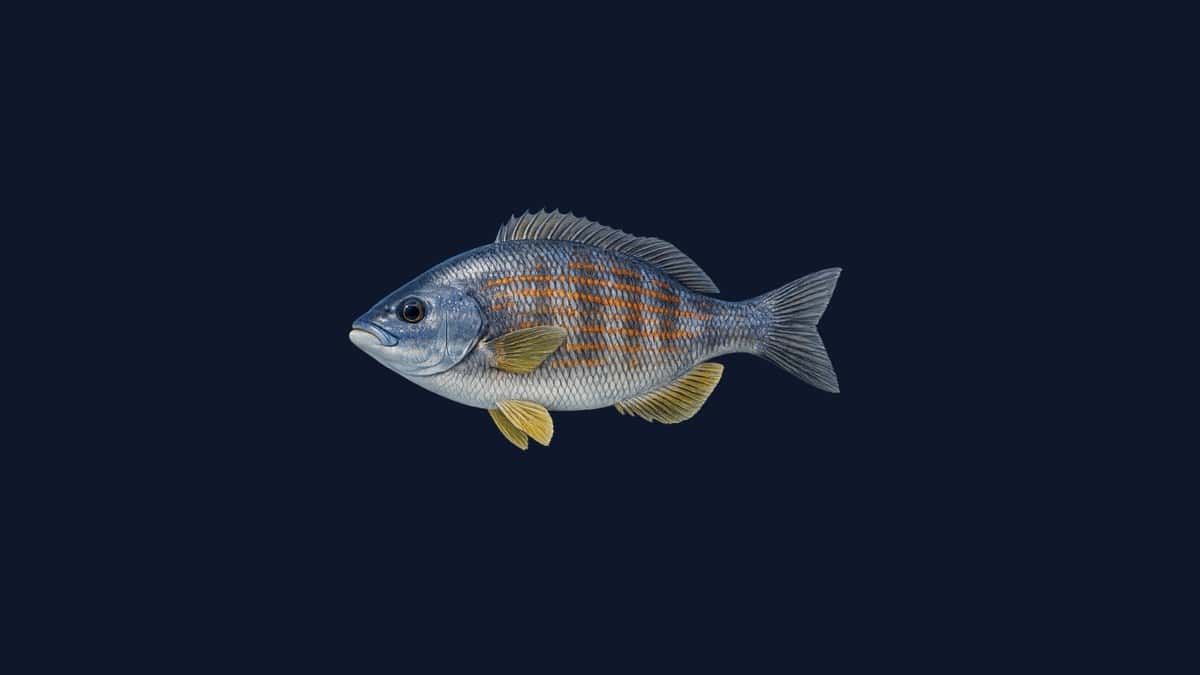
Striped seaperch (blue perch) studio illustration — elongated surfperch with horizontal blue and orange stripes against a light background.
All Species

Blue Perch (Striped Seaperch)

Embiotoca lateralis

In Season Now2 oz – 1 lb

Striped seaperch (Embiotoca lateralis) — a surfperch family member (Embiotocidae), not a rockfish and not a parrotfish. Named for its vivid blue and orange horizontal stripes, blue perch inhabit rocky shores and kelp edges from Alaska to Baja and bite year-round on ultra-light gear.

Illustration: Fish City

About Blue Perch

Blue perch is the common name for striped seaperch (Embiotoca lateralis), a member of the surfperch family (Embiotocidae) — not a rockfish, not a sheephead blue phase, not a wrasse. The name traces to the vivid horizontal blue, orange, and red stripes that run the length of the fish's flanks, making it one of the more visually striking small fish on the California coast.

These are live-bearing fish. No eggs, no larvae — females carry developing young internally and give birth to fully-formed juveniles. It's a hallmark of the Embiotocidae family and explains why surfperch are so abundant in nearshore areas despite their modest size.

Blue perch range from southeastern Alaska to Baja California, with the densest populations in the rocky nearshore habitat of central and northern California. In SoCal they're present but less abundant; north of Point Conception they're everywhere. The fish are demersal — they hold close to rocky structure, kelp holdfasts, pilings, and jetties rather than cruising open water.

How to Catch

Light tackle is mandatory, not optional. A 4- to 6-pound fluorocarbon leader to a size 8 or 10 hook is a reasonable starting point. The fish are small, the mouths are soft, and heavy line produces refusals and lost hooks.

The best bait is small. Ghost shrimp, live shrimp, mussel chunks, sand crab (mole crab torn in half), and small strips of squid all produce. The key is getting it to the bottom near rocky structure and leaving it there — blue perch are methodical foragers, not ambush predators. A 2-inch grub on a 1/16-oz jig head, dropped along a jetty wall or kelp stipe, is an effective artificial option.

Shore and jetty fishing are ideal. Rocky coves with kelp nearby are the prime spots — cast into pockets between rocks, hold the bait near the bottom, wait. Blue perch are not shy. If they're present, they'll find the bait.

Eating Profile

Acceptable table fare when you have enough of them. The flesh is mild and white but the fish are small — a 10-inch blue perch yields very little fillet. If you're targeting blue perch specifically for the table, plan on catching and cleaning a dozen. Pan-fried in butter with lemon is the classic preparation. Not a destination eating fish, but perfectly edible when conditions produce numbers.

Common Mistakes

  • Too-heavy line. 20 lb line on a light perch is not fishing — it's hanging bait off the bottom. Drop to 6 lb and you'll catch five times the fish.
  • Fishing open sandy bottom. Blue perch are a structure species. Open sand holds none. Work the rocks, jetty walls, and kelp edges.
  • Hard hooksets. The mouths are soft — a hard trout-style hookset rips the hook through the lip. Reel down and apply steady pressure.
  • Expecting large fish. These are a half-pound species. Approach them as a light-tackle shore target, not a trophy fishery.

Month-by-Month

  • Jan–Mar: Present year-round. Shore access is open. Fish slower and deeper in cold water.
  • Apr–May: Activity picks up as water warms. Good jetty and kelp-edge bite.
  • Jun–Sep: Peak. Fish active on shallow structure. Best numbers from shore access.
  • Oct: Bite remains solid through early fall cooling.
  • Nov–Dec: Slower but catchable. Rocky structure provides thermal refuge — fish hold to warmer pockets near kelp.


Where to Catch Blue Perch (Striped Seaperch) in California

  • Rocky shores and jetties throughout California
  • Kelp forest edges from San Diego to northern California
  • Piers adjacent to rocky structure
  • Central Coast tide pools and nearshore rocky reef
  • NorCal nearshore kelp — blue perch abundant north of Point Conception
  • Sandy surf zones adjacent to rock

Conditions & Habitat

Water Temp

50–64°F; prefers cool nearshore rocky habitat

Typical Depth

Surf zone to 21 m (70 ft); rocky coasts, kelp beds, jetties

Diet

Small crustaceans, worms, mussels, herring eggs — opportunistic near-bottom forager

How to Catch Blue Perch (Striped Seaperch)

Techniques

  • Small live shrimp or ghost shrimp on a size 8–10 hook — top bait
  • Sand crab, mussel strip, or small squid chunk on a light rig near rocks
  • Tiny soft plastics (1–2 inch grub) on 1/16–1/8 oz jig head
  • Fly-lining a small piece of mussel under a light float
  • Drop-shot with small worm imitation near kelp base

Lures & Baits

  • Ghost shrimp or live shrimp on size 8–10 octopus hook — the definitive surfperch bait
  • Mussel chunk on size 8 hook with split shot — simple and effective from rocks or jetties
  • Berkley PowerBait Micro Grub 1" (chartreuse, white) on 1/16 oz jig head
  • Sand crab (mole crab) torn in half on size 6 hook — surf zone access
  • Small strip of squid on size 10 hook with 1/4 oz split shot

Line & Leader

4–8 lb mono or fluorocarbon main line, or 10 lb braid to 6 lb fluorocarbon leader (18 in). Light drag, light presentation. Blue perch are small and soft-mouthed — heavy tackle produces more lost hooks than caught fish.

Rod & Reel Combos

  • Shore: 7 ft ultralight spinning rod, 1000–2000 reel, 4–6 lb mono or 8 lb braid — ideal for rocky shore fishing
  • Pier: same ultralight setup — add a small float to keep bait off bottom structure
  • Fly rod: 5–6 wt with a small Clouser on a sinking tip line, jetty and rocky cove situations

Product links may earn Fish City a small commission at no extra cost to you. We only recommend gear we'd use ourselves.

Regulations

Striped seaperch fall under the California surfperch aggregate regulation (14 CCR § 28.59), which covers all Embiotocidae species. Daily bag limit is 20 surfperch aggregate in ocean waters (5 aggregate in San Francisco and San Pablo Bays), with not more than 10 of any one species; shiner perch are exempt from the aggregate and have their own limit. Only redtail surfperch carry a 10.5-inch minimum; striped seaperch (Embiotoca lateralis) has no minimum size. Open year-round in ocean waters; San Francisco Bay and San Pablo Bay carry an April 1–July 31 closure (shiner perch exempt). Always verify current CDFW regulations before your trip.

As of April 20, 2026 — CDFW source

Did You Know?

Striped seaperch are viviparous — females carry developing embryos internally and give birth to fully-formed juveniles. A single female can produce 7–35 live young per brood, and the newborn fish are immediately independent, typically around 35–50 mm at birth. This live-birth strategy, unusual among marine bony fishes, means blue perch have a lower reproductive output than egg-layers but higher juvenile survival — a trade-off that's worked well for the Embiotocidae family for millions of years.

Book a Blue Perch (Striped Seaperch) Charter

Find charter boats targeting Blue Perch (Striped Seaperch) at these California landings:

Frequently Asked Questions

No. Blue perch is a common name for striped seaperch (Embiotoca lateralis), a member of the surfperch family (Embiotocidae). Rockfish are entirely different — they're Sebastes species in the Scorpaenidae family. Blue perch are live-bearing surfperch that inhabit rocky shores and kelp edges; rockfish are deeper reef fish that release eggs. The coloring is different, the biology is different, and they're caught with different gear.

Sources

Ready to Find the Bite?

Join thousands of California anglers using Fish City for real-time fish counts, reports, and charter data.

Download on the App StoreGet it on Google Play

Free — no subscription required