About Rubberlip Seaperch
Rhacochilus toxotes is the big perch of the California rocky shore — the one that makes you look twice when you pull it out. Most surfperch are 6–10-inch fish that barely register on a bait setup. Rubberlip regularly reaches 14–18 inches and 1.5 to 2 pounds; FishBase records a maximum of 47 cm (18.5 inches). That's enough fish to actually fillet.
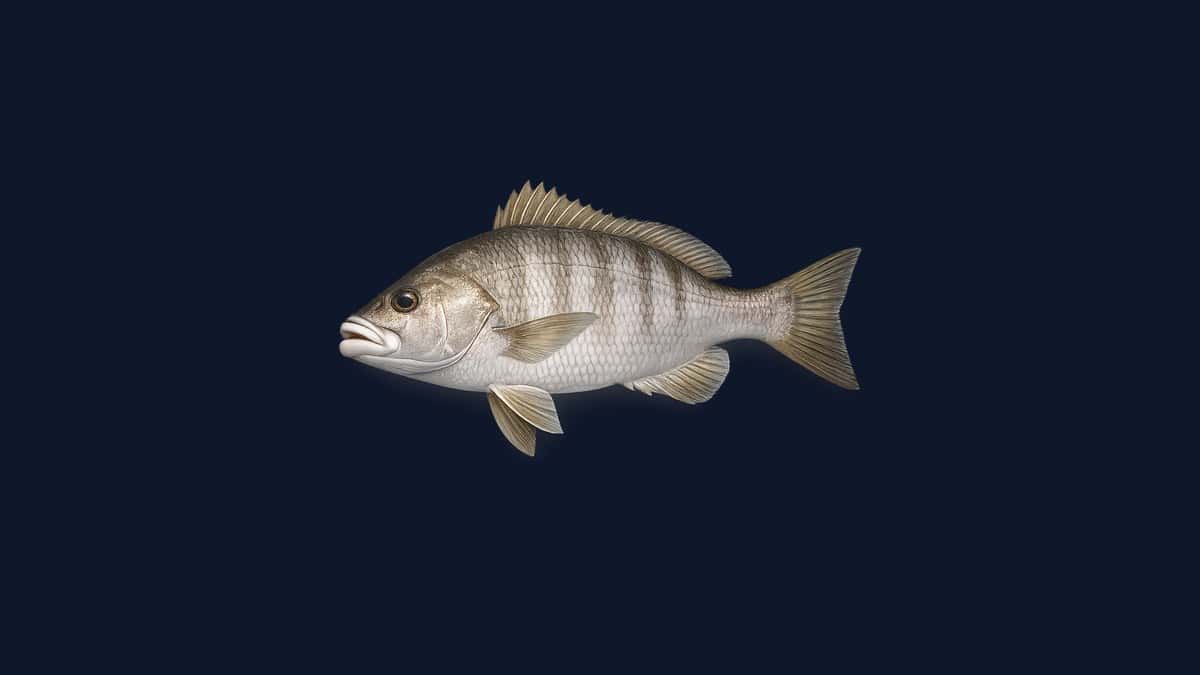
The identification is immediate: thick, white, rubbery lips that look cartoonishly oversized for the fish's body. No other California surfperch has this feature. The body is pinkish to grayish with faint vertical barring on younger fish, and the fish often schools in small groups along rocky structure.
Range: Mendocino County south to central Baja California, including Guadalupe Island. Most abundant north of Point Conception, where Central Coast and NorCal rocky reefs hold solid populations. SoCal jetties and rocky points produce rubberlip too, but the big fish are generally in cooler water.
How to Catch
Rubberlip are bottom-structure feeders — they root through mussels, barnacles, and rocky crevices looking for crabs, shrimp, and worms. Your bait presentation should reflect that.
Fresh mussels on a size 6–8 hook with light split shot is the top approach. Get the bait to the rock face, let it sit at the bottom, and wait. Rubberlip will find it. This works off jetties, rocky shoreline points, and pier pilings equally well.
Ghost shrimp or live grass shrimp on a size 6 hook is the second-best option — especially productive in areas with sandy patches near rock. Sand crab torn in half works well in surf-adjacent rocky habitat.
Compared to smaller surfperch, rubberlip can handle slightly heavier tackle — 10–12 lb fluoro leader is appropriate. These are 1- to 2-lb fish in rocky structure, and they'll test your gear. Not heavy by any standard, but not ultralight either.
Eating Profile
The best-eating surfperch in the family, and it's not close. The larger size produces actual fillets rather than the postage-stamp scraps you get from smaller perch. Flesh is mild, white, and firm — pan-fried with butter and lemon, or done whole if the fish is under 14 inches. Rubberlip is worth specifically targeting if table fare is the goal.
Common Mistakes
- Fishing too light. 4 lb line is appropriate for blue perch. Rubberlip can hit 2 lbs in rocky structure — bump to 10 lb fluoro.
- Bait too large. Rubberlip have distinctive thick lips, but the mouth opening is moderate. A large cut bait is harder for them to take cleanly. Small bait presentations — golf ball-sized mussel chunk, half a sand crab — outperform large presentations.
- Fishing open sand. This is a structure species. Open sandy bottom holds no rubberlip. Get the bait to rocks, pilings, or kelp base.
- Ignoring the 20-fish aggregate. Surfperch share a 20-fish daily bag limit across all species. Keep a running count of what you've already retained.
Month-by-Month
- Jan–Mar: Shore access open year-round. Rubberlip present year-round in rocky habitat. Fish at slower, cooler water pace.
- Apr–May: Bite picks up as water warms. Good jetty and rocky-shore access.
- Jun–Sep: Peak season. Fish active on shallow structure, accessible from shore.
- Oct: Solid fall bite continues. Good fishing along Central Coast before water cools.
- Nov–Dec: Slower but present. Rocky habitat continues producing fish through winter in SoCal and Central Coast areas.