About Halfmoon
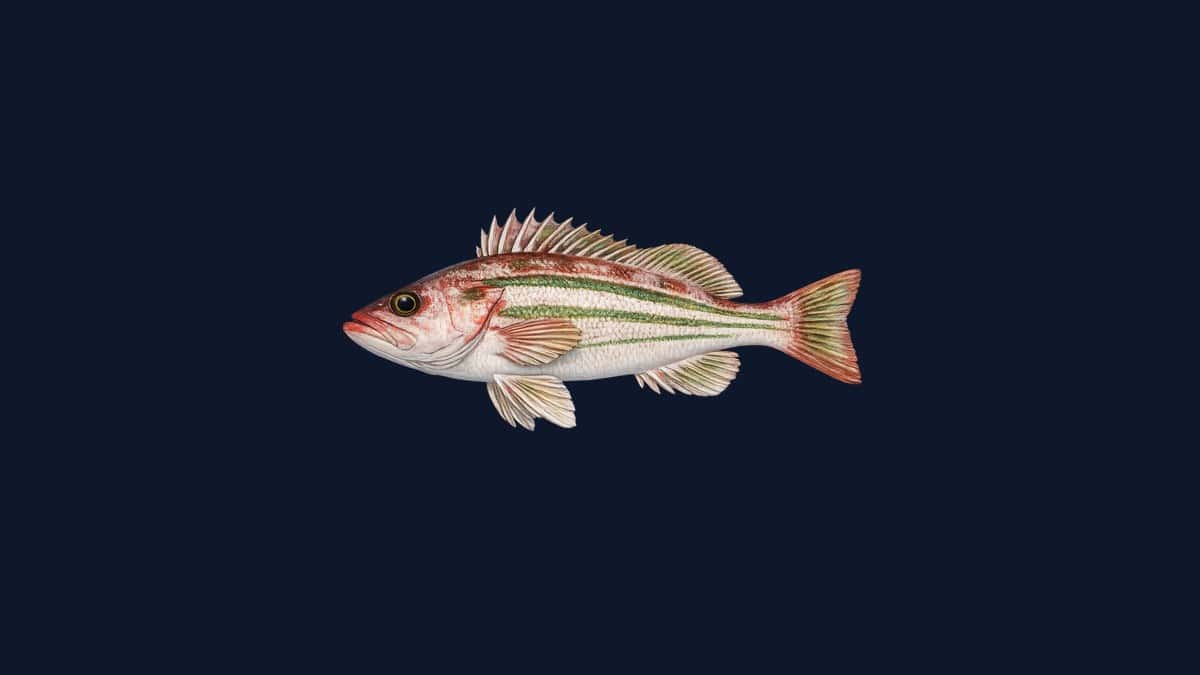
Halfmoon (Medialuna californiensis) are one of the more distinctive reef fish in SoCal — the paint-by-numbers color scheme makes them immediately identifiable. Dark blackish-gray on the upper body, bright silver on the lower half. Semi-circular tail. Round body. Small mouth for a reef fish. If you've spent any time around SoCal kelp, you've seen them.
FishBase places halfmoon in the family Scorpididae — a small family with members across the Indo-Pacific and Medialuna californiensis as the only Eastern Pacific representative. Range runs from Vancouver Island south through the Gulf of California, but they're rare north of Point Conception. This is primarily a SoCal and Baja species.
They're primarily herbivorous — kelp, seaweed, sponge, and algae are the core diet — which makes them behave differently than other reef fish at the end of a hook. Don't approach halfmoon the way you'd approach calico bass or sheephead. Different baits, different presentation.
How to Catch
The basic fact is: halfmoon eat plants. That changes the bait selection entirely.
Fresh kelp (seaweed) on a size 8 hook is the most natural presentation — you're matching their food exactly. Tear a piece of kelp frond, thread it onto a small hook with light split shot, and place it near the kelp base. Simple. Mussel chunks work for the same reason — encrusting invertebrates they pick off reef structure naturally.
Green peas — fresh or frozen, 2–3 threaded onto a size 8–10 hook — are a well-established halfmoon bait among shore anglers in SoCal. This sounds like a joke but it isn't. Halfmoon are herbivores and they recognize plant matter as food.
Float fishing with a small bait near the surface in calm kelp coves produces well when the fish are schooled in the upper water column. A small dark soft plastic on a 1/16-oz jig head, worked slowly along kelp fronds, also catches halfmoon.
Light tackle throughout. These are small-mouthed herbivores on 6–10 lb gear.
Eating Profile
Good, if small. Firm, mild white flesh — similar to other reef fish of this size. The fish rarely exceed 14 inches, so plan on keeping several for a meal. Pan-fried or done whole. Not a trophy eating fish, but a solid table species when you're catching them in kelp coves.
Common Mistakes
- Live bait. Halfmoon aren't ambush predators. Drifting a live anchovy won't produce halfmoon specifically — they're looking for plant material and small encrusting invertebrates.
- Wrong hook size. Small mouth = small hook. Size 8–10 is right. Larger hooks reduce hook-ups.
- Ignoring the grazer habitat. Halfmoon feed along kelp fronds and rocky surfaces, not in the water column above structure. Get the bait to the kelp base or along rocky edges.
- Forgetting the 10-per-species limit. The general finfish aggregate is 20 total, but no more than 10 of any one species. Halfmoon count toward both limits.
Month-by-Month
- Jan–Mar: Present year-round in SoCal kelp. Shore access open. Fish are slower in cold water.
- Apr–May: Activity increases. Kelp-edge bite picks up.
- Jun–Sep: Peak. Fish active in shallow kelp, accessible from shore and small boats.
- Oct: Good fall action as water holds warmth.
- Nov–Dec: Slower, but halfmoon persist in kelp year-round in SoCal.