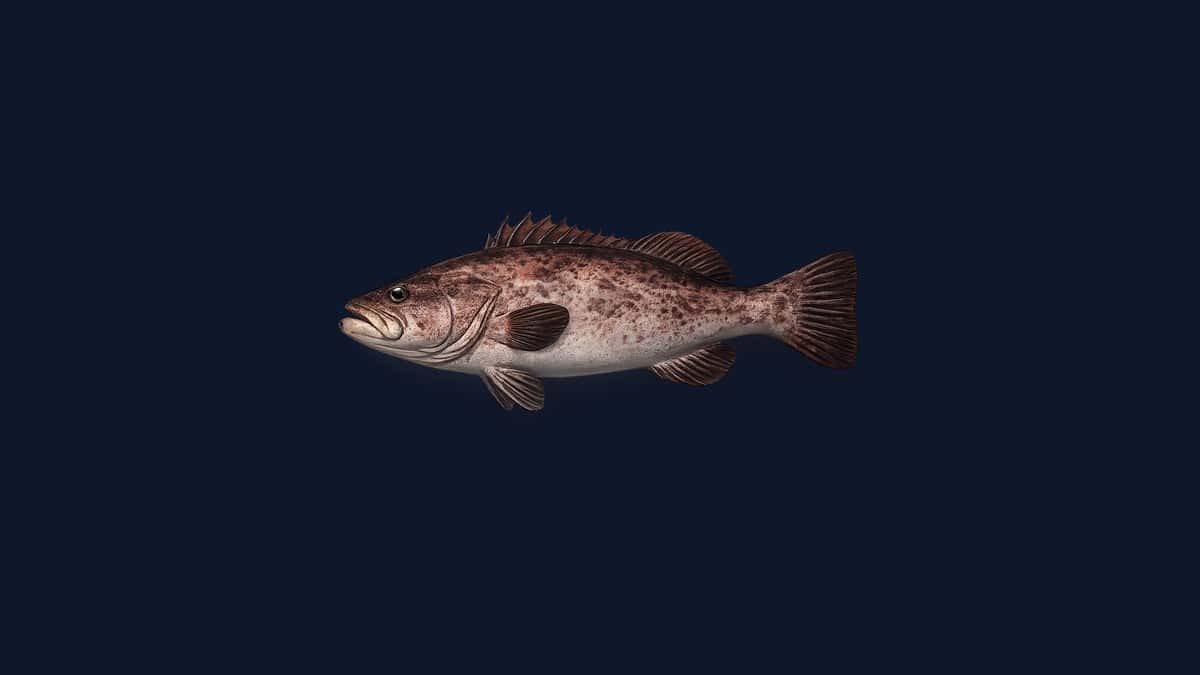
Sargo studio illustration — silver-bodied grunt with a distinctive single dark vertical bar across the body against a light background.
All Species

Sargo

Anisotremus davidsonii

In Season Now2 oz – 2 lbs

Sargo (Anisotremus davidsonii) are a grunt — family Haemulidae — not a croaker and not a perch. They're silver-bodied reef fish with a single dark vertical bar across the body, found in SoCal rocky reefs and kelp from Santa Cruz south to Baja. Cautious biters that require finesse, but once hooked they fight with authority and the table quality is excellent.

Illustration: Fish City

About Sargo

Sargo (Anisotremus davidsonii) are a grunt — family Haemulidae, not family Sciaenidae. The "China croaker" nickname that follows them around is a misnomer. Grunts and croakers are unrelated families that both happen to produce audible sounds; the mechanism is different (pharyngeal tooth grinding vs. swim bladder drumming), the family is different, and the fish look different.

Silver body, one dark vertical bar across the mid-body just behind the pectoral fin. Oval-compressed shape. Small mouth with slightly thick lips. Typically 8–14 inches in California. FishBase records a maximum of 58 cm (23 inches) and a 15-year maximum age — a 1-pound sargo might be 5–7 years old.

Range: Santa Cruz, California, south through Baja to the Gulf of California, with an isolated Gulf population. South of Point Conception is where you'll consistently find them. This is primarily a SoCal and Baja species.

They feed on crustaceans, mollusks, and bryozoans on rocky reef — not the algae diet of halfmoon and opaleye, not the open-water schooling of croakers. Sargo hold to rocky structure and work the reef methodically.

How to Catch

Sargo are the finesse target of the SoCal reef. They're cautious enough that heavy gear and aggressive presentations produce refusals; light tackle with careful placement is the answer.

Small live shrimp on a size 6–8 hook is the most consistent approach. Present it near rocky bottom with minimal weight — just enough to keep the bait in the strike zone. Sargo pick up the bait, hold it, evaluate it, and either commit or drop it. Heavy split shot triggers more drops. A sensitive rod tip is essential — the take can be subtle.

Fresh mussel chunk on a size 8 hook near rocky structure works on the invertebrate component of their diet. Place it right against the rock face, not hanging in open water.

Ghost shrimp on size 6 hook produce well in areas where they're available. The scent profile of live shrimp is hard for sargo to pass up when the bait is properly placed near structure.

When sargo are feeding, they reward patience. When they're off — which happens — no amount of bait changes will fix it. Move to another spot.

Eating Profile

Genuinely good. Delicate, mild, white flesh with clean flavor. Often considered one of the better-eating reef fish in the SoCal nearshore mix — the herbivore component of their diet produces clean-flavored fillets. Pan-fried, steamed, or in fish tacos. Worth specifically targeting for the table when they're accessible.

Common Mistakes

  • Misclassifying as a croaker. Sargo are grunts (Haemulidae). If you're fishing for croakers using croaker-specific approaches (sand, bay structure), you're in the wrong habitat. Sargo are on rocky reef.
  • Heavy gear. 20 lb line and a large hook on a sargo is a near-guarantee of refusals. Light leader, small hook.
  • Missing the take. Sargo don't slam bait. They pick it up and hold it. Watch the rod tip — the subtle loading before a committed take is what you're looking for.
  • Wrong season. Sargo are a warm-water SoCal species. Winter fishing in Central California won't produce. Focus effort May–September in SoCal.

Month-by-Month

  • Jan–Feb: Largely absent or inactive in California. Southern Baja holds fish; California population retreats or becomes very slow.
  • Mar–Apr: First fish show up as water warms south of Point Conception.
  • May–Jun: Bite picks up substantially. Rocky reef and kelp edges begin producing.
  • Jul–Sep: Peak. Best months. Warm water, active fish on SoCal rocky structure.
  • Oct: Good fall bite continues through warm water.
  • Nov–Dec: Declining as water cools. Season effectively over in most of California by December.

Where to Catch Sargo in California

  • Rocky reefs and kelp beds from San Diego to Santa Cruz
  • SoCal nearshore rocky structure — best south of Point Conception
  • Catalina Island rocky shoreline and kelp
  • La Jolla rocky reef and cove
  • Palos Verdes rocky structure
  • Bay rocky structure with adjacent kelp — San Diego and LA areas

Conditions & Habitat

Water Temp

60–72°F; warm-water SoCal and Baja species, rare north of Santa Cruz

Typical Depth

0–40 m (0–130 ft); rocky reefs and kelp, typically 0–8 m depth, occasionally over sandy bottom

Diet

Crustaceans, mollusks, bryozoans — reef-grazing omnivore working hard structure

How to Catch Sargo

Techniques

  • Small live shrimp on size 6–8 hook near rocky bottom — most consistent sargo bait
  • Mussel chunk on size 8 hook, placed right against rocky structure
  • Ghost shrimp on size 6 hook with minimal weight near reef
  • Small pieces of crab or crustacean on size 6 hook
  • Tiny soft plastic (1–2 inch) on 1/16–1/8 oz jig head near rocky base

Lures & Baits

  • Live shrimp or ghost shrimp on size 6–8 hook — the go-to sargo bait
  • Fresh mussel chunk on size 8 hook near rocky structure — especially effective from shore
  • Small crab piece on size 6 octopus hook — sargo actively eat crustaceans
  • Berkley Gulp! Crab 1" (natural) on 1/16 oz jig head near rock face
  • Ghost shrimp on size 6 hook with 1/4 oz split shot

Line & Leader

8–12 lb fluorocarbon or mono, or 15 lb braid to 8 lb fluorocarbon leader. Sargo are cautious biters — they pick up a bait and hold it, then drop it if anything feels wrong. Light leader, no unnecessary weight, and a sensitive rod tip to detect the take.

Rod & Reel Combos

  • Shore/reef: 7 ft light to medium-light spinning, 2500 reel, 12 lb braid to 8 lb fluorocarbon leader
  • Bay structure: same light setup with a small float — sargo will take surface presentations in calm water
  • Rocky shoreline: 7 ft medium-light spinning, 8–10 lb fluoro main line, light split shot, size 6–8 hook

Product links may earn Fish City a small commission at no extra cost to you. We only recommend gear we'd use ourselves.

Regulations

Sargo have **no species-specific minimum size and no species-specific bag limit** in California ocean waters. They fall under the general finfish aggregate (14 CCR § 27.60): 20 finfish combined of all species daily, not more than 10 of any one species. No closed season. Note that 14 CCR § 5.26 establishes a separate rule for sargo and gulf croaker in the Salton Sea — not applicable to coastal ocean fishing. Always verify current CDFW regulations before your trip.

As of April 20, 2026 — CDFW source

Did You Know?

Sargo produce their characteristic grunting sounds by grinding pharyngeal teeth — plates of teeth located in the throat that mesh together when the jaw closes. This is distinct from the swim-bladder drumming mechanism of the Sciaenidae (croaker family). FishBase records a maximum length of 58 cm (about 23 inches) and maximum age of 15 years for the species — meaning California legal-size sargo are often multi-year fish. The species shows 'distinct pairing during breeding,' suggesting more structured reproductive behavior than many reef fish.

Book a Sargo Charter

Find charter boats targeting Sargo at these California landings:

Frequently Asked Questions

No. Sargo (Anisotremus davidsonii) is a grunt — family Haemulidae. Croakers are family Sciaenidae. The families are unrelated, though both produce sounds. Grunts grind their pharyngeal teeth (teeth in the throat) together; croakers use a specialized swim bladder drumming mechanism. Different anatomy, different family, different species. Sargo is sometimes called 'China croaker' in colloquial use, but that's a misnomer — it's a grunt.

Sources

Ready to Find the Bite?

Join thousands of California anglers using Fish City for real-time fish counts, reports, and charter data.

Download on the App StoreGet it on Google Play

Free — no subscription required