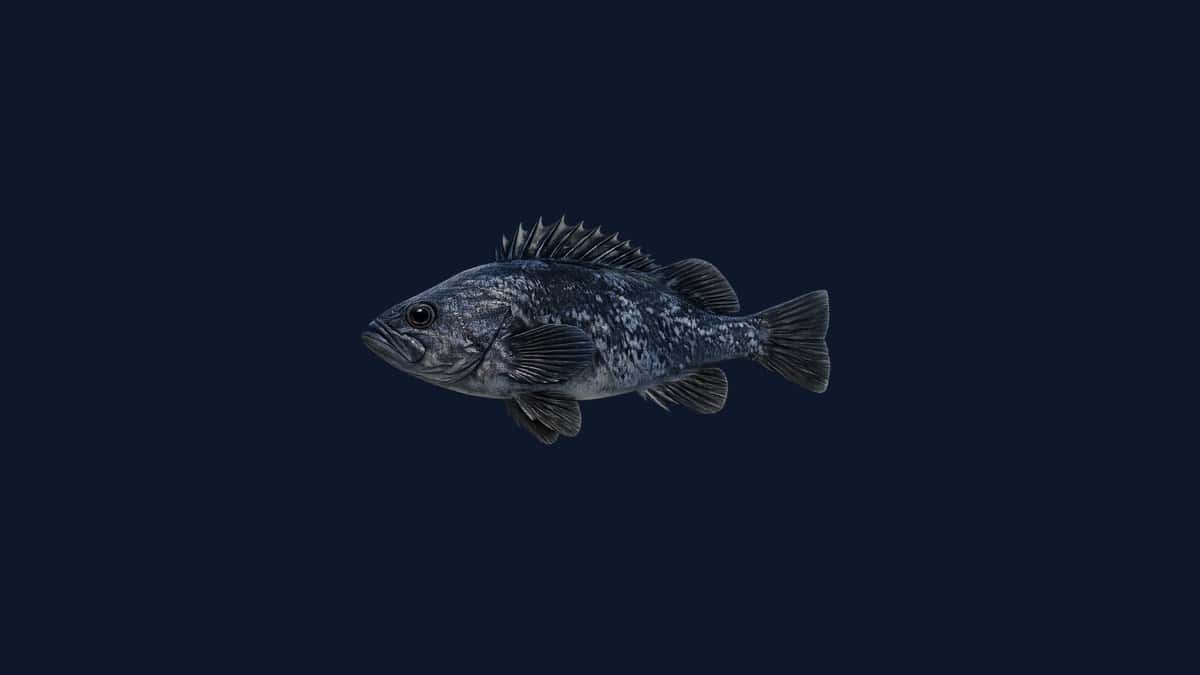
Blue rockfish studio illustration — dusky blue-grey body with faint mottling and compact rockfish profile against a black background.
All Species

Blue Rockfish

Sebastes mystinus

In Season Now0.5 lbs – 3+ lbs

Abundant, willing, and found everywhere from the kelp canopy to 300 ft. Blue rockfish are the entry-level California reef fish — easy to catch, decent table fare, and useful for filling the last few slots in the 10-fish aggregate limit.

Illustration: Fish City

About Blue Rockfish

Blue rockfish are the most abundant rockfish on the California coast. Trip after trip, Central Coast and NorCal boats come back with blues mixed through the catch — they're not glamorous, but they're reliable.

Their coloring is dusky blue-grey with faint mottling. They're a schooling species found from the kelp canopy all the way to 300 ft, which is unusual — most rockfish are depth-specific. FishBase shows a max depth of 550 m and a max weight of 3.8 kg (~8.4 lbs), though you'll rarely see a fish over 2 lbs from a party boat.

The California state angling record is just under 4 lbs (3 lbs 14 oz, San Luis Obispo County, 1993). The diving record is 5 lbs 4 oz (Humboldt Bay, 2023). These are genuinely small fish — they make up for it with sheer abundance.

How to Catch

Light jigging works best. A 1–2 oz diamond jig or small swimbait dropped to mid-depth over rocky structure produces consistent action. Blues are aggressive and will chase a moving lure — no need for the heavy dropper-loop bait rigs used for deep reds. If you see mid-water sonar marks, drop to them.

Live bait on a dropper loop out-fishes jigs on slow days. Smaller live baits — small anchovies, small squid — work better than the big stuff. Blues are small-mouthed compared to lingcod or bocaccio.

Cast and retrieve near kelp is the kayak and private-boat play. A 3-inch swimbait worked along a kelp canopy edge at 30–60 ft will draw consistent strikes. This is the most fun way to catch them — visual, light tackle, active presentation.

Party boats catch them incidentally on standard rockfish rigs. Blues mix in with whatever other species the boat is targeting on the reef. They're small enough that some serious rockfish anglers pass them to keep slots open for bigger fish.

Common Mistakes

  • Ignoring them on NorCal trips. If you're fishing Central/NorCal structure and dismissing blues as "small fish," you're leaving easy cooler-fillers on the reef. A limit of mixed blues and blacks is a legitimately good bag.
  • Too heavy a sinker. In 60–100 ft of water with light current, a 2–4 oz sinker is enough. Blues aren't deep-water fish; you don't need the 16-oz torpedo rig for them.
  • Misidentifying them as black rockfish. Blues have a more rounded tail (vs. the slightly notched tail of black rockfish) and lighter coloration on the belly. On a NorCal boat you'll often have both species in the same area. Blues tend to be smaller.

Month-by-Month

Blues follow the standard groundfish closure calendar (see /species/rockfish), but their specific seasonality is worth noting:

  • Jan–Mar: Closed for boat-based in most areas. Kelp-edge kayak trips some locations.
  • Apr–Jun: Good consistent numbers on Central/NorCal nearshore structure.
  • Jul–Aug: Peak — abundant, active, and accessible on short half-day trips.
  • Sep–Oct: Still strong; shallows producing well before weather closes in.
  • Nov–Dec: Present but fishing windows shrink with weather.

Where to Catch Blue Rockfish in California

  • Kelp forest systems throughout Central and Northern California
  • Nearshore rocky reefs at 30–150 ft
  • Channel Islands structures (northern islands)
  • Artificial reefs and rocky outcroppings
  • Rocky habitat with moderate current

Conditions & Habitat

Water Temp

48–56°F; cooler NorCal and Central Coast waters

Typical Depth

30–300 ft; mid-water schooling species, abundant near kelp forest systems

Diet

Krill, jellyfish, tunicates, small crustaceans, small fish — one of the few omnivorous rockfish

How to Catch Blue Rockfish

Techniques

  • Light jigging with 1–2 oz metal jig or swimbait at mid-depth
  • Live bait on dropper loops in 30–100 ft of water
  • Cast and retrieve small swimbaits near kelp edges
  • Cut bait (squid, anchovy) on a simple dropper loop — reliable bottom rig
  • Drifting over rocky bottom with shrimp fly gangion

Lures & Baits

Line & Leader

15–30 lb braid main line, 12–20 lb fluorocarbon leader. Light enough to feel the bites but strong enough for NorCal structure. Blues aren't leader-shy.

Rod & Reel Combos

  • 7 ft medium spinning rod, 3000–4000 size reel, 20–25 lb braid — light-tackle ideal
  • Party-boat conventional: Penn Fathom 15 or similar, 7 ft medium rod, 30 lb braid

Product links may earn Fish City a small commission at no extra cost to you. We only recommend gear we'd use ourselves.

Regulations

Counted toward the 10-fish RCG (Rockfish, Cabezon, Greenling) aggregate daily bag limit. No species-specific sub-limit. Boat-based groundfish season open April 1–December 31, closed January 1–March 31 in most management areas. Descending devices required onboard when releasing fish from depth. See /species/rockfish for full aggregate rule structure and depth zone details. (14 CCR § 27.20; 2026 CDFW Groundfish Regulations.)

As of April 20, 2026 — CDFW source

Did You Know?

Blue rockfish can live 44 years (FishBase max age) and are one of the few rockfish with an omnivorous diet — they eat krill, jellyfish, tunicates, and small fish. Most rockfish are strict carnivores. Their mixed diet makes them more ecologically versatile and contributes to their extraordinary abundance throughout California kelp systems.

Boats Known for Blue Rockfish

Charter boats with a track record on this species.

Sea Wolf II

Chris' Sportfishing (Monterey)

Monterey Bay nearshore rockfish — blues and blacks mixed with lings

Osprey

Bodega Bay Sport Fishing

NorCal nearshore trips where blues dominate the shallow reef

Book a Blue Rockfish Charter

Find charter boats targeting Blue Rockfish at these California landings:

Frequently Asked Questions

Blue rockfish are genuinely small fish. FishBase puts the max at 3.8 kg (~8.4 lbs) and the max length at 61 cm, but typical catch runs well under a pound to 2 lbs. The state angling record is 3 lbs 14 oz. They're schooling baitfish-level predators — numerous and cooperative, not trophy-sized. Their value is volume and consistency, not size.

Sources

Ready to Find the Bite?

Join thousands of California anglers using Fish City for real-time fish counts, reports, and charter data.

Download on the App StoreGet it on Google Play

Free — no subscription required