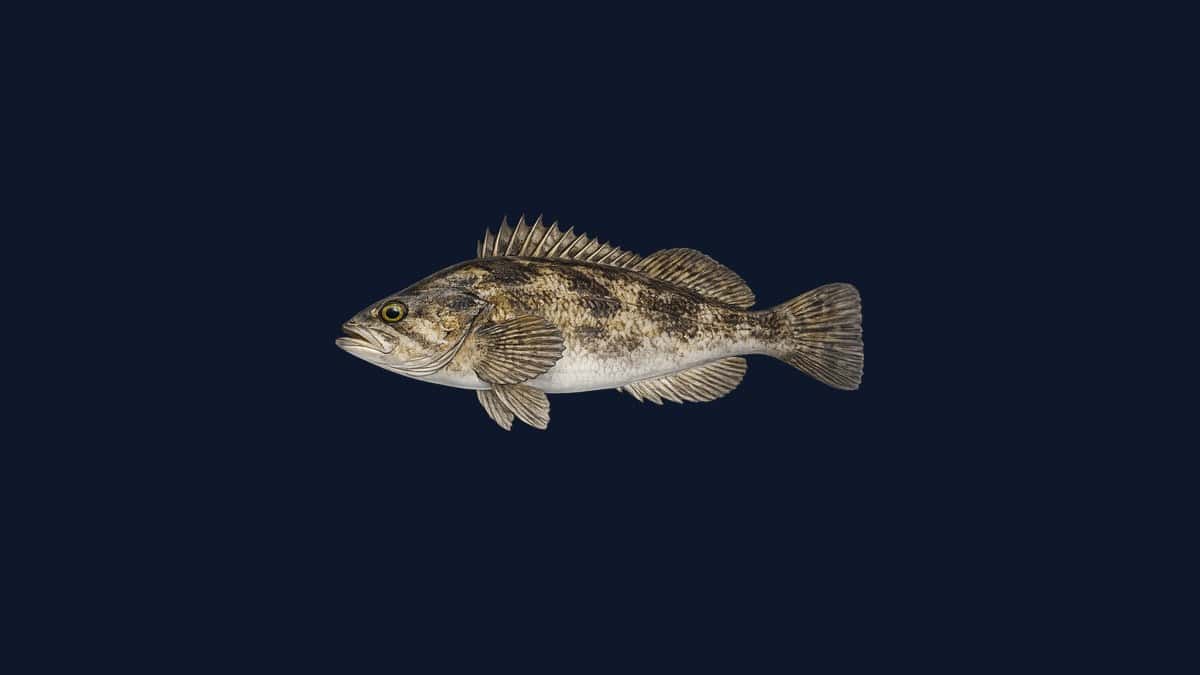
About Kelp Rockfish
Kelp rockfish are the most habitat-specific species in this batch. While most rockfish will work different depths and bottom types, kelp rockfish are genuinely kelp forest specialists — FishBase records a typical depth of just 9–12 m, and the max is 46 m. They don't go deep, and they don't stray from the canopy.
Their olive-green mottled coloration blends into kelp fronds well. They're small — max 42 cm, max age 20 years (short-lived by Sebastes standards, where many species reach 50+ years). Their range runs from Timber Cove in Sonoma County south to central Baja California, which means no Pacific Northwest or Alaska populations.
Kelp rockfish are solitary and nocturnal. Most daytime fishing catches them holding in the canopy during rest; early morning and dusk produce more active feeding fish.
How to Catch
Kayak and small private boat fishing near established kelp systems is the best approach. Paddle quietly into the kelp edge, cast a small swimbait into the canopy, and work it with slow hops back toward open water. Kelp rockfish ambush from within the fronds — your presentation should enter their territory, not just approach it.
Light spinning tackle is appropriate. A 2-inch paddle tail on a 1/4-oz jig head is the size-matched choice. The full-sized party-boat gangion is overkill; kelp rockfish barely dent a medium-heavy rail rod.
Live bait is effective when presentation accuracy is less important than scent. A small live anchovy on a lightweight rig dropped at the kelp edge will draw bites from kelp rockfish, gophers, and browns simultaneously.
Common Mistakes
- Using gear too large. The half-ounce jig head minimum for most rockfish fishing is oversized for kelp rockfish in 20 ft of water. Scale down to quarter-ounce and match to the fish.
- Fishing open water adjacent to kelp. They're inside the canopy, not outside it. Your bait needs to reach the fronds.
- Expecting them above Sonoma County. Their northern range limit is Timber Cove in Sonoma County. NorCal anglers north of there won't find kelp rockfish — blue rockfish, black rockfish, and gopher rockfish fill the shallow reef niche north of that boundary.
Month-by-Month
- Jan–Mar: Boat closure in most areas. Shore access at rocky points year-round in some zones.
- Apr–May: Kelp starting to establish; fish present but canopy not yet peak density.
- Jun–Sep: Best fishing — established kelp, active fish, accessible weather.
- Oct: Good fishing; kelp canopy still functional.
- Nov–Dec: Kelp thinning; fish present but harder to locate.