About Dungeness Crab
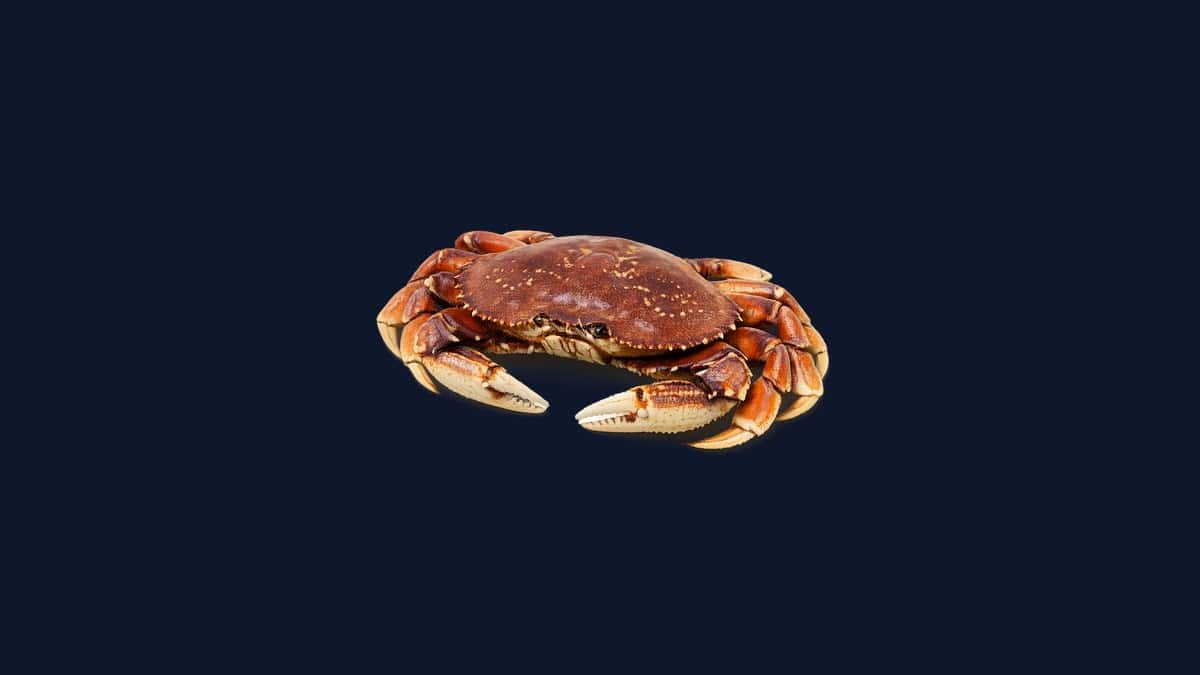
Dungeness crab (Metacarcinus magister) is the California commercial and recreational crab. They live on sandy and muddy bottom from roughly 10 to 300 feet, from Del Norte down to around Point Conception — south of there the water's too warm for a stable population, and you're looking at rock crabs or spider crabs instead. A mature male runs 1 to 3.5 pounds and yields about 25% edible meat by weight. That's high for a crab; it's why Dungeness is a money species.
The scientific name changed in 2007. They used to be Cancer magister (Dana, 1852); taxonomic work splitting the Pacific "big" Cancer-like crabs from true Atlantic Cancer moved them into Metacarcinus. Both names still show up in older CDFW docs and sea grant profiles.
The recreational season exists in a state of ongoing negotiation with two hazards: domoic acid (a neurotoxin produced by Pseudo-nitzschia algal blooms that accumulates in crab viscera and can trigger northern-county delays) and whale entanglement (humpbacks and leatherback sea turtles migrating through trap zones prompt temporary trap bans). The 2025-26 season had both: a north-of-Sonoma domoic-acid delay that lifted January 30, 2026, and crab-trap restrictions in Zones 3 and 4 protecting whales. Hoop nets and snares remained legal in trap-restricted zones.
How to Catch
Three methods: hoop net, crab pot, crab snare.
Hoop net is the Central Coast and NorCal boat standard. Collapsible 30-inch rings, baited with a bait cage full of squid, mackerel, or sardine carcasses, dropped in 30 to 80 feet of water, pulled every 30 to 60 minutes. Crabs enter, walk onto the netting, and get lifted. If you wait too long they figure out they can walk off; 30 to 60 minute soak is the sweet spot. Legal everywhere and no validation required.
Crab pot is an overnight or day-long soak. Rectangular or round steel-frame traps with one-way entrances. Requires a Recreational Crab Trap Validation, a numbered/marked buoy, and a destruct device (rot-away panel or escape hatch) that opens the trap if it's lost and becomes ghost gear. Higher yield if you can leave gear in the water long — but you're the one responsible for the gear. A lost pot keeps fishing.
Crab snare is the pier and surf technique. A 4–6 oz pyramid sinker with loops of mono sticking out; bait tied in the middle; cast on a surf rod; let the crab come in, feel the load, yank hard. The loops cinch around the crab's legs. Works off Pillar Point, Monterey Wharf, Bodega Bay pier. No boat, no pot, no permit beyond a standard CA fishing license.
Gauge every crab before it comes aboard. 5¾ inches minimum. An actual metal gauge, not a tape measure. The spines don't count — measure shell edge to shell edge in front of the lateral spines.
Eating Profile
Excellent. Sweet, firm, clean — the Pacific standard. A 2 lb male yields about 8 oz of picked meat (lump body and leg). The cooking move is boil or steam in seawater or well-salted fresh water for 10–12 minutes, shock in ice water, crack, and pick.
The viscera (guts, the "crab butter") is where domoic acid accumulates during algal blooms. If CDFW has a domoic-acid advisory active for your area, discard the viscera and eat only the meat. This is a real health risk, not theoretical — domoic acid causes amnesic shellfish poisoning, which is permanent.
Store live crabs on ice (not in fresh water) until cooking. Freeze cooked meat vacuum-sealed for up to 3 months.
Common Mistakes
- Keeping undersized crab because the gauge "barely" fits. If the gauge fits, release. The penalty schedule for undersized crab is substantial.
- Leaving hoop nets too long. After 45 minutes, crabs start walking off. 30 to 60 minutes is the working window.
- Using unmarked or non-compliant pot buoys. Traps require a specific buoy marking and a rot-away destruct device. Unmarked or non-compliant gear gets seized.
- Eating viscera during a domoic advisory. Check CDFW's shellfish advisory page before your trip. When in doubt, pick meat only.
- Ignoring trap-zone restrictions. Whale-entanglement restrictions can flip on mid-season. Check CDFW inseason updates before every trip — hoop nets and snares remain legal when traps are restricted.
Month-by-Month
- Jan–Feb: Peak recreational bite for most of California. Nearshore pots and hoop nets producing heavily. Weather is the limiting factor.
- Mar–Apr: Strong bite continues. Offshore movement begins as water warms. Trap zones may flip closed on short notice for whale season.
- May–Jun: Season winding down statewide (June 30 closure for most counties). Smaller nearshore crab; bigger fish are already moving offshore.
- Jul: Closed everywhere except Del Norte, Humboldt, Mendocino (through July 30). Fish are typically offshore and large.
- Aug–Oct: Closed statewide. Off-season. Target rock crabs or spider crabs instead.
- Nov: Season reopens first Saturday of November. Nearshore grounds begin producing. Domoic-acid testing gates northern openings.
- Dec: Peak recreational month. Cold water, fat crabs, bay and nearshore producing. Holiday crabbing is a California tradition.