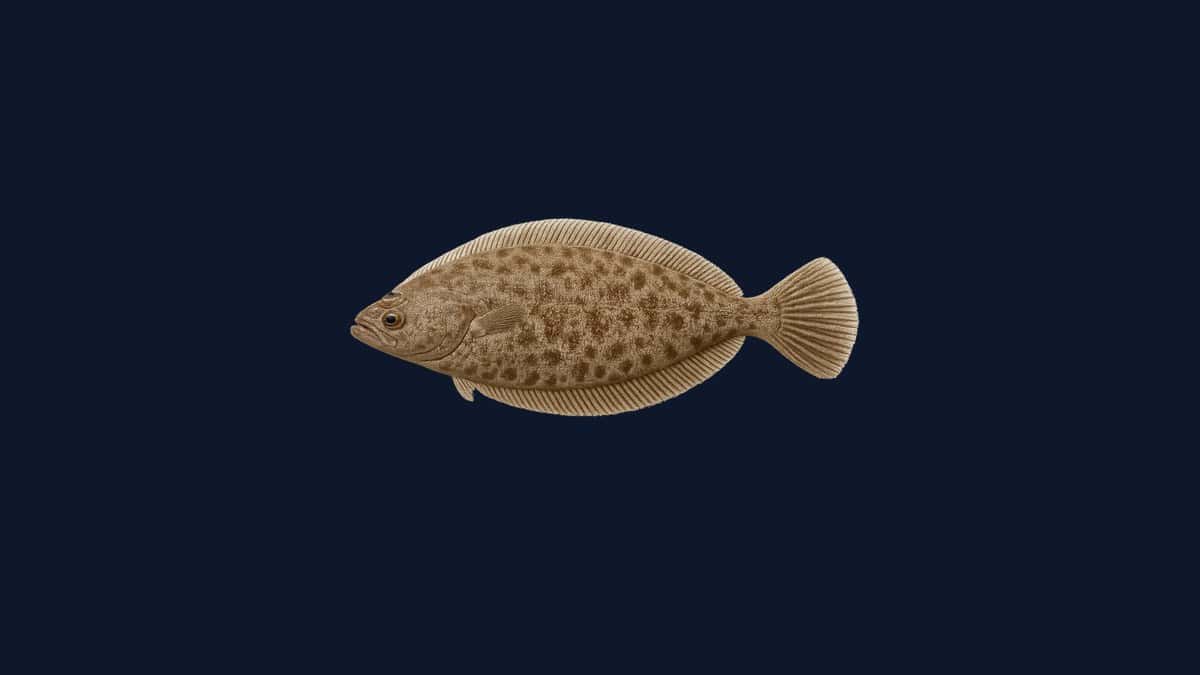
About Fantail Sole
Fantail sole are a minor character in California's flatfish story — not a target species, not particularly common, but genuinely good eating when you land one. They're a warm-water species, found from Monterey Bay south to the Gulf of California, most reliably encountered by SoCal anglers working sandy bottom at moderate depths.
The name comes from the enlarged pectoral fin on the eyed side, which resembles a fan. Xystreurys liolepis feeds almost exclusively on crustaceans — shrimp, small crabs — making it distinct from the more omnivorous flatfish like California halibut.
Depth is shallower than petrale sole: FishBase records them from the surf zone to about 260 ft (79 m), with most California encounters at 50–150 ft on sandy or muddy substrate.
How to Catch
You're more likely to catch a fantail sole by accident than on purpose. They show up as bycatch on sandy-bottom drifts when you're after California halibut, sand dabs, or general bottom species. The most productive approach is simply fishing sandy bottom with appropriate bait — squid strips or fresh shrimp — on a light dropper loop, and being pleased when a fantail comes over the rail.
If you wanted to target them specifically (a minority pursuit), work shallow sandy areas in warmer months with light gear and fresh crustacean-type baits. Their preference for shrimp and crab fragments means shrimp baits slightly outperform pure squid.
Eating Profile
Better than its minor-species status suggests. Fantail sole has delicate, sweet flesh — fine-grained and clean-tasting, comparable to petrale sole in quality. Small fish (under 12 inches) are best cooked whole; larger fish yield proper fillets. Pan-fried simply with butter and lemon is the standard approach.
Common Mistakes
- Releasing them without considering the table. Fantail sole are underrated as eating fish. If you're already fishing, keeping one is worth the cleanup.
- Fishing too deep on purpose. Unlike petrale, fantail sole are not a deep-water species. If you're specifically hunting them, stick to 50–150 ft over sandy bottom in warm months.
Month-by-Month
- Jan–Apr: Minimal catch rates; cold water pushes them deeper and east.
- May–Jun: Bite picks up as water warms. Sandy-bottom bycatch increases.
- Jul–Sep: Best period for incidental catches on SoCal sandy-bottom drifts.
- Oct: Still catchable into fall before water cools.
- Nov–Dec: Largely absent from shallow accessible grounds; minimal catch.