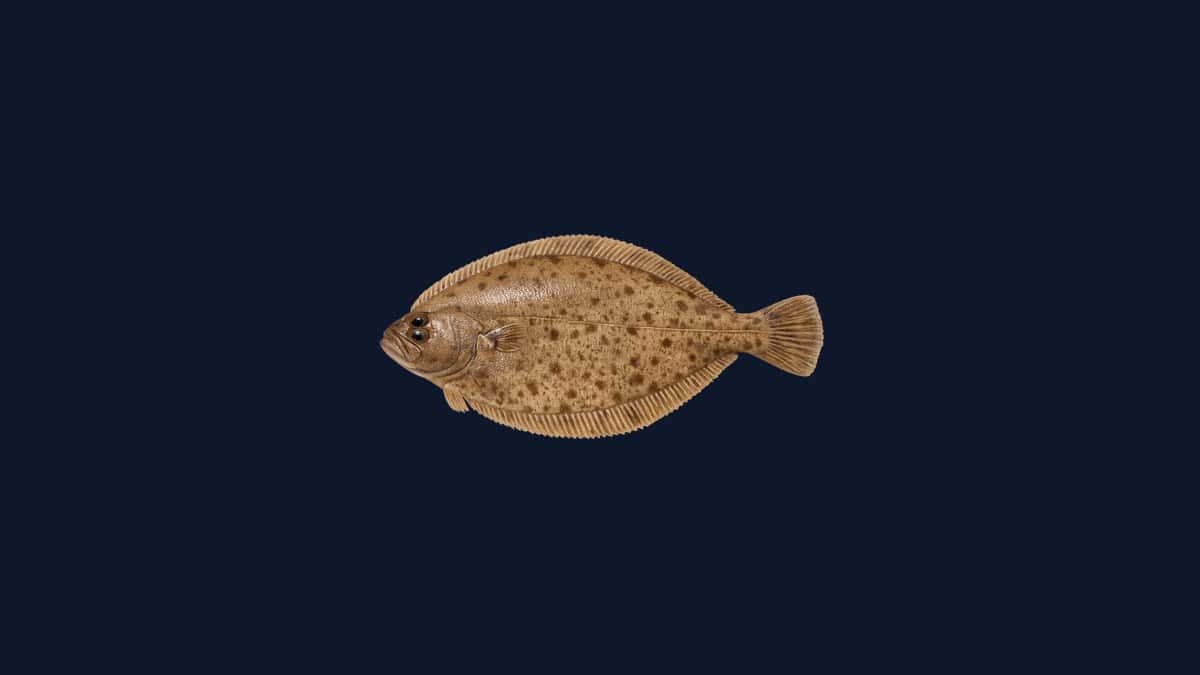
About Petrale Sole
Petrale sole are the flatfish that chefs actually want. They're considered the finest-eating sole on the West Coast — firmer and sweeter than sand dabs, more delicate than halibut — and command prices at San Francisco fish markets that reflect it.
Eopsetta jordani is a right-eyed flatfish that lives on sandy and muddy soft bottom from the continental shelf to the upper slope. In California, they're most abundant from Monterey north into Oregon and Washington — NorCal anglers encounter them more often than SoCal anglers do. They're not reef fish; they prefer open sandy bottom at depth.
Recreational anglers mostly catch petrale as bycatch on rockfish and groundfish trips that drift soft bottom at 200–500 ft. Dedicated petrale trips are uncommon but productive when you know the grounds.
How to Catch
The setup is simple: dropper loop rig, 2–3 hooks, fresh squid, enough weight to hold bottom. Petrale aren't particularly wary — they'll eat a well-presented bait readily, and when you find a school, multiple-hook rigs fill quickly.
The key variable is depth and bottom type. Petrale want soft, sandy or muddy bottom, not rock. If your sonar shows rough bottom, move. When you're on the right substrate at 200–500 ft and the bite is on, you'll know — the rod loads up as multiple fish come at once.
Drift fishing is more productive than anchoring. Let the boat work you across the flat, feel the rod tip for the telegraphed pulls of feeding petrale, and work hooks up slowly when multiple fish are on.
Eating Profile
One of the best-eating flatfish available. Petrale sole has delicate, slightly sweet, fine-grained white flesh that holds its texture well. It responds well to pan-frying in butter (classic preparation at Bay Area restaurants), baking, broiling, or light breading. Don't overcook — 3–4 minutes per side in a hot pan is usually plenty.
Seafood Watch rates petrale sole as a "Best Choice" — the stock has recovered well from its low point around 2009–2012, and current harvest levels are within sustainable bounds.
Common Mistakes
- Fishing on rocky bottom. Petrale are soft-bottom fish. If you're dropping on reef or mixed structure, you'll catch rockfish and lingcod, not petrale. Target sandy/muddy substrate specifically.
- Too little weight. In deep water with any current, a light sinker won't hold bottom. Use enough weight (4–8 oz or more) to feel the bottom clearly — petrale bite subtly and you need to be near bottom to detect it.
- Not bringing enough ice. Petrale are excellent table fish but they need to go on ice immediately after landing. Soft-bodied flatfish deteriorate faster than rockfish if they sit in a warm box.
Month-by-Month
- Jan–Apr: Present but access limited — winter groundfish trips less common. Fish at maximum depth.
- May–Jun: Bite picks up as boats shift to offshore grounds. Good numbers at 200–400 ft.
- Jul–Aug: Peak window. Schools in predictable depth bands. NorCal boats produce best catches.
- Sep–Oct: Solid action continues. Fish remain on soft bottom into fall.
- Nov–Dec: Catch rates drop as weather limits offshore access. Still catchable but low-percentage dedicated trips.