About Starry Flounder
Starry flounder are the flatfish that shows up where you don't expect a marine fish to be — far up a tidal river, in a brackish slough, or in the murky upper reaches of a bay estuary. Most flatfish are ocean fish that occasionally wander into estuaries. Starry flounder actively use freshwater habitat, moving up rivers as far as 120 km according to FishBase records.
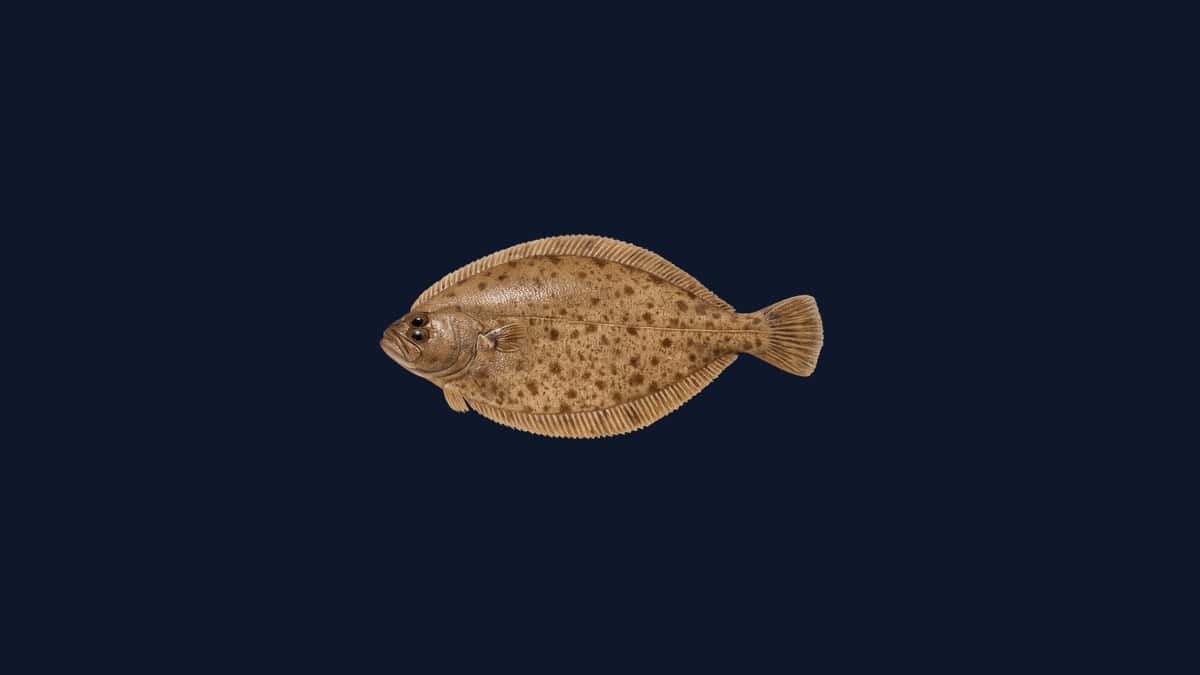
The name comes from the star-shaped tubercles (rough projections) that cover the dark upper side, giving the fish a sandpaper texture. The banded orange-and-black dorsal and anal fins are the clearest field ID marker — distinctive enough to recognize at a glance.
Their range runs from the Sea of Japan and Korea through the North Pacific to Alaska and down to California. In California, they're most common from the Central Coast north; San Francisco Bay and Humboldt Bay are the best-known starry flounder fisheries. SoCal anglers encounter them, but they're less abundant south of Morro Bay.
How to Catch
Starry flounder are shallow-water, soft-bottom fish accessible without a boat. Piers over sandy bay bottom, kayaks drifting tidal flats, and wade-fishing river mouths all produce fish.
Ghost shrimp is the premier bait in NorCal bays — dig your own from mudflats at low tide or buy from local bait shops. Cut squid and clam necks also work well. The rig is simple: sliding egg sinker, short leader, 1/0–2/0 hook near bottom. No need for complex rigs.
Tidal timing matters more than the specific spot. Fish the moving tide — incoming or outgoing — not slack water. Starry flounder feed on the current, positioning themselves to intercept food washing past.
Eating Profile
Good table fare — mild, white, firm flesh similar to other Pacific flatfish. Smaller fish (under 2 lbs) are often cooked whole after cleaning; larger fish fillet into usable portions. Classic preparation: dredge in seasoned flour, pan-fry in butter with a squeeze of lemon. Don't skip the skin-side crisping.
No sustainability concerns — no bag limit, abundant throughout their range, and not targeted heavily enough by California recreational fishers to create pressure.
Common Mistakes
- Fishing slack water. Starry flounder feed on tide movement. If the water isn't moving, neither are the fish. Check tidal timing before heading out.
- Heavy gear in shallow water. A 40 lb setup is overkill for fish averaging 1–3 lbs in 5–20 ft of bay water. Light spinning gear lets you feel the tentative tap-tap bite before the fish commits.
- Ignoring estuarine access. Many anglers drive past perfectly good starry flounder habitat — tidal creeks and river mouths — looking for "real" fishing grounds. The fish literally go upstream.
Month-by-Month
- Jan–Feb: Fish present in bays year-round, but action slow. Cold water, sluggish bite.
- Mar–Apr: Bite picks up. Fish move shallower as water warms slightly.
- May–Jul: Active feeding on tidal flats. Best months for consistent action.
- Aug–Sep: Solid throughout; fish spread across bay systems.
- Oct: Good fall bite; fish fat before winter.
- Nov–Dec: Present but slow. Deeper bay channels produce more than shallow flats.