About Kelp Greenling
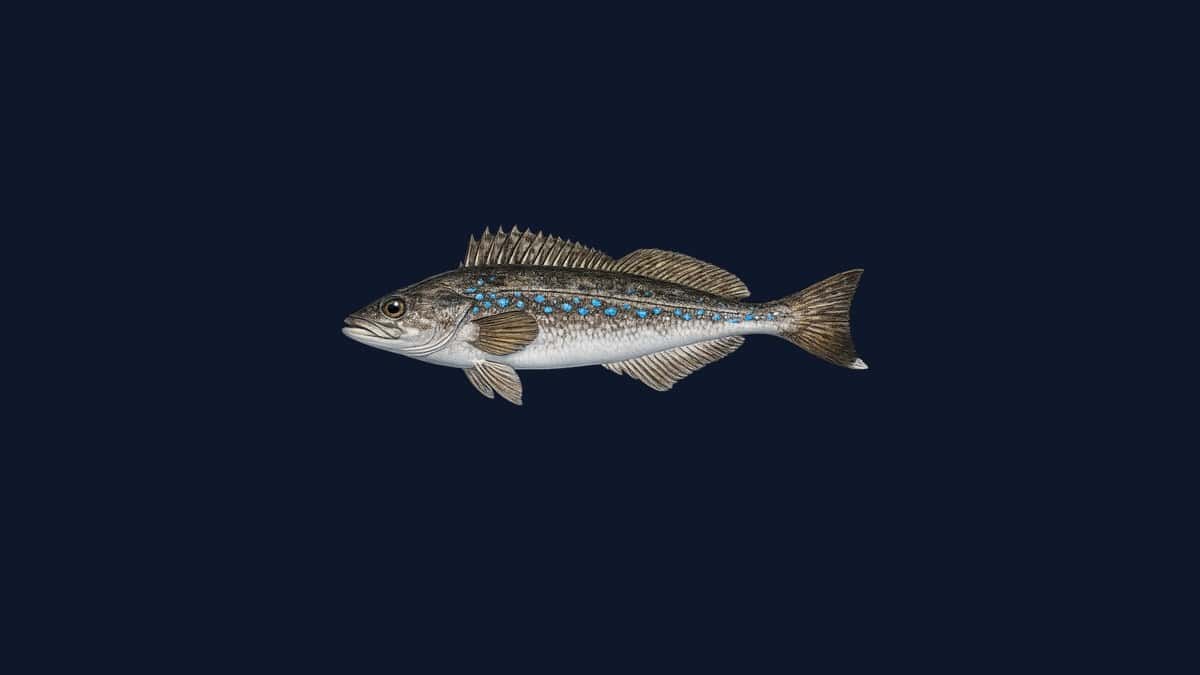
Kelp greenling are the colorful shallow-water fish of California's kelp forest. Males are blue-grey with irregular brown spots and vivid orange or red fins. Females are warm golden-brown with small reddish spots. They look different enough that first-timers sometimes think they've caught two species — they haven't.
They're small to medium-sized: most fish run 10 to 16 inches. The minimum size is 12 inches (14 CCR § 28.55), which means you'll release a fair number, especially around kelp beds where juveniles are plentiful. A 2-pound kelp greenling is a good catch.
They're in the RCG aggregate (the G in Rockfish, Cabezon, Greenling) — along with all other greenling species (rock greenling, whitespotted greenling, painted greenling). Every greenling species counts toward the same 10-fish aggregate bag and has the same 12-inch minimum.
How to Catch
Light tackle, shallow structure. Kelp greenling live in the forest, not in 300 ft of deep water. The standard approach on private boats is a 1/4- to 1/2-oz jig head with a small soft plastic (2- to 3-inch curly tail or Gulp shrimp), cast to kelp stipes and retrieved slowly along the canopy edge.
Shrimp flies work on party boats when they're running nearshore shallow trips — a 1-hook gangion with a 2- to 4-oz sinker, fished at 20 to 60 ft near structure. Tip with a small squid strip to improve scent.
Ghost shrimp from shore are the NorCal shore-fishing specialty for greenling at jetties and rocky points. Small hooks, light sinkers, right on the bottom adjacent to kelp.
Sight fishing works at the right spots — greenling will hold in kelp clearings in clear water, and you can target individual fish with a small swimbait.
Eating Profile
Good. The flesh is firm, white, and mild — not quite as large-filleted as cabezon or lingcod, but perfectly good eating. A 1.5-lb greenling yields about 8 oz of clean fillets. Best preparations: pan-fried with butter, or in fish tacos where smaller pieces work well. Don't expect a big fillet from a single greenling — accumulate them through a trip.
Common Mistakes
- Fishing too deep. Kelp greenling are a shallow-reef fish. If you're running a full groundfish setup to 200+ ft, you won't find them. They're in the kelp zone at 10 to 100 ft.
- Missing the 12-inch minimum. A surprising number of fish near kelp are undersized. Measure before you bag it.
- Confusing males and females. Both are kelp greenling. Both count the same. The dramatic color difference is just sex-based dimorphism — not separate species.
- Overlooking them on mixed-bag trips. Greenling are often caught as bycatch on nearshore rockfish trips and don't get counted toward a goal. They're a legitimate part of the RCG bag and eat well — don't throw them back carelessly.
Month-by-Month
- Jan–Mar: Shore and kelp-adjacent shore access often open year-round. Boat-based groundfish closure limits most party-boat opportunities.
- Apr: Boat season opens. Greenling on shallow reefs immediately.
- May–Aug: Peak kelp-forest activity. Best light-tackle fishing of the year.
- Sep–Oct: Excellent. Kelp well-developed, greenling active and feeding.
- Nov–Dec: Fishing holds in protected inshore areas. Weather is the limiting factor.