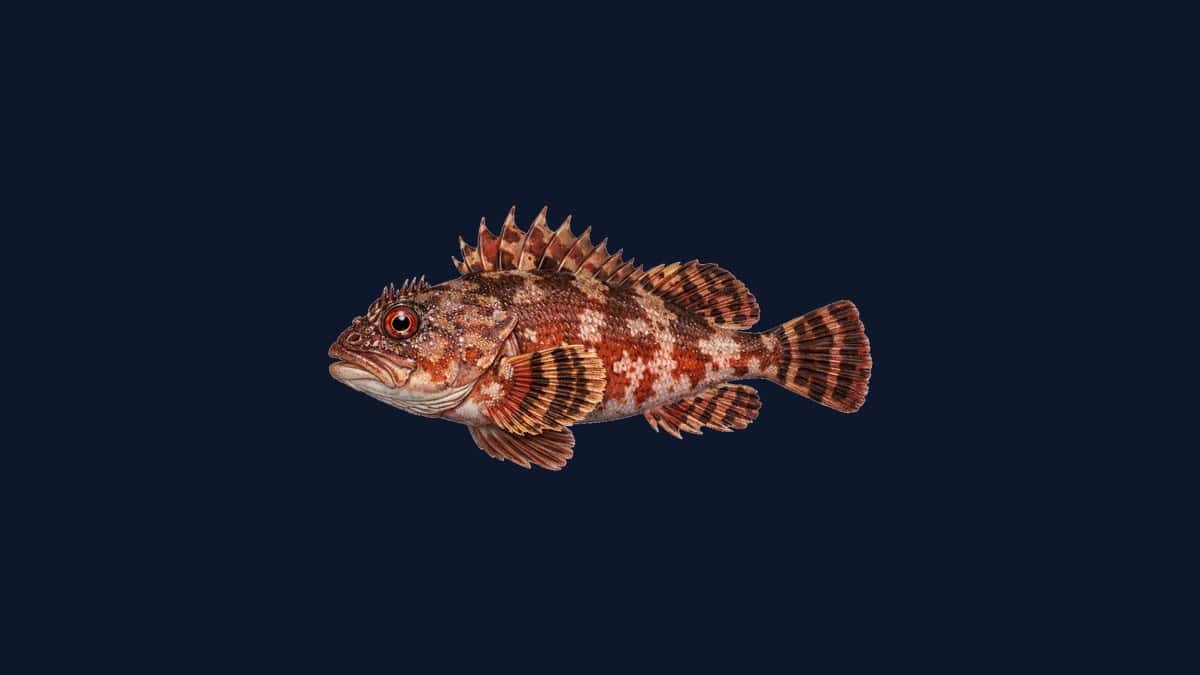
Cabezon studio illustration — large mottled sculpin with prominent head, wide pectoral fins, and marbled skin pattern against a black background.
All Species

Cabezon

Scorpaenichthys marmoratus

In Season Now2 lbs – 20+ lbs

California's biggest sculpin and one of its most underrated reef fish. Cabezon park in rocky crevices, slam live bait with authority, and yield fillets that rival any fish in the cooler. Just don't eat the eggs.

Illustration: Fish City

About Cabezon

Cabezon are the biggest sculpin on the California coast — and they eat like it. This is not the small venomous scorpionfish (that's the California sculpin). Cabezon are Cottidae — the marbled sculpin family — and they get to 20-plus pounds on rock reefs from the intertidal zone to 250 ft.

The head is massive. The mouth is enormous. The pectoral fins spread wide like paddles. They sit in crevices, ambush crabs and small fish with a lunge, and when hooked on live bait they immediately try to go back into the rocks. You have to crank hard and turn them fast.

They're most abundant north of Point Conception, where NorCal rocky reefs hold large populations of fish in the 3- to 10-pound range. SoCal catches them too — Channel Islands, La Jolla, Palos Verdes — but NorCal is the destination for serious cabezon fishing.

How to Catch

Live bait is the primary method. A live anchovy or sardine on a 2/0 circle hook, tied into a dropper loop with a 4- to 8-oz sinker, dropped to structure and held just off the bottom, is the standard SoCal rig. In NorCal, fresh rock crab pieces on a bottom rig are legendary cabezon bait — the same crabs that cabezon eat all day long. The scent of fresh crab is irresistible.

Cut squid works when live bait isn't on the boat. Same rig — dropper loop near rocks, slow presentation. The key for cabezon is getting the bait to structure, not hanging it above it.

Swimbaits produce on private boats. A 4- to 6-inch plastic swimbait on a 3/4- to 1-oz jig head, slow-rolled along boulder fields at 20 to 60 ft, picks off the larger fish that aren't interested in dead bait. Cabezon are ambush predators — they'll track a swimbait if it comes close enough.

When hooked, a cabezon turns and drives back toward the rocks. Reel hard and turn the fish — slack line means a broken-off fish under a ledge.

Eating Profile

Outstanding. The flesh is mild, firm, and delicious — often described as among the best eating of any California reef fish. The biliverdin pigment that turns some fillets blue-green is harmless; cook at 140°F and the color disappears completely.

The catch: cabezon roe is toxic to humans and must be discarded. The egg mass causes severe nausea and vomiting. There's no ambiguity — remove any egg mass before cleaning and don't taste it. The flesh has zero problems.

A 5-lb cabezon yields about 2 lbs of boneless fillets. Pan-fry in butter, bake with lemon, or use for fish tacos.

Common Mistakes

  • Missing the 15-inch minimum. Cabezon must be 15 inches total length to keep (14 CCR § 28.55). Undersized fish happen regularly when fishing rockier nearshore areas — measure before you bag it.
  • Eating the roe. The egg mass is toxic. This is not a gray area. Discard it.
  • Not cranking hard enough. A cabezon needs to be turned immediately when hooked or it's going under a ledge. Passive hooksets mean lost fish.
  • Confusing cabezon with venomous sculpin. California scorpionfish (sculpin) have venomous dorsal spines; cabezon do not. They look different — cabezon are much larger and marbled, sculpin are smaller and mottled-red. Know which fish you're handling.

Month-by-Month

  • Jan–Mar: Shore and jetty fishing remains available in many areas. Boat-based groundfish closure limits access but cabezon can be targeted from shore.
  • Apr: Opener. Fish on structure year-round — immediately available at the start of boat season.
  • May–Aug: Consistent throughout. NorCal peak in summer; SoCal steady.
  • Sep–Oct: Excellent. Calm seas, fish feeding aggressively on shallow reefs.
  • Nov–Dec: Fishing holds as long as weather permits access.

Where to Catch Cabezon in California

  • Rocky reefs and boulder fields from intertidal to 80 ft
  • Kelp forest margins with underlying hard structure
  • Channel Islands reef systems (Catalina, San Clemente)
  • Central Coast rocky reefs (Morro Bay, Big Sur, Monterey)
  • NorCal nearshore rocky habitat — cabezon are abundant north of Point Conception
  • Jetties and artificial structure

Conditions & Habitat

Water Temp

50–60°F; prefer cool kelp-adjacent rocky habitat

Typical Depth

Intertidal to 250 ft; most common 10–80 ft on rocky reef

Diet

Crabs, abalone, small lobsters, fish eggs, small fish — powerful crusher of hard-shelled prey

How to Catch Cabezon

Techniques

  • Live anchovy or sardine on a simple dropper loop near rocky structure — cabezon hit live bait hard
  • Fresh or frozen crab pieces on a bottom rig — especially effective on NorCal fish
  • Cut squid on a dropper loop held tight to the rocks
  • Large swimbait (4–6 inch) cast to rocky outcrops and retrieved slowly
  • Slow-dragged live mackerel on a circle hook near boulder transitions

Lures & Baits

Line & Leader

30–50 lb braid mainline, 20–30 lb fluorocarbon leader (4–6 ft). Cabezon head immediately for the rocks when hooked — crank hard and turn them fast.

Rod & Reel Combos

Product links may earn Fish City a small commission at no extra cost to you. We only recommend gear we'd use ourselves.

Regulations

Counted toward the 10-fish RCG (Rockfish, Cabezon, Greenling) aggregate daily bag limit — cabezon is the 'C' in RCG. **Minimum size: 15 inches total length** (14 CCR § 28.55). Any cabezon under 15 inches must be released. No cabezon-specific bag sub-limit beyond the RCG aggregate. Boat-based season follows groundfish regulations — typically open April 1–December 31, closed January 1–March 31 in most management areas. Shore and pier fishing remains open year-round in many areas. Descending devices REQUIRED onboard when releasing fish from depth. See /species/rockfish for full RCG aggregate details.

As of April 20, 2026 — CDFW source

Did You Know?

Cabezon roe is toxic — one of very few California sport fish where part of the animal is genuinely dangerous to eat. The flesh is outstanding and perfectly safe; only the egg mass contains the toxin. The name 'cabezon' comes from the Spanish word for 'big head' — an accurate description of the species' most noticeable feature. California cabezon can reach 25 lbs and live over 15 years; the largest fish are almost always old females in low-pressure nearshore areas.

Boats Known for Cabezon

Charter boats with a track record on this species.

Chief

Virg's Landing (Morro Bay)

Central Coast full-day — cabezon regular on nearshore structure

Huli Cat

Pillar Point (Half Moon Bay)

NorCal nearshore trips — cabezon solid on rocky reefs

New Seaforth

Seaforth Landing

SoCal half-day trips picking up cabezon on nearshore rock

Osprey

Bodega Bay Sport Fishing

Bodega Bay nearshore — cabezon a regular catch

Book a Cabezon Charter

Find charter boats targeting Cabezon at these California landings:

Frequently Asked Questions

Biliverdin — a bile pigment that some cabezon (and lingcod) accumulate in their flesh. It's harmless. The color is vivid: a freshly-filleted cabezon can look dramatically blue-green. Cook it at 140°F and the color disappears completely — the fillet turns white. A blue cabezon is the same outstanding eating as a white one. Don't throw it back over the color.

Sources

Ready to Find the Bite?

Join thousands of California anglers using Fish City for real-time fish counts, reports, and charter data.

Download on the App StoreGet it on Google Play

Free — no subscription required