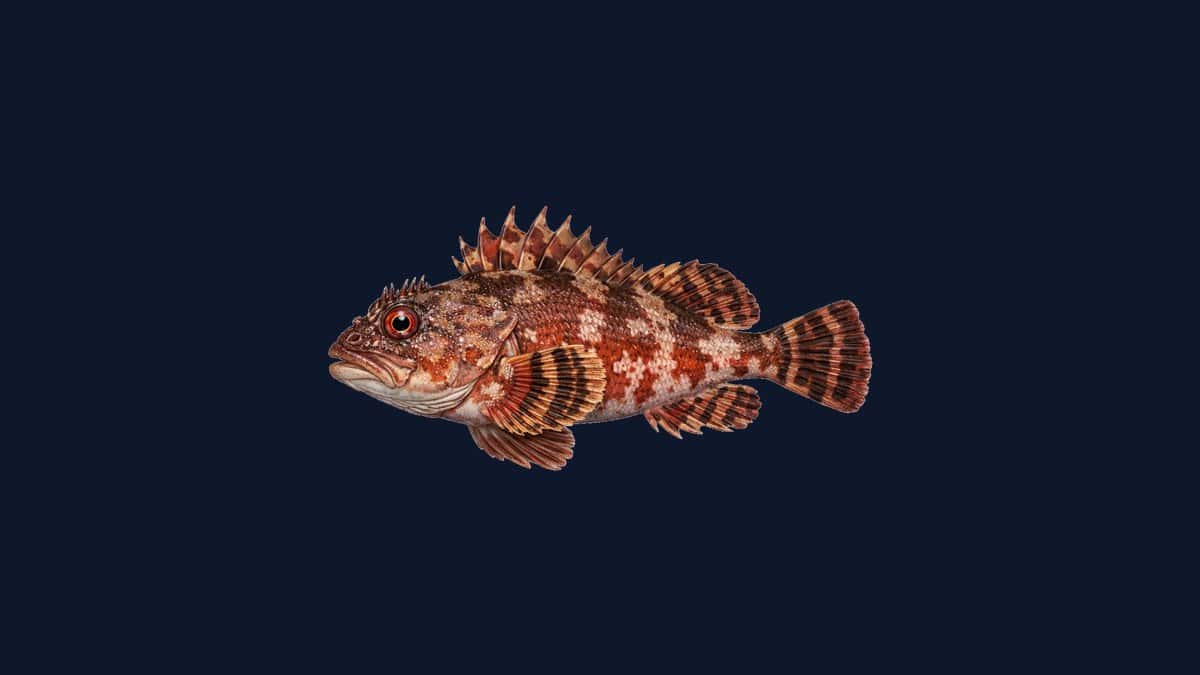
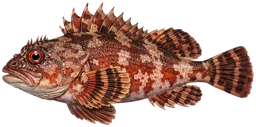
About Sculpin (California Scorpionfish)
Sculpin is what California anglers call the California scorpionfish — Scorpaena guttata. This is not a rockfish (Sebastes), not a cabezon (Cottidae), and not in the RCG aggregate. It's a distinct species with its own 5-fish bag limit, managed separately under 14 CCR § 28.54.
They're SoCal's ambush specialist — mottled red-brown skin that blends into reef rock, a wide mouth, and zero movement until prey gets close. When that squid strip drifts past the boulder they've been sitting on for hours, they inhale it.
Typical size is 1 to 2 pounds. They're found at 10 to 200 ft, most commonly 30 to 120 ft on rocky reefs and kelp beds. They're a SoCal species — their range runs roughly Point Conception south to Baja.
How to Handle — Read This First
The dorsal, pelvic, and anal fin spines are venomous. A puncture causes immediate severe pain and local swelling from a neurotoxin in spine grooves. The venom is protein-based, which means hot water neutralizes it.
If stung: Immerse the puncture site in hot water (110–113°F / 43–45°C) for 30 to 90 minutes. The heat denatures the toxin proteins. This works — it's not folk medicine. Seek medical care if pain is severe or systemic symptoms appear.
To avoid getting stung: Never grab a sculpin on the dorsal surface bare-handed. Lip-grip the lower jaw, hold from the belly, or hand to deckhands who deal with these every day. When removing the hook, use pliers. If a sculpin lands loose on the deck, don't step on it or grab it quickly.
How to Catch
Cut squid on a dropper loop is the standard. A 2-inch squid strip on a #2 to 1/0 hook, tied into a dropper loop 18 inches above a 2- to 6-oz torpedo sinker, dropped to the rocky bottom and held there. Sculpin won't chase far — the bait needs to be at their level.
Ghost shrimp from shore or pier is the classic sculpin bait in Southern California — they're extraordinarily effective. Live anchovy and shrimp flies also work. The fish responds to scent, so fresh bait outperforms old.
Small jigs produce on private boats. A 1/4-oz jig head with a small grub, worked slowly along rocky bottom, picks off sculpin that won't move for static bait. Keep it near the rocks; sculpin barely leave structure.
Eating Profile
Outstanding for their size. Delicate white flesh, mild and slightly sweet — arguably better eating than many of the rockfish they share structure with. Fillet carefully, remove all spines during cleaning, and use a sharp knife; the small body requires careful work. Pan-fry, bake, or use for fish tacos. A 1.5-lb sculpin yields about 6 oz of clean fillets.
Regulations Summary
- Separate from the RCG aggregate (NOT in the 10-fish rockfish bag)
- 5-fish daily bag limit (14 CCR § 28.54)
- Minimum size: § 28.54(c) as published reads "Minimum size: None"; some CDFW summaries and dock signage list a 10-inch total length minimum — assume the stricter figure and confirm against the current printed CDFW booklet
- Subject to Cowcod Conservation Area closures — verify boundaries before offshore trips
- Venomous spines — see handling guidance above
Common Mistakes
- Counting sculpin toward the rockfish bag. They don't count. Five sculpin and 10 RCG fish is legal — they're separate bags.
- Grabbing the fish bare-handed. The dorsal spines will puncture you before you've registered what happened. Use a lip gripper or hold from the belly.
- Assuming there is no size limit. The published CCR section lists none, but CDFW summaries and dock signage have carried a 10-inch total length minimum. Measure, keep the stricter figure, and check the current booklet before bagging short fish.
- Fishing the wrong depth zone. Sculpin are 30 to 120 ft on rocky reef — not 300 ft on offshore banks. If you're running a heavy deep-water rig for bocaccio, you're not going to find sculpin.
Month-by-Month
- Jan–Feb: Sculpin are present year-round but SoCal conditions can limit boat access; nearshore sculpin still targeted from shore.
- Mar: Water warming in SoCal; sculpin become more active.
- Apr–Oct: Peak season. SoCal reefs fully productive, best boat and shore access.
- Nov: Fishing holds in SoCal; water cooling slightly but sculpin still active.
- Dec: Some reduction in activity as water temps drop; still catchable on most nearshore SoCal trips.