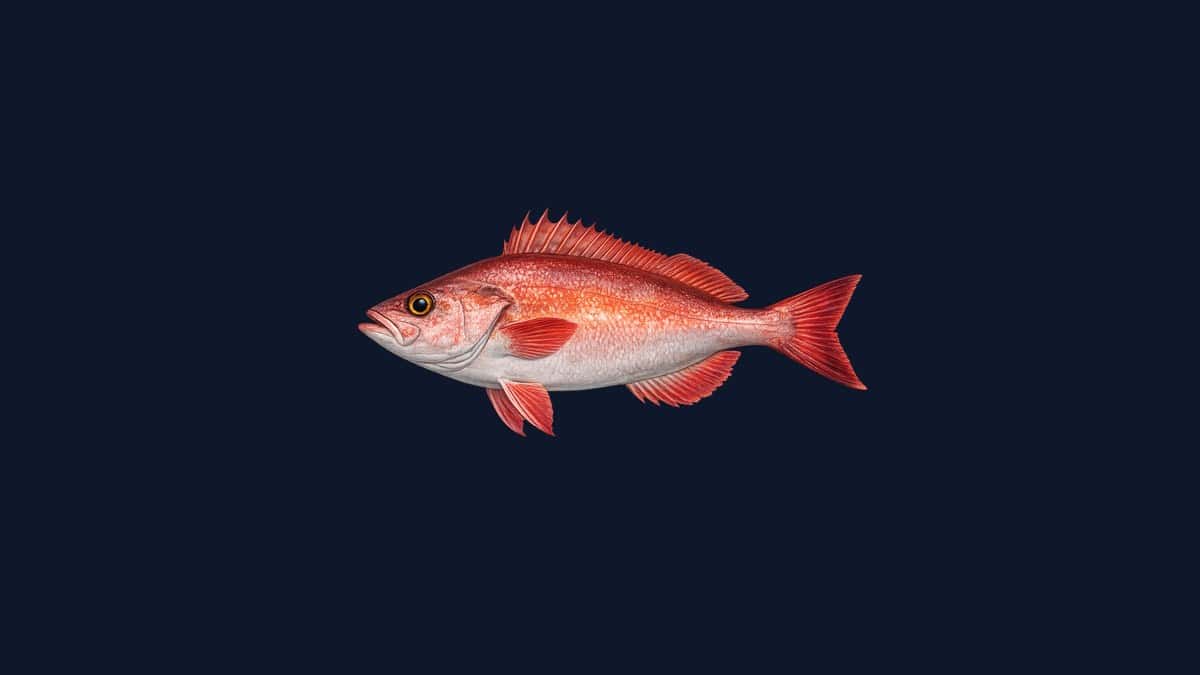
Pacific ocean perch studio illustration — bright red-orange Sebastes with distinct notched symphyseal knob and deep-water body shape against a black background.
All Species

Pacific Ocean Perch

Sebastes alutus

In Season Now0.5 lb – 4 lbs

A deep-slope Sebastes rebuilt from serious depletion. Pacific ocean perch live at 500–1,500 ft — far deeper than most recreational gear reaches — and appear occasionally in NorCal mixed deepwater bags.

Illustration: Fish City

About Pacific Ocean Perch

Pacific ocean perch — or POP in fishery shorthand — are a deep-slope Sebastes that most California recreational anglers will encounter only as an incidental catch on extreme-depth NorCal trips. Their core habitat runs 150 to 460 meters (roughly 500 to 1,500 ft), putting them substantially deeper than typical party-boat groundfish territory.

They're a significant species in the commercial groundfish fishery and in the management history of West Coast rockfish — the North Pacific population was severely depleted by foreign trawl fleets in the 1960s and 70s, and the species took decades to rebuild. The West Coast stock was declared rebuilt in 2017.

For recreational purposes: if you're fishing standard SoCal or Central Coast groundfish trips at 150–400 ft, you won't typically encounter POP. They appear occasionally on NorCal deepwater trips with electric reels targeting the 500+ ft zone.

How to Catch (If Encountered)

Deep-drop techniques: heavy gangion rigs with 20- to 32-oz torpedo sinkers, electric reel nearly required at 500+ ft, shrimp fly or cut squid on the rig. They appear in mixed-species catches when a NorCal boat extends into their depth range.

At legal depth, any standard deep groundfish setup catches them incidentally. They're not typically targeted directly by recreational anglers.

Eating Profile

Good — same quality as most Sebastes. Firm white flesh, mild flavor. They're commercially fished and processed in Alaska, where the species is more abundant and easier to access at depth. Recreationally, they're table fish like any other rockfish.

Month-by-Month

  • Jan–Mar: Boat-based groundfish closure. No recreational access in most areas.
  • Apr–Dec: Open with the standard groundfish season; encounter depth makes them rare in typical party-boat bags.


Where to Catch Pacific Ocean Perch in California

  • Deep rocky slopes and soft-bottom habitat at 500–1,500 ft
  • NorCal offshore structure (Eureka, Bodega Bay) — where recreational deepwater trips occasionally reach their depth range
  • Central California offshore banks at extreme depth
  • Not commonly encountered on party-boat groundfish trips due to depth requirements

Conditions & Habitat

Water Temp

52–62°F; deep cold-water species

Typical Depth

150–460 m (500–1,500 ft); most commonly encountered by recreational anglers at the shallower end of that range during mixed deepwater trips

Diet

Euphausiids (krill), copepods, small fish — mid-water and near-bottom feeder on zooplankton and small organisms

How to Catch Pacific Ocean Perch

Techniques

  • Heavy sinker gangion rigs (20–32 oz) at extreme depth on NorCal deepwater trips
  • Electric reel required for practical fishing at 500+ ft
  • Shrimp fly gangion with heavy torpedo sinker
  • Typically caught incidentally on deepwater rockfish trips rather than targeted directly

Lures & Baits

  • Shrimp fly gangion 2-hook (chartreuse) with 20–32 oz torpedo sinker — necessary for 500+ ft work
  • Dropper loop with cut squid — standard at any extreme depth

Line & Leader

65–80 lb braid mainline (500+ yards for deep-drop work), 50 lb fluorocarbon leader. Electric reel strongly recommended — hand-cranking from 1,000 ft is not practical.

Rod & Reel Combos

  • Heavy conventional rod 7 ft, Shimano Torium 30 or Penn Fathom 40, 65–80 lb braid minimum
  • Electric reel: Daiwa Tanacom 750 or Shimano Plays 1000 — the practical choice at 500+ ft depth

Regulations

Counted toward the 10-fish RCG (Rockfish, Cabezon, Greenling) aggregate daily bag limit. No species-specific sub-limit for Pacific ocean perch in 2026. Boat-based groundfish season typically open April 1–December 31; closed January 1–March 31 in most management areas. Depth restrictions (RCA lines) may apply and are particularly relevant to species living at 500+ ft — verify current CDFW groundfish bulletin before booking. Descending devices REQUIRED onboard when releasing fish from depth. See /species/rockfish for full aggregate rules. (14 CCR § 27.20; 2026 CDFW Groundfish Regulations.)

As of April 20, 2026 — CDFW source

Did You Know?

Pacific ocean perch can live over 100 years — one of the longest-lived Sebastes species. Their slow growth and extreme longevity made them especially vulnerable to trawl depletion in the 1960s and 1970s: a single sweep of a trawl net could remove fish representing a century of accumulated biomass. The stock rebuilt slowly after management tightened, reaching rebuilt status in 2017. A Pacific ocean perch caught today could feasibly be older than the Golden Gate Bridge.

Boats Known for Pacific Ocean Perch

Charter boats with a track record on this species.

Pacific Pearl

Eureka — Woodley Island Marina

NorCal deepwater groundfish trips where POP occasionally appear in mixed bags

Book a Pacific Ocean Perch Charter

Find charter boats targeting Pacific Ocean Perch at these California landings:

Frequently Asked Questions

Same genus (Sebastes), completely different species and ocean. Pacific ocean perch (S. alutus) is a West Coast rockfish; Atlantic ocean perch (S. norvegicus) is the species common in New England fisheries. Neither is related to actual perch (family Percidae). Both are red-orange Sebastes; both are used in commercial fisheries for their mild white flesh. If you're buying 'ocean perch' at a fish counter in the US, it's likely the Atlantic species — Pacific ocean perch isn't heavily commercialized on the West Coast.

Sources

Ready to Find the Bite?

Join thousands of California anglers using Fish City for real-time fish counts, reports, and charter data.

Download on the App StoreGet it on Google Play

Free — no subscription required