About Bocaccio
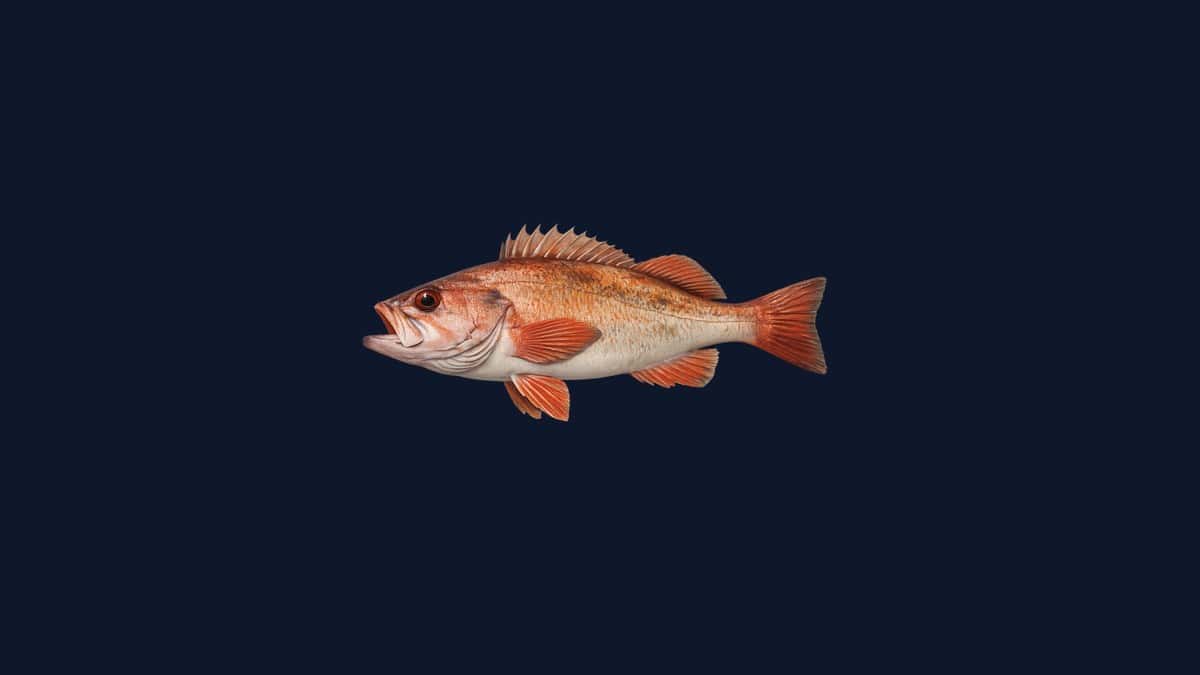
Bocaccio are the big-mouthed rockfish — distinguished instantly from other Sebastes by the wide gape that stretches well behind the eye. They're also one of the largest-bodied species in the family: decent fish run 3 to 6 pounds, and fish over 8 pounds aren't rare on offshore banks.
They're worth knowing for conservation reasons too. Bocaccio were one of the most severely depleted West Coast groundfish in the early 2000s — the 2001 stock assessment estimated the population at roughly 8% of unfished levels. The rebuilding timeline called for 60-plus years. It happened in about 15. The stock was officially rebuilt by 2019, which is why there's no longer a bocaccio sub-bag within the 10-fish RCG aggregate.
On the water, they live in the same depth zone as vermilion — 150 to 450 ft on offshore banks and rocky pinnacles. The two species often come off the same drift.
How to Catch
The deep groundfish playbook applies: cut squid on a dropper loop is the standard, flat-fall jigs produce the bigger class of fish, and a shrimp fly gangion tipped with squid covers both volume and quality.
Bocaccio are more aggressive mid-water feeders than most Sebastes — they actively school and chase baitfish rather than sitting still on the reef. That makes them slightly more jig-responsive than, say, a vermilion sitting on a ledge. A 150g Butterfly flat-fall worked near bottom can outperform bait on a day when bocaccio are actively feeding.
Keep your sinker matched to depth and drift. At 300 ft with current running, a 12-oz sinker swings 50 yards behind the boat — you need 16 to 24 oz to stay vertical. Electric reels are legal on most party boats and meaningfully improve drops-per-trip at these depths.
Eating Profile
Top-tier table fish. Firm white flesh, mild and slightly sweet — very similar to vermilion in quality. Bocaccio tend to run a touch more moist than vermilion, which makes them slightly more forgiving in a pan. Fillet and skin the fish at the cleaning station; the red skin is edible but most anglers remove it. A 4-lb bocaccio yields about 1.8 lbs of clean fillets.
Seafood Watch rates California hook-and-line bocaccio as a Good Alternative following the stock's rebuilding.
Common Mistakes
- Ignoring them in mixed catches. On a party boat, bocaccio often get lumped in with "generic reds." They're a different species with a notable biology story — worth knowing what's on ice.
- Not using descending devices. Even with no sub-limit, bocaccio pulled from 300 ft die at the surface. Run a descending device on every release.
- Too light a sinker. Same problem as vermilion — 8 oz at 300 ft leaves your rig 30 yards behind the boat. Match weight to conditions.
Month-by-Month
- Jan–Mar: Closed in most management areas for boat-based groundfish.
- Apr: Opener. Fish active on offshore banks post-closure.
- May–Jun: Steady production at 200–350 ft on offshore banks.
- Jul–Sep: Peak summer — full limits common on good days at the 43-fathom spot and Channel Islands.
- Oct–Nov: Excellent conditions; boats that run bring home fish.
- Dec: Weather windows narrow; bocaccio still present on deep structure.