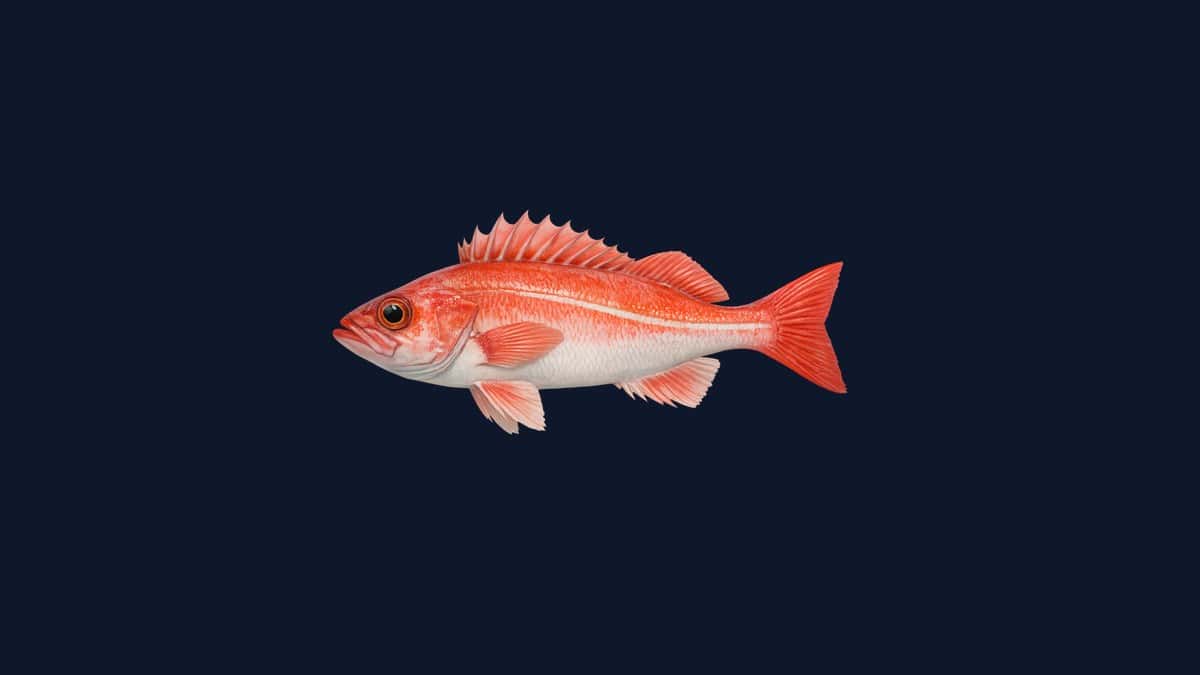
Chilipepper rockfish studio illustration — slender red-orange Sebastes with a distinctive lateral pink stripe against a black background.
All Species

Chilipepper Rockfish

Sebastes goodei

In Season Now1 lb – 5+ lbs

A slender, schooling rockfish of California's mid-depth offshore banks. Chilipepper school tightly and feed aggressively — when you find them, limits come quickly.

Illustration: Fish City

About Chilipepper Rockfish

Chilipepper are the sleek schooling rockfish of California's mid-depth banks. Where vermilion and bocaccio tend to hold to specific reef structure, chilipepper school mid-water and move with the bait — which means when you find them, the action is fast.

They're slender for a Sebastes — longer, thinner body than a vermilion, with a distinctive narrow pink lateral stripe that runs from behind the head to the tail. Red-orange color, smaller average size (1 to 4 lbs), but dense schools that can fill a limit quickly.

They're the species on the trip description listed generically as "rockfish." You'll know you have them when you see that stripe and that narrow profile.

How to Catch

Same depth zone as vermilion and bocaccio — 200 to 400 ft on offshore banks. The standard deep groundfish setup applies: cut squid on a dropper loop gangion with a 14- to 20-oz torpedo sinker, shrimp fly gangion tipped with squid, or a flat-fall jig worked through mid-water schools.

The difference from vermilion is that chilipepper are more jig-responsive. They actively school mid-water and chase bait — if sonar shows a cloud at 200 ft over 300 ft of bottom, that's chilipepper territory. Drop a 100g to 200g flat-fall into the mark and work it through the school. They'll hit on the drop.

Volume comes fast. When the boat is over a good school, a 2-hook gangion often comes up with a double. The trick is staying vertical — a sinker too light for the current swings out of the zone. Match weight to conditions; on a hard-drifting boat, 20 oz isn't overkill at 300 ft.

Eating Profile

Solid table fish. Firm white flesh, mild and clean. Slightly leaner than vermilion or bocaccio, which means they can dry out if overcooked. Pan-fry with butter and a fast finish — 3 to 4 minutes per side at high heat is plenty for a 3/4-inch fillet. Fish tacos are another good application. A 2-lb chilipepper yields about 12 oz of boneless fillets.

Common Mistakes

  • Mistaking them for generic reds. The pink lateral stripe and slender body are reliable identifiers — worth knowing which fish is on the deck.
  • Fishing bottom only. Chilipepper are mid-water schoolers. If your sonar shows marks at 200 ft over 300 ft of water, raise your bait to the mark, not the floor.
  • Under-weighting the sinker. At 300 ft with any current, you need 16 oz minimum to stay on the school. Go heavier than feels natural.

Month-by-Month

  • Jan–Mar: Closed in most management areas.
  • Apr: Opener. Schools on offshore banks and available immediately.
  • May–Aug: Consistent production; NorCal upwelling concentrates bait and fish.
  • Sep–Oct: Excellent — calm seas, schools feeding hard before winter.
  • Nov–Dec: Fish remain on offshore structure; weather is the limiting factor.

Where to Catch Chilipepper Rockfish in California

  • Offshore banks at 200–400 ft depth — rocky pinnacles and hard-bottom areas
  • Channel Islands (San Clemente, San Nicolas) mid-depth slopes
  • Central Coast offshore banks (Morro Bay, Monterey)
  • NorCal offshore structure (Half Moon Bay, Bodega Bay)
  • Areas with upwelling-driven current bringing krill and baitfish

Conditions & Habitat

Water Temp

46–54°F; deep cold-water schooling rockfish

Typical Depth

150–600 ft; most common 200–400 ft on rocky pinnacles and sandy-rock transition zones

Diet

Krill, small fish, squid — schooling mid-water feeder that actively hunts rather than ambushes

How to Catch Chilipepper Rockfish

Techniques

  • Cut squid on a dropper loop gangion — chilipepper respond to scent and hit decisively
  • Shrimp fly gangion (2-hook) tipped with cut squid at 200–350 ft
  • Flat-fall jig (100–200g, glow or sardine) worked through schools on sonar
  • Diamond jig (chrome, 8–14 oz) dropped into mid-water school marks
  • Live sardine or mackerel on dropper loop — bigger average fish

Lures & Baits

Line & Leader

50–65 lb braid mainline (400+ yards for deep work), 40–50 lb fluorocarbon or mono leader. Same setup as vermilion — they share the depth zone.

Rod & Reel Combos

Product links may earn Fish City a small commission at no extra cost to you. We only recommend gear we'd use ourselves.

Regulations

Counted toward the 10-fish RCG (Rockfish, Cabezon, Greenling) aggregate daily bag limit. No species-specific sub-limit for chilipepper in 2026. Boat-based groundfish season typically open April 1–December 31; closed January 1–March 31 in most management areas. Depth restrictions (RCA lines) may apply — verify current CDFW groundfish bulletin before booking. Descending devices REQUIRED onboard when releasing fish from depth. See /species/rockfish for full aggregate rules. (14 CCR § 27.20; 2026 CDFW Groundfish Regulations.)

As of April 20, 2026 — CDFW source

Did You Know?

Chilipepper get their name from their red-orange coloration, which resembles the chili peppers the common name references. Despite the SoCal-sounding name, they're abundant coast-wide from Baja to Oregon and are a staple of NorCal deep-water party boat trips where they school densely on offshore banks.

Boats Known for Chilipepper Rockfish

Charter boats with a track record on this species.

Pacific Queen

Fisherman's Landing

Full-day Mexican water — chilipepper mixed with reds on deep banks

Malihini

H&M Landing

3/4-day offshore structure — chilipepper frequent

Fiesta

Virg's Landing (Morro Bay)

Central Coast full-day groundfish — chilipepper on offshore banks

Huli Cat

Pillar Point (Half Moon Bay)

NorCal deep-reef trips where chilipepper appear in mixed bags

Book a Chilipepper Rockfish Charter

Find charter boats targeting Chilipepper Rockfish at these California landings:

Frequently Asked Questions

Chilipepper are noticeably slender compared to vermilion and bocaccio — longer, thinner body, less deep through the chest. They also have a distinctive narrow pink lateral stripe running from just behind the head to the tail. The overall color is red-orange but lighter than a vermilion. On a deck full of mixed Sebastes, the body shape is the reliable tell — chilipepper look like they've been stretched out.

Sources

Ready to Find the Bite?

Join thousands of California anglers using Fish City for real-time fish counts, reports, and charter data.

Download on the App StoreGet it on Google Play

Free — no subscription required