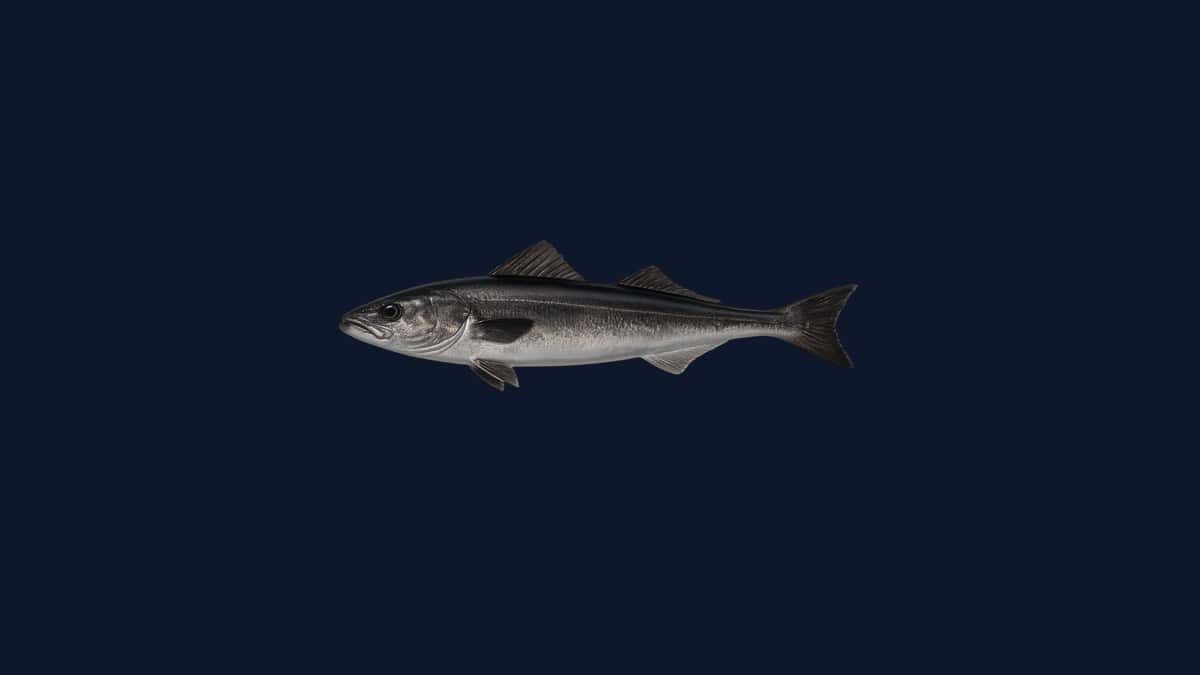
About Black Cod (Sablefish)
Black cod (Anoplopoma fimbria) is not a cod. It is the only member of its own family — Anoplopomatidae — a deepwater species of the North Pacific with no close relatives among common California catches. Commercial fisheries call it sablefish. Restaurants call it black cod. Both names refer to the same fish.
What distinguishes it is the fat content. Few Pacific species match the buttery richness of sablefish flesh — it sits alongside king salmon as one of the highest-omega-3 fish in the ocean. That fat content is also why it's forgiving to cook: you essentially have to try to dry it out.
California's recreational access to sablefish is limited by geography. The fish live at 600 to 4,500 feet — true continental slope depths. Most party boats don't fish that deep. The anglers who catch them consistently run private boats with electric reels and either know the underwater canyons or have made the investment in detailed charts and experience. But the fish are there, the stock is healthy, and a handful of deep-drop specialists make it work every season.
How to Catch
An electric reel is not optional. Retrieving gear from 1,000 feet of water on a manual crank is a 25-minute workout that wears you out before the fish even surfaces. The standard deep-drop setup is an electric reel with 500+ yards of 65–80 lb braid, a 4-to-6-foot fluorocarbon leader, and 8/0 circle hooks on a multi-drop bottom rig baited with squid or mackerel chunks.
The technique itself is patient. Lower to the bottom slowly — at depth, heavy current can arc your line and put you nowhere near structure. Once on bottom, set the reel and deadstick for 5 to 10 minutes. Sablefish tend to nose along the bottom and find the bait without much action needed.
Fish near submarine canyon walls, slope breaks, and seamount edges rather than flat soft bottom. Topographic complexity concentrates sablefish the same way it concentrates shallow-water rockfish. NorCal anglers hitting the Cordell Bank area and Mendocino slope get consistent action when conditions cooperate.
Eating Profile
Outstanding — arguably the best-eating fish in this batch. The flesh is white to pale, extremely moist, high-fat, and mild with a clean oceanic flavor. Pan-sear or grill with minimal seasoning; the fat content handles the heat. Miso-glazed preparations (the Nobu method) are popular for good reason: the fermented salt in the marinade cures the surface while the fat keeps the interior from drying. Skin-on is preferred — it crisps beautifully.
Black cod freezes exceptionally well due to its fat content. Vacuum-seal and freeze for up to 8 months without significant quality loss. Do not try to eat it sashimi-style — the high fat content makes raw texture somewhat gelatinous.
Common Mistakes
- Fishing too shallow. Black cod begin to appear around 400 ft but the core population is at 600–1,500 ft. Fishing at 300 ft produces rockfish, not sablefish.
- Going too light on line. Braid will take a beating at depth from current drag and bottom contact. 50 lb braid is the floor; 65–80 lb is better. You won't feel the bite anyway at 1,000 ft.
- Not identifying the bottom type. Flat soft bottom yields no sablefish. You want slope breaks, canyon walls, and hard structure near soft bottom. Deep-water charts or sonar marks are worth the investment.
- Fishing without an electric reel. Manual reeling from 1,000 ft is possible but fatiguing. By trip four, you'll be fishing shallower to avoid the arm burn, which means fewer sablefish.
Month-by-Month
- Jan–Mar: Peak cold-water season. NorCal boats get best access when weather allows. Fish are active along the slope.
- Apr–May: Good action continues. Spring swells can limit boat access.
- Jun–Aug: Summer. Effort drops due to weather but fish are still there. SoCal deep-canyon edges produce sporadically.
- Sep–Oct: Excellent fall run begins. Water cools; fish become more consistently catchable at 600–1,200 ft.
- Nov–Dec: Strong season. NorCal deep-drop specialists put in the most effort here. Best months for dedicated targeting.