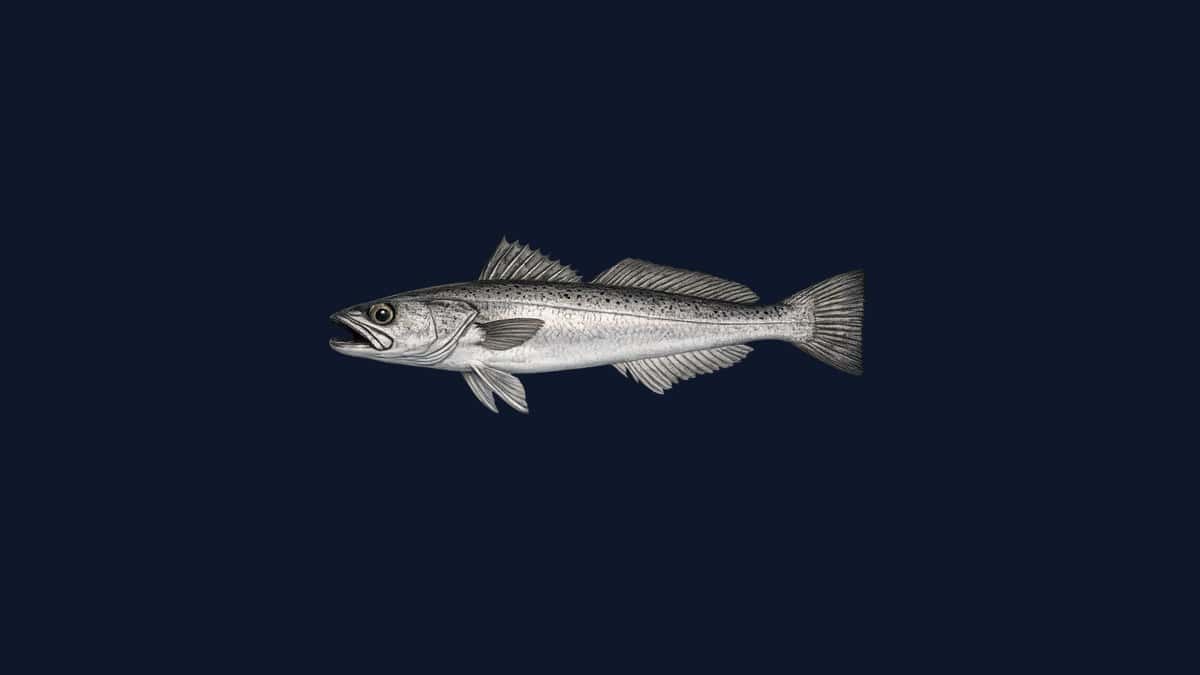
About Pacific Hake (Whiting)
Pacific hake (Merluccius productus) is the whale in the room of California's offshore fishery. By sheer weight, it's the most abundant commercially harvested fish on the West Coast — entire treaty fleets from the US and Canada target it jointly under quota management. The stock is enormous and healthy. And most recreational anglers have never intentionally targeted one.
That's partly because hake live at 150 to 600 feet in the water column — reachable but not easy. They're a mid-water to deep schooling species found along the continental shelf from Vancouver Island to Baja. The fish FishBase documents max at 105 cm (about 41 inches); common length is 60 cm. California recreational catches run 1–5 lbs. They fight with reasonable speed but not the drama of a lingcod or rockfish.
What defines hake as a recreational species is the spoilage problem. There's no way around it — hake flush faster than any other Pacific fish if they're not handled correctly. If you're going to keep one, you need ice in the cooler before the fish hits the deck.
How to Catch
Deep-drop, mid-water. Hake aren't strictly bottom fish — they school in the mid-water column, typically 100 to 400 feet below the surface during daylight hours. They'll show on sonar as dense returns that look like schools of small rockfish but sit off the bottom rather than on it.
Drop a multi-hook dropper rig baited with squid or mackerel chunks through the sonar mark. Hake intercept bait on the way down, so watch the rod as the rig sinks — bites on the drop are common. Small knife jigs (1–2 oz) worked through the school also produce.
NorCal and Central Coast anglers encounter hake most consistently while running deep-water trips for rockfish and lingcod — the fish show up as bonus catches when the rig passes through a school on the way to the bottom. SoCal hake fishing is less common but happens on the deeper offshore banks.
Eating Profile
Good when iced immediately, inedible when not.
Here is what the mushy-hake problem actually is: the fish flesh contains a high concentration of natural enzymes (cathepsins) that begin breaking down cell structure within minutes of death in warm conditions. Un-iced hake develops soft, gelatinous, unpleasant-textured flesh within an hour of landing. Cold temperatures halt the enzyme activity.
Ice the fish immediately — within 5 minutes of landing. Keep in slush ice, not just cold water. Fillet same day. The resulting meat is clean, white, mildly flavored, and lean. It bakes and fries well. It makes decent fish tacos but isn't as firm as rockfish or halibut. Don't freeze — the texture degrades further.
Common Mistakes
- Not icing immediately. The only thing that matters for hake eating quality. Everything else is secondary. If you don't have ice in the cooler, don't keep hake.
- Fishing strictly on bottom. Hake school mid-water. Bouncing a rig on the flat bottom 50 feet below the school will produce nothing. Use the sonar; target the actual school depth.
- Trying to freeze hake. The mushy problem worsens after freezing. Hake is a same-day or next-day species.
- Underestimating the fight. A 3-lb hake at 300 ft on 20 lb line provides a legitimate workout on the retrieve — not because the fish is strong but because of the depth and water resistance. Go heavier than you'd expect.
Month-by-Month
- Jan–Apr: Schools in deeper offshore water; less accessible recreationally. Commercial boats active.
- May: First seasonal shallowing of schools onto the continental shelf.
- Jun–Jul: Peak recreational access as schools move to 150–400 ft depths along the shelf edge.
- Aug–Sep: Consistent action for NorCal deep-water anglers; SoCal encounters on deeper offshore banks.
- Oct: Still producing; schools begin moving offshore and deeper as fall approaches.
- Nov–Dec: Mostly offshore; incidental catches on deep rockfish trips.