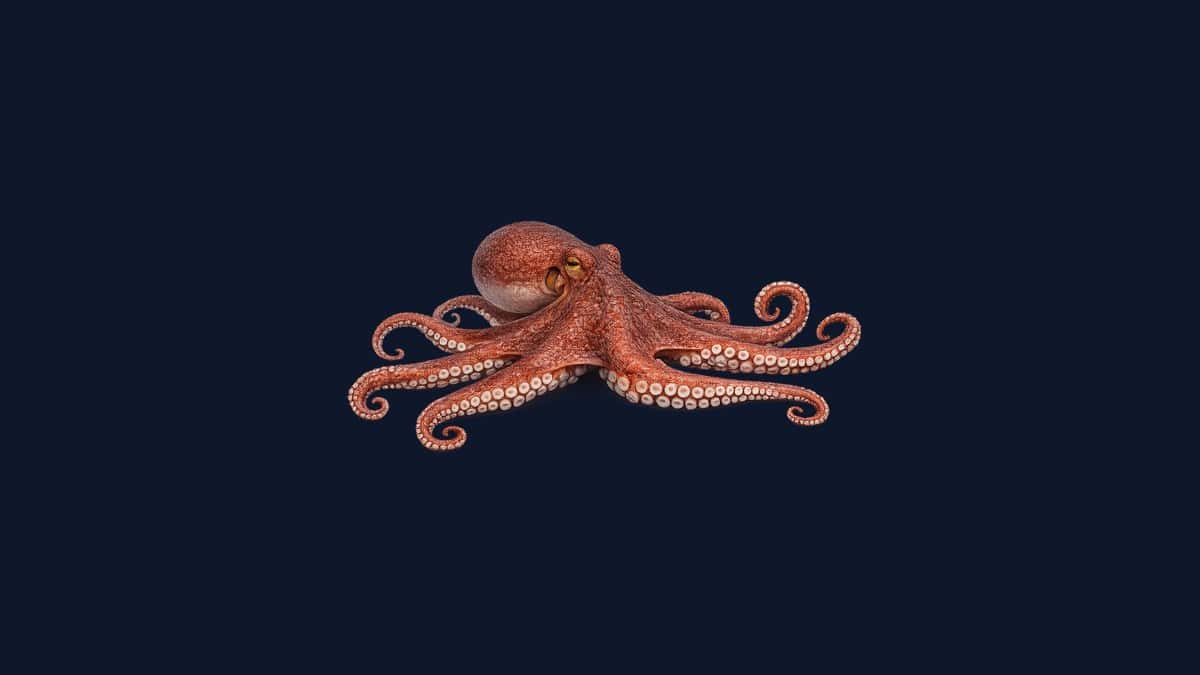
California two-spot octopus studio illustration — tan octopus with distinctive blue-ringed false eye spots and eight sinuous arms against a dark rocky background.
All Species

California Two-Spot Octopus

Octopus bimaculatus

In Season Now0.5 lb – 3 lbs (two-spot; Giant Pacific Octopus can exceed 50 lbs but rare in CA recreational take)

The SoCal reef's eight-armed predator. Two-spot octopus dens in rocky crevices from tidepools to 50 m, hunts crabs and shellfish at night, and is one of California's most identifiable invertebrates. Hand or spear capture only.

Illustration: Fish City

About California Octopus

Three species routinely turn up in California recreational take:

California two-spot octopus (Octopus bimaculatus) is the primary SoCal species. Point Conception south into Baja. Lives intertidal to 50 m in rocky dens. Mantle length to ~47 cm; weight up to ~3 lbs. Lifespan 1–2 years. Identified by the two blue-ringed "false eye" ocelli on each side of the body below the real eyes — this is the diagnostic field mark. Females lay eggs once, guard the clutch for 2–3 months, then die. Males die shortly after mating. This one-shot reproductive strategy (semelparity) is why the species grows and matures so fast.

Red octopus (O. rubescens) is smaller (mantle to ~20 cm), reddish-brown, and ranges from Baja to Alaska. Common in NorCal tidepools and subtidal rocky areas. Often confused with juvenile two-spot; look for the ocelli (two-spot has them; red octopus doesn't — it has three raised papillae below the eye instead).

Giant Pacific Octopus (Enteroctopus dofleini) is the big one. Monterey northward into Alaska. Up to 50+ lbs in California, 150+ lbs in Alaska. Lifespan 3–5 years — longer than the other two. Rare south of Point Conception. No California species-specific regulation; same § 29.05 defaults apply.

Regulatorily, none of these three is separately named in CA invertebrate law. They all fall under § 29.05's default: 35/day, no size minimum, year-round, MPA restrictions, SCUBA limits north of Yankee Point.

How to Catch

Finding a California octopus is largely about finding the den. They're ambush predators and den-dwellers, not open-water wanderers. Look for middens — piles of crab shells, mussel shells, clam shells — at the entrance to rocky crevices. That's the tell.

Tidepool hand capture at minus tides is the classic SoCal approach. Walk rocky intertidal at low tide, look for middens or visible octopus retracting into crevices. Gloves and a game bag. Reach in carefully; the beak is sharp and will puncture skin. Work by feel on the mantle (the soft body cavity) — grip the mantle base firmly and lift; the arms will wrap around your forearm, but that's normal.

Freedive / SCUBA spear is the high-yield method in SoCal kelp and rocky reef. Pole spear or Hawaiian sling into the mantle; confirm kill before bringing into the bag (a live octopus in the game bag is a serious suction-and-beak problem). SCUBA for octopus is south of Yankee Point only — NorCal SCUBA divers are restricted to urchins, rock scallops, and Cancer-genus crabs under § 29.05. Freedive is legal statewide.

Night diving outproduces day because octopus actively hunt after dark. A flashlight scanning tidepools or subtidal rocks at night will catch bright-eyed octopus on the move.

Incidental bait capture happens — an octopus grabs a live crab on a dropper loop or a baited hook. Low probability but well-documented, especially around Catalina and the Channel Islands.

MPAs: Check no-take boundaries. Many of the best SoCal octopus areas (La Jolla, Point Loma, Catalina) have adjacent MPAs. Take inside MPAs is illegal.

Eating Profile

Excellent when prepared right, rubber when prepared wrong. California octopus needs either freezing-thawing pre-tenderization (the easiest method — freeze whole for 48 hours, thaw, then cook) or long slow braising (45–60 min in liquid).

Mediterranean method: Braise in red wine, tomato, and olive oil for 45 min until fork-tender; then grill or sear for charred finish. Serve sliced with olive oil, lemon, and salt.

Korean / Japanese method: Raw sashimi from live octopus (sannakji) — technically legal, practically requires very fresh octopus and experienced preparation. More commonly, blanched in boiling water with vinegar (30 seconds to 2 minutes depending on size), sliced, served with ponzu or soy-sesame dipping.

A 2-lb two-spot octopus serves 4 as a tapa; a 3-lb octopus serves 4–6 as a main. Yield is high — roughly 60% of body weight is edible meat after cleaning (discard beak, eyes, and ink sac).

Common Mistakes

  • Bare-handed grab in a tidepool. The beak will puncture skin. Gloves mandatory.
  • SCUBA take north of Yankee Point. Illegal. § 29.05 limits NorCal SCUBA invertebrate take to urchins, rock scallops, and Cancer-genus crabs.
  • Take inside MPAs. Many SoCal octopus spots are adjacent to no-take reserves. Verify boundaries before diving.
  • Putting a live octopus in the game bag. Suction and beak. Kill first, then bag.
  • Fast-cooking fresh (unfrozen) octopus. Rubber. Freeze-thaw or long braise. No middle ground.
  • Confusing species. Two-spot has ocelli; red octopus has three papillae; Giant Pacific Octopus is much larger. All legal under § 29.05 default, but knowing which species you have is good practice.

Month-by-Month

  • Year-round legal under § 29.05. No closed season.
  • Jan–Mar: Cool water. Octopus less active during coldest months. Tidepool encounters decrease.
  • Apr–Jun: Spring tidepool season in SoCal — minus tides pull at low-pressure systems, exposing octopus dens. Solid hand-capture window.
  • Jul–Sep: Peak recreational effort for divers — water warm enough for comfortable extended dives, kelp forests active, octopus out of dens at night.
  • Oct–Dec: Lobster season opens October 2, 2026 — divers focused on lobster will incidentally encounter octopus. Reciprocal: an octopus in a crevice is often the animal that's been eating the lobsters in that same reef. The two species compete.


Where to Catch California Two-Spot Octopus in California

  • Rocky intertidal and shallow subtidal (two-spot's primary habitat)
  • Channel Islands kelp-forest rocky structure
  • Tide pools at minus tides (hand collection)
  • Palos Verdes, La Jolla, Point Loma — SoCal rocky fringes
  • Monterey Bay and Central Coast (transition zone between two-spot and red octopus range)
  • Dens are often identified by middens — piles of crab and shell debris at den entrance

Conditions & Habitat

Water Temp

50–68°F; two-spot is warm-temperate SoCal; red octopus is cooler NorCal

Typical Depth

Intertidal to 50 m (two-spot); up to 1,500 m (Giant Pacific Octopus, but shallow in CA)

Diet

Crabs, shrimp, clams, small fish, snails — active nocturnal predator; drills shells with radula

How to Catch California Two-Spot Octopus

Techniques

  • Hand capture at low tide in tidepools (SoCal) — reach carefully into crevices
  • Spear on freedive or SCUBA (SoCal) — legal under § 29.05
  • Bait fishing with live crab near den openings (uncommon — hand or spear dominate)
  • Identify dens by middens (crab shell piles) at the entrance
  • Night diving outproduces day — octopus emerge after dark to hunt
  • SCUBA hand/spear for octopus is legal south of Yankee Point only (§ 29.05 restriction)

Lures & Baits

  • Pole spear or Hawaiian sling (legal in SoCal freedive and SCUBA)
  • Gloves and game bag — octopus suction is strong and the beak is sharp
  • Live crab on a dropper near rocky structure — low-probability but occasional bait strike
  • Flashlight for night work and crevice inspection

Line & Leader

Not typically rod-and-reel — this is dive or hand capture. If bait-fishing: 30 lb braid with 25 lb fluorocarbon leader on a 4/0 circle hook, live crab in rocky structure.

Rod & Reel Combos

  • Spearfishing: pole spear or Hawaiian sling — standard SoCal freedive kit
  • Hand capture: gloves, game bag, tickle stick or small knife (for dislodging suction)
  • Bait rod: 7 ft medium bottom rod, 4000 spinning with 30 lb braid, live crab rig

Regulations

California recreational octopus take is regulated under **14 CCR § 29.05** as a general invertebrate. Daily bag limit: **35 per day** (the § 29.05 default for invertebrates with no species-specific limit). **No minimum size**. **Year-round season**. Legal methods: hand, skin-dive (freedive), SCUBA, spear, and hook-and-line (§ 29.05 permits take by 'hand, hand-held net, hook and line, and by diving'). **SCUBA restriction**: north of Yankee Point, Monterey County, SCUBA take of invertebrates is limited to sea urchins, rock scallops, and Cancer-genus crabs only — **octopus does not qualify for SCUBA take north of Yankee Point**. South of Yankee Point, SCUBA hand and spear take of octopus is permitted. Freedive (skin-dive) is legal statewide. **No take in Marine Protected Areas (MPAs)** — no-take reserves and state marine conservation areas may restrict or prohibit octopus take depending on designation. Two-spot octopus is the primary SoCal species (*O. bimaculatus*); Giant Pacific Octopus (*Enteroctopus dofleini*) is common from Monterey northward but rare in SoCal recreational take. Red octopus (*O. rubescens*) overlaps both regions.

As of April 20, 2026 — CDFW source

Did You Know?

California two-spot octopus has **three hearts, nine brains, and blue copper-based blood**. The three hearts pump hemocyanin-based blood (which is blue when oxygenated, because hemocyanin uses copper instead of the iron found in hemoglobin); two hearts pump blood to each gill and one pumps to the rest of the body. The 'nine brains' figure counts one central brain plus eight secondary nerve clusters in each arm — each arm can perform complex motor tasks (opening a jar, grabbing prey) semi-independently of the central brain.

Book a California Two-Spot Octopus Charter

Find charter boats targeting California Two-Spot Octopus at these California landings:

Frequently Asked Questions

Three commonly encountered. **Two-spot octopus (*Octopus bimaculatus*)** — SoCal, Point Conception south into Baja, the most commonly caught California species recreationally; up to ~47 cm, 3 lbs; distinctive blue-ringed false-eye 'ocelli' below the real eyes. **Red octopus (*O. rubescens*)** — smaller (up to 20 cm mantle), reddish-brown, ranges from Baja to Alaska, common in tidepools; recreational take legal. **Giant Pacific Octopus (*Enteroctopus dofleini*)** — huge (up to 50 lbs+ in CA, 150+ lbs in AK), common from Monterey north, rare south of Point Conception; no CA species-specific rule beyond the § 29.05 35-bag.

Sources

Ready to Find the Bite?

Join thousands of California anglers using Fish City for real-time fish counts, reports, and charter data.

Download on the App StoreGet it on Google Play

Free — no subscription required