About Skipjack Tuna
Skipjack are the most abundant tuna in the Pacific Ocean — globally speaking, they vastly outnumber bluefin or yellowfin. Off Southern California, they're warm-water visitors. You don't target them specifically; you find them when the water goes warm and you're already offshore looking for other tunas.
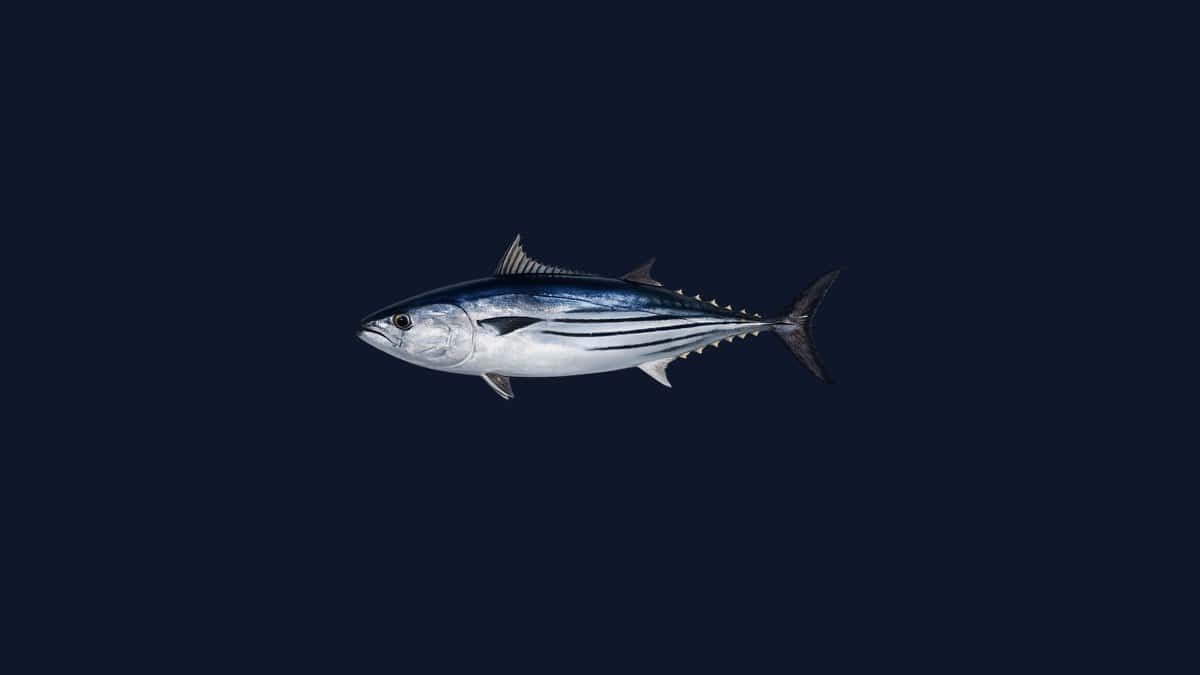
The tell is the stripes: four to six dark horizontal lines running along the lower belly, nowhere else. No lateral stripe, no yellow finlets. A skipjack in hand looks like someone painted racing stripes on a small, fat tuna. Most SoCal fish run 5 to 12 lbs. The species record is around 34 kg (75 lbs), but anything over 15 lbs locally is a good one.
For more on the warm-water tuna game in SoCal, see the yellowfin tuna and bluefin tuna pages — the tactics largely overlap.
How to Catch
Skipjack eat the same things as other small tunas and they're not picky. Cedar plugs trolled at 6 to 8 knots will get them. A flat-fall jig dropped into a marked school works. Live sardine fly-lined in chum works. They'll hit chrome iron cast into a surface boil.
The most fun way, if you can stand it when there are bluefin around: light spinning gear, 20-lb braid, 1/0 circle on a fresh sardine. A 10-lb skipjack on that setup is a genuine two-minute fight and they jump.
Most anglers encounter skipjack as bycatch — trolling between paddies, or when a school blitzes the surface near a stopped boat. They're rarely worth repositioning for specifically, but they're worth keeping if the bluefin aren't biting.
Eating Profile
Good, if you eat them the same day. Skipjack flesh is darker and more intense than yellowfin or albacore — rich, slightly metallic, excellent raw as sashimi or poke. The bloodline is large and pronounced; remove it cleanly before eating. Tataki-style (seared rare with ponzu) is the best preparation.
The problem is freshness degradation. Skipjack turn fishy faster than any other tuna. A 6-hour-old skipjack sitting in a warm cooler is unpleasant. Bleed immediately on deck, get it in slush (ice + seawater), and plan to eat it within 12 hours. Don't freeze for later.
Common Mistakes
- Taking too many. The limit structure is permissive (no species-specific cap), but skipjack go bad fast. Keep only what you'll actually eat that evening.
- Fishing heavy gear. A 10-lb skipjack on 80-lb stand-up tackle is a 30-second drag, not a fight. If you're already set up for big bluefin and a school of skipjack comes through, sure — but know you're missing the fun.
- Confusing with small yellowfin. The ID matters when mixed schools are present; regulations differ and you want to know what you're keeping. Look at the belly: stripes = skipjack.
- Not bleeding fast enough. They deteriorate faster than bluefin or yellowfin. The ice chest has to be ready.
Month-by-Month
- Jan–Jun: No skipjack in SoCal. Water too cold.
- Jul: Possible in warm years when surface temps push 68°F+. First sightings usually from boats already targeting yellowfin or dorado.
- Aug–Sep: Most likely window in El Niño years. Mixed with yellowfin schools on warm-water offshore banks.
- Oct: Tailing off as water cools. Still around in warm-water years into early October.
- Nov–Dec: Gone from SoCal. Present in Baja and tropical Pacific year-round.