About Yellowtail Rockfish
Yellowtail rockfish are the mid-water jig species on NorCal and Central Coast offshore trips. Where black rockfish are shallow and blues are everywhere, yellowtails work the 100–600 ft zone and actively chase baitfish — less structure-dependent than most rockfish.
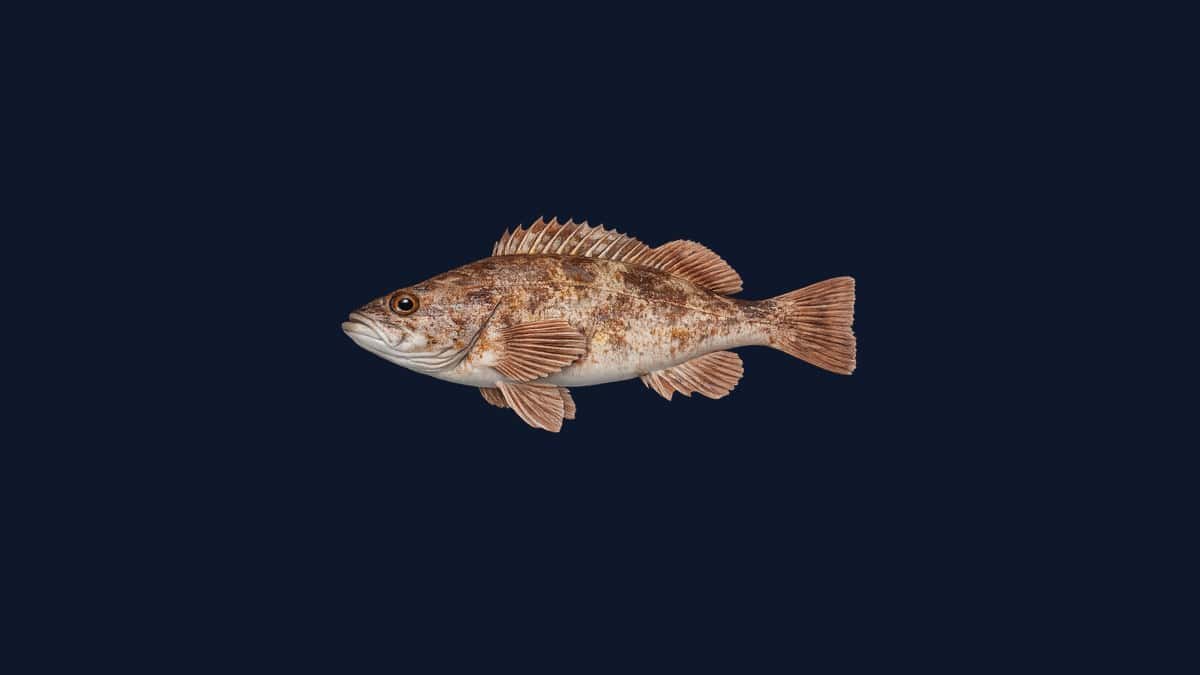
The yellow tail fin is the field ID marker. Body is olive-brown with mottled flanks and a distinctly pale yellow caudal fin. FishBase: max 66 cm length, 2.5 kg weight, to 549 m depth, max age 64 years. The California state record of 6 lbs 8 oz (Morro Bay, 2020) exceeds the FishBase max weight figure.
Range extends from Unalaska Island, Alaska to San Diego — more northerly than most California rockfish species, which aligns with NorCal being the productive zone. They're least common south of Point Conception.
How to Catch
Vertical jigging is the highest-percentage approach. Yellowtail rockfish actively chase prey mid-water. When sonar shows a school at 200 ft over 400 ft of water, drop your jig to them. A 3–5 oz diamond jig or flat-fall worked with slow lifts and pauses triggers strikes. The pause is critical — they often hit on the fall, not the lift.
Live mackerel or sardine produces the largest individual fish. Live bait on a dropper loop at the depth of the sonar mark will pull out the biggest yellows in the school.
Standard bait rigs work when the boat isn't jigging-oriented. Cut squid on a dropper loop at mid-depth covers the zone. Yellowtails aren't picky about presentation style.
Common Mistakes
- Fishing the bottom when yellows are mid-water. This is the most common error. Watch the sonar marks — yellowtails often school 50–150 ft above the reef. If you let your rig go to bottom, you're fishing 50 yards below the fish.
- Confusing with yellowtail amberjack. Different fish, different regulations, very different size. If you caught it on a deep rockfish trip with a gangion or dropper loop at 150+ ft, it's yellowtail rockfish. Yellowtail amberjack are caught on live bait near kelp paddies or offshore structure on entirely different trips.
- Too-light sinkers at mid-depth. In 300 ft of water with current, you still need 10–16 oz to stay vertical. Even on mid-water marks that rule applies.
Month-by-Month
- Jan–Mar: Groundfish closure in most areas.
- Apr: Opener. Yellowtails accessible immediately on offshore structure.
- May–Aug: Best fishing — NorCal offshore trips consistently producing. Peak jigging season.
- Sep–Oct: Solid; late-season deep-structure trips where yellows are reliable.
- Nov–Dec: Weather limits access; fish are there when boats can run.