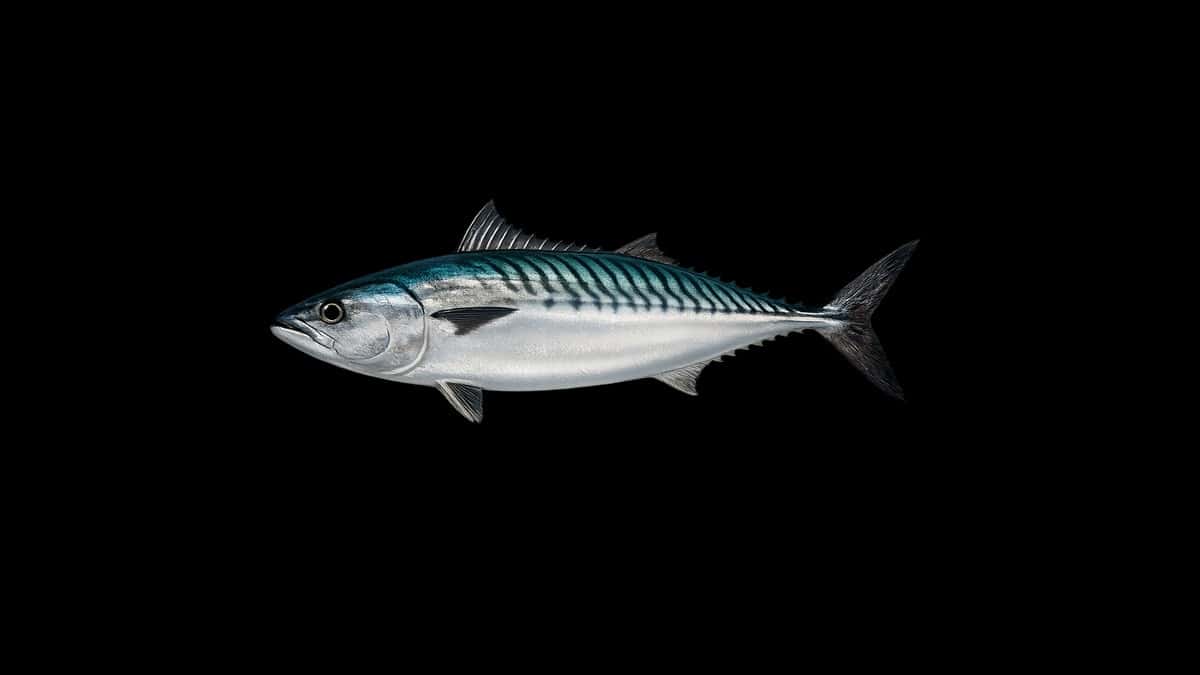
About Pacific Bonito
Pacific bonito are the year-round SoCal gamefish. Unlike yellowtail (mostly a spring/summer fish) or bluefin (summer/fall) or dorado (warm-water only), bonito are ALWAYS around. Every SoCal harbor, pier, and kelp line has a shot at bonito on any given day — even in February.
They're tuna family but not tuna. Closer to skipjack than to yellowfin, shorter and slimmer, averaging 3 to 8 lbs. A 12-pounder is a great fish; 15+ lbs is the top of the scale. The California state record is 21 lb 5 oz (Gail M. Barton, Malibu, 1978). They school up on bait and can boil on the surface in pods of hundreds.
Taxonomic note: the eastern Pacific population most anglers still call Sarda chiliensis lineolata has been treated as a full species, Sarda lineolata, by some sources since a 2015 revision. You'll see both names in the wild. Same fish either way.
Most SoCal anglers dismiss them as "bait" or "boneheads" — too common, too easy, too dark-fleshed. But on light spinning gear they're one of the most fun fish to catch, and when handled properly, they eat as well as any light tuna.
How to Catch
Fast lures, light line.
The Kastmaster spoon in chrome (1/2 to 1 oz) is the lure. Cast it into a boil or past diving birds, let it sink 2 seconds, and crank fast. The hit is instant and violent. Chrome is the color; everything else is decoration.
Small iron jigs (1 to 2 oz) work the same way — Salas, Tady, or cheaper alternatives. Surface iron walked through boiling bait catches every fish in the boil.
Live bait fly-lined is the reliable option when fish are finicky. A sardine or smelt on a 1/0 circle with 15–20 lb fluoro, no weight, cast 30 feet and let it swim. Bonito inhale it.
Trolling feathers at 4–6 knots along kelp edges is the SoCal classic "find the fish" technique. Hook up on the troll, then switch to bait or iron and hold the school.
Topwater is criminal — bonito crush surface plugs. Zara Spook, Yo-Zuri Sashimi, anything that walks the dog. Not as reliable as iron, but the most fun when it works.
Pier and jetty fishing is legitimately productive for bonito. Unlike yellowtail or white seabass, bonito routinely push inside the kelp canopy and into harbors. Redondo Pier, Cabrillo Pier, Huntington Pier, and the San Diego Harbor jetties all produce. Bring a 9 ft medium spinning rod and a handful of Kastmasters.
Eating Profile
Underrated when handled right, trash when not.
Bonito flesh is dark red and myoglobin-rich — closer to bluefin than to halibut. Un-bled, it turns dark, mushy, and strong-flavored within hours of capture. Properly bled and chilled, it's sashimi-quality: deep red, mild, fatty when the fish is post-spawn.
The protocol: gill-cut the fish immediately on deck, let it bleed out 30 seconds in a bucket, then submerge in slush ice. Fillet within 12 hours; remove the dark bloodline along the rib line. Eat raw (sashimi), as poke, or grill medium-rare with sesame oil and soy sauce.
Most SoCal anglers skip the bleed, eat the meat cooked-through, and conclude bonito is "trash." That's a handling problem, not a meat problem.
Scombroid warning. Bonito are a Scombridae-family fish — along with tuna, mackerel, and skipjack — and the FDA flags the whole group as the highest-risk family for scombroid (histamine) poisoning. Histamine builds up in the flesh when warm fish sit un-iced. The fix is the same as the sashimi handling above: gill-cut immediately, submerge in slush ice within 10 minutes, and keep it cold until you fillet. FDA guidance is to get the core temp under 50°F within six hours, and under 40°F within 24 hours. Cooking does NOT destroy the histamine once it's formed.
Seafood Watch rates Pacific bonito as Good Alternative — stock is healthy and the hook-and-line fishery is low-impact.
Common Mistakes
- Not bleeding. This is the #1 mistake. Every un-bled bonito is wasted meat. 30-second gill cut makes the difference between sashimi and garbage.
- Slow retrieve. Bonito key on fleeing bait. A slow-moving lure doesn't trigger the reaction strike. Cast and CRANK.
- Heavy line. 40-lb gear on bonito is a sledgehammer on a nail. Drop to 15–20 lb braid; the fight becomes fun and the strike count doubles.
- Keeping too many. 10-fish limit with 5-under-24-inches sub-limit. Don't try to take home 20. Keep 3–5 good ones, release the rest — and eat them fresh rather than freezing a giant pile.
- Skipping the ice. Bonito spoil fast. Dead fish on deck in the sun for 2 hours is fish you don't want to eat. Bring ice; use it.
Month-by-Month
- Jan–Mar: Present but scattered. Cooler water thins them out. Good winter days still produce.
- Apr–May: Schools push up as water warms. Kelp edges start firing. Light-tackle season begins.
- Jun–Aug: Peak. Boils on the surface, year's-best averages, constant action on iron and bait.
- Sep–Oct: Still excellent, though schools may thin slightly. Good trophy-sized bonito (10+ lb) possible.
- Nov–Dec: Action slows but never stops. SoCal resident population stays in the zone year-round.