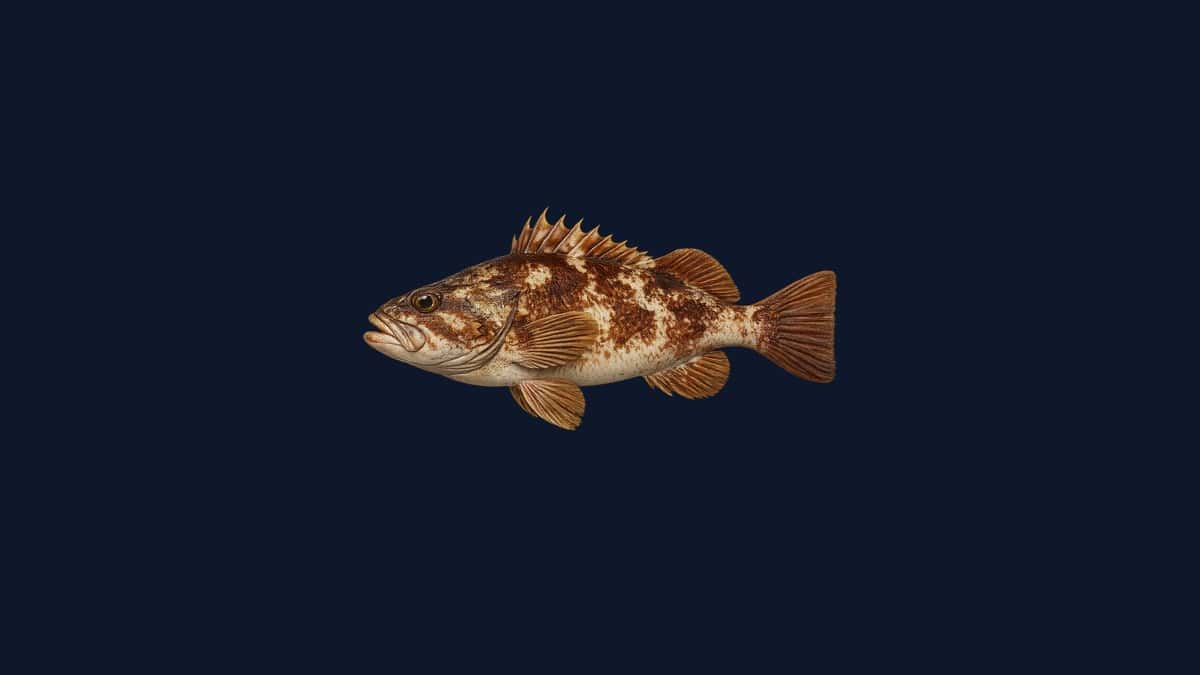
About Greenspotted Rockfish
Greenspotted rockfish are not a trophy species. They're a consistent bycatch on California offshore groundfish trips working 60–200 m of water — small, olive-spotted fish that show up in the bag when you're targeting vermilion, bocaccio, or chilipepper.
FishBase: max length 50 cm, max weight 1.0 kg (~2.2 lbs), depth range 49–201 m, max age 33 years. They're shorter-lived than most California rockfish and relatively small. The California state record of 3 lbs 5 oz (9-Mile Bank, San Diego, 2024) suggests occasional larger individuals, and it exceeds the FishBase weight figure — worth noting as a discrepancy.
They range from Copalis Head, Washington south to central Baja California. Unlike the deepest rockfish (greenstriped, some chilipepper), greenspotteds work a mid-depth zone that overlaps heavily with other targeted species.
How to Catch
You catch them the same way you catch everything else at their depth. Standard deep-rockfish rig — dropper loop with cut squid, 8–16 oz torpedo, dropped to 60–200 m. They don't require a specialized approach. They're incidental to whatever you're doing.
Identify them before they go in the bag. The green spots on an olive-tan body are the ID marker. They're not big enough to confuse with canary or vermilion, but mixing them up with greenstriped rockfish is easy — greenstripes are slimmer with vertical striping rather than scattered spots.
Common Mistakes
- Ignoring them. On a day when bigger fish are scarce, greenspotteds are easy bag-fillers. Not glamorous, but edible.
- Misidentifying them as greenstriped. Greenstripes have a slimmer body profile and vertical banding rather than scattered spots. Both are small mid-depth rockfish but look noticeably different with the fish in hand.
Month-by-Month
Greenspotteds follow the offshore groundfish calendar — no species-specific pattern that differs meaningfully from the aggregate. See /species/rockfish for the full season breakdown. They appear May through October when offshore trips are running consistently.