Skip to content
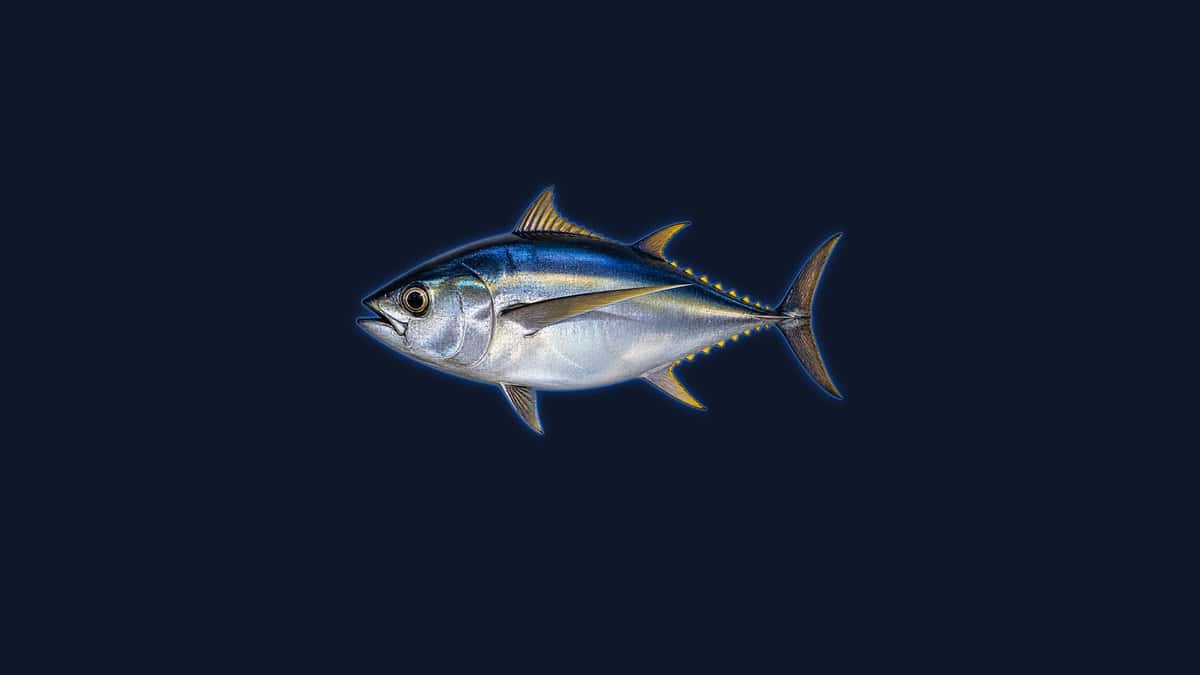
Bigeye tuna studio illustration: deep rounded body, dark blue back, silver belly, very large eye and long pectoral fins, against a dark background.
All Species

Bigeye Tuna

Thunnus obesus

Updated · Published

Season: Late summer into fall in warm-water years. Recent San Diego counts and angler accounts cluster from July through October.Most San Diego fish run 60 to 110 lbs – Up to about 460 lbs worldwide (FishBase lists 210 kg); local fish are far smaller

Bigeye are the deep-bodied, big-eyed cousin of the yellowfin and some of the richest sashimi meat in the ocean. Off San Diego they are a rare bonus: a few fish in a week of dock totals, usually mixed in with yellowfin on 1.5- to 3-day trips in a warm year.

Illustration: Fish City

When is bigeye tuna season in SoCal?

There is no true season. Counts and angler accounts cluster from July through October in warm years, usually a few fish mixed with yellowfin. Historic runs came in strong El Niño years.

How deep do bigeye tuna feed?

FishBase lists bigeye from the surface to about 4,900 ft, usually in the top 1,600 ft. Adults stay deeper than smaller fish, but SoCal bigeye are also caught on trolled jigs and under paddies.

What is the bigeye tuna limit in California?

No bigeye-specific limit. The general finfish rule applies: 20 finfish per day, no more than 10 of one species (14 CCR 27.60).

Bigeye vs yellowfin: what is the difference?

Bigeye have a deeper body, a much larger eye and longer pectoral fins. Yellowfin are slimmer, with long dorsal and anal fins on bigger fish.

About Bigeye Tuna

Bigeye are the deep-bodied, big-eyed cousin of the yellowfin, and a prized sashimi fish. Worldwide they grow well past 400 lbs, but the fish San Diego anglers see are mostly 60 to 110 lbs.

Locally they are a surprise, not a program. A weekly dock total from more than 200 boats might list five bigeye next to thousands of yellowfin. Fish City dock counts show only one bigeye in the 90 days to October 8, 2026 (Point Loma Sportfishing, September 24).

Identifying a Bigeye at the Rail

Look at the head first. A bigeye has a visibly large eye for its size, and the body is deep and rounded through the shoulders, almost barrel-shaped on a big fish. Pectoral fins are long. Yellowfin are slimmer, and big ones show very long dorsal and anal fins. Anglers have mixed the two up before, including some of the old-timers' stories about big runs, so look closely.

How Anglers Actually Catch Them Here

Bigeye are rarely targeted. Most are caught by accident while trolling for something else.

Troll marlin jigs, cedar plugs and dark Rapalas. Anglers have landed bigeye in the 60 to 100 lb range this way, including some on big marlin jigs.

Slow down. One experienced troller finds bigeye prefer a slower troll than yellowfin.

Greenstick. Anglers rate a greenstick spread for both bigeye and yellowfin.

Live bait at first light. One angler says bigeye pop up over seamounts and high spots at dawn and briefly at sunset. Others report good bites around noon, so do not assume a dawn-only window.

Paddies and chum. Fish have been caught under kelp at about 80 ft, and on bait thrown at a school.

Eating Profile

Bigeye meat is fatty and deep red, richer than yellowfin. It is excellent raw as sashimi or poke and sears well. Bleed the fish quickly and ice the loins hard, because heat damages the flesh fast on a big fish.

Common Mistakes

  • Assuming it is a yellowfin. The meat and the limit treatment are the same, but check the fish for the large eye and long pectorals.
  • Fishing only one time of day. Accounts disagree on dawn, midday and sunset bites. Be ready all day.
  • Going too light. A big bigeye on yellowfin gear can take a long time to land.
  • Slow cooling. Big loins hold heat. Ice them hard and fast or the flesh softens.

When They Show Up

  • Jul to Oct: The best local window, in warm years. Expect a few fish among yellowfin, not a bite of their own.

Looking for a trip? See San Diego charters. Related fish: Yellowfin Tuna and Bluefin Tuna.

Where to Catch Bigeye Tuna in California

  • Warm offshore water with yellowfin. Bigeye are caught as a few fish among yellowfin counts, not as a school of their own
  • Kelp paddies and floating debris. Anglers have caught bigeye under paddies at about 80 ft
  • Over high spots and seamounts at first light, and for a short bite at sunset (one angler's view, others disagree)
  • Southbound from San Diego toward Ensenada and San Martin Island, a historic bigeye area
  • Between Point Loma and San Clemente Island in strong El Niño years, when fish have come within sight of the coast

Conditions & Habitat

Water Temp

FishBase gives 55 to 84°F, with the best range around 63 to 72°F. Look for warm water with a temperature break.

Typical Depth

Surface to about 4,900 ft, usually in the top 1,600 ft (FishBase). Local fish also take trolled jigs and sit under kelp paddies.

Diet

Fishes, squid and crustaceans, feeding both day and night (FishBase)

How to Catch Bigeye Tuna

Techniques

  • Troll big marlin jigs, cedar plugs and dark or purple Rapalas. Many local bigeye are caught by accident on these
  • Slow the troll down. One experienced troller reports better bigeye results at slower speeds, around 6 to 10 knots
  • Run a greenstick if your boat has one. Anglers rate it for bigeye and yellowfin
  • Fish live mackerel at first light over a high spot
  • Chum and throw live bait at a school that comes up, then fish bait on light line in the chum

Lures & Baits

  • Big marlin-style trolling jigs
  • Cedar plugs and clones
  • Dark or purple Rapala-style trolling plugs
  • Live mackerel or sardine

Line & Leader

Anglers have landed bigeye estimated at 90 to 110 lbs on 20 to 25 lb gear, but that takes time and open water. Match your line to the other tuna you are fishing for and ask your deckhand.

Rod & Reel Combos

  • Your boat's yellowfin outfit. Bigeye are a bonus on the same gear, not a separate setup.

Regulations

California has no bigeye-specific limit in the CDFW ocean regulations. The general finfish rule applies: 20 finfish per day in combination, no more than 10 of any one species (14 CCR 27.60; CDFW 2026 regulations). Long-range and some multi-day trips fish Mexican waters, where Mexican rules apply and every angler needs a Mexican fishing license. Mexican limits are commonly described as 10 fish a day with no more than 5 of one species. Check current CDFW and CONAPESCA rules before your trip.

As of — CDFW source

When boats actually landed it

Not enough data yet — too few reported trips to show a reliable catch pattern.

Did You Know?

A handful of bigeye in a week of San Diego dock totals is a normal result. In one September 2016 week, five bigeye were counted against more than 7,000 yellowfin.

Book a Bigeye Tuna Charter

Find charter boats targeting Bigeye Tuna at these California landings:

Frequently Asked Questions

Bigeye have a deeper, more rounded body, a larger eye and longer pectoral fins. Yellowfin are slimmer, and big yellowfin show very long dorsal and anal fins. Anglers also misidentify bigeye in the heat of a bite, so check the fish on deck.

Sources

Ready to Find the Bite?

Get the app California anglers use for real-time fish counts, reports, and charter data.

Download on the App StoreGet it on Google Play

Free — no subscription required